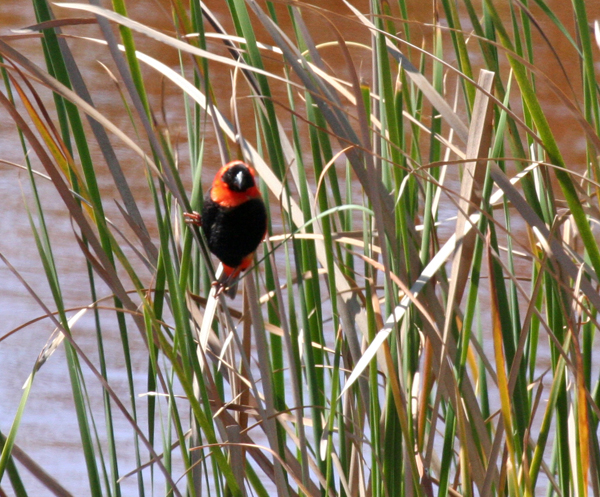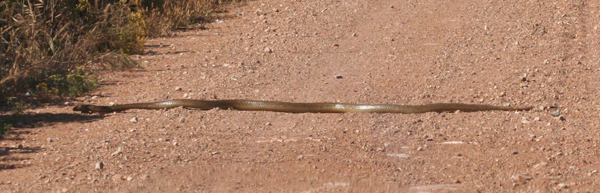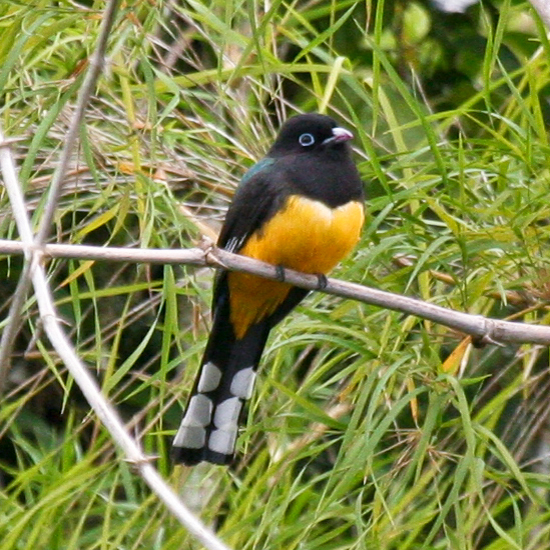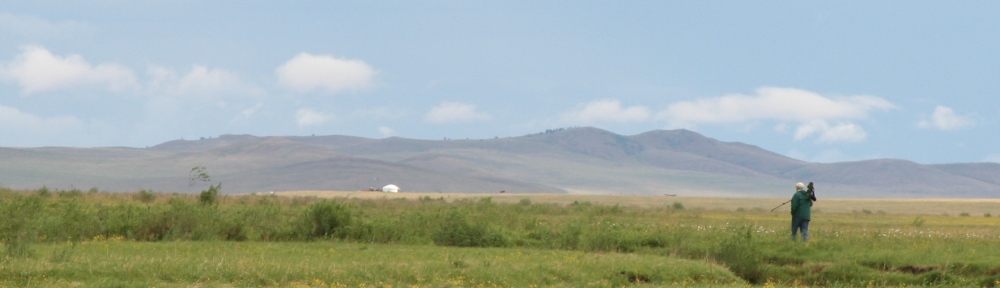
Hawaii – Kauai and Maui September 30 – October 5

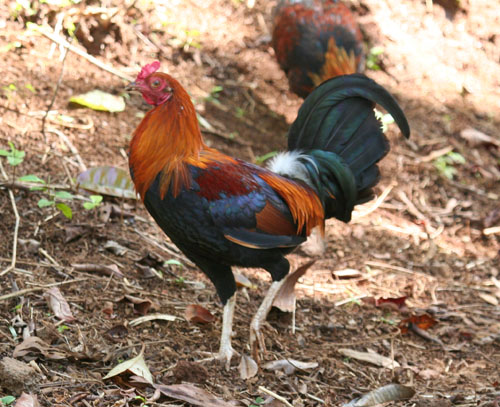
We flew to Kauai on September 30.  This was our first time on Kauai.  We arrived late and stayed at a nice resort north of the Lihue airport. The next morning (October 1) we were awakened by the persistent crowing of the Red Jungle Fowl (chickens)

jungle-fowl

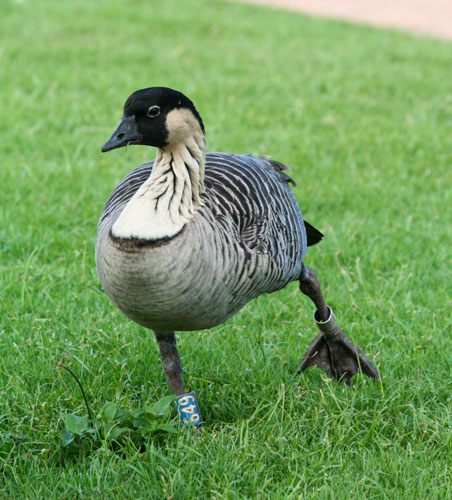
that were introduced onto the island many years ago and now occupy almost every acre of the island.   We birded on our own from Lihue up the east and north coasts.  At the Kilauea Lighthouse, we found our first interesting birds: lots of Nene Geese, 

nene-goose

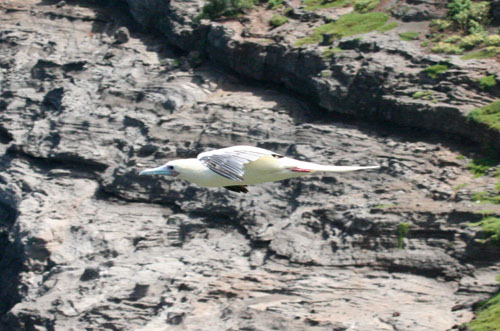
Red-footed Boobies 

red-footed-boobie

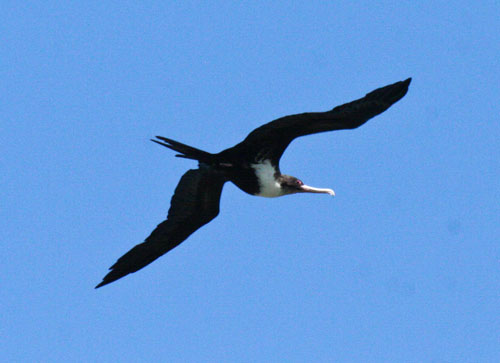
and Great Frigate Birds.

great-frigate

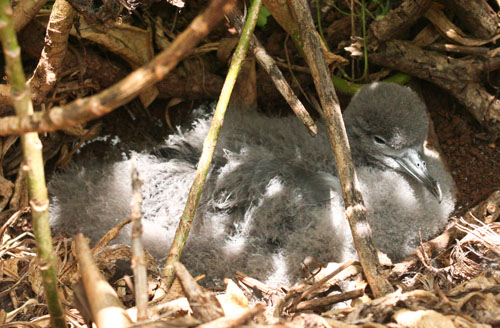
The best finds of the day were the Wedge-tailed Shearwater chicks, looking very vulnerable and exposed.

chicks

 
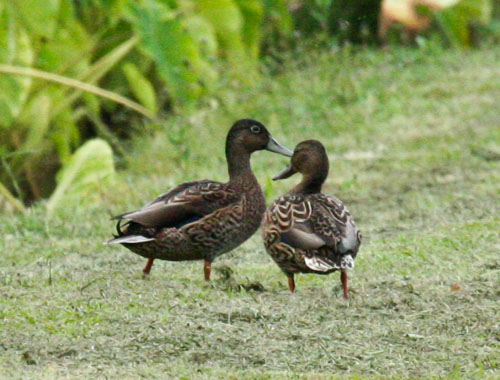
We went on to the end of the road at the northwest corner of the island, looking for a way to get near the taro ponds, where we had been told we might see Koloas, or Hawaiian Ducks, which would be new for me.
 
 
koloa-2
 
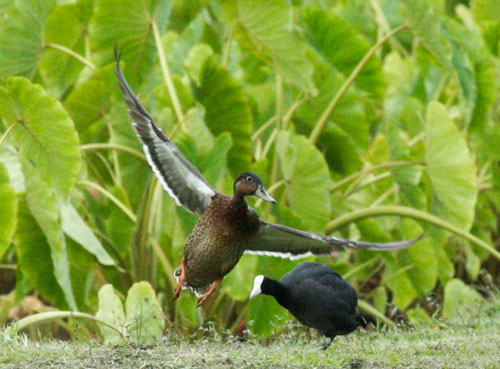
We failed to find an access point on the way out, but on the way back we took a little turn-off toward the taro ponds, and just a few yards in, spotted two pairs of Koloas.
 
koloa-1
 
Coots and Common Gallinules were plentiful on the ponds and rivers along the way.
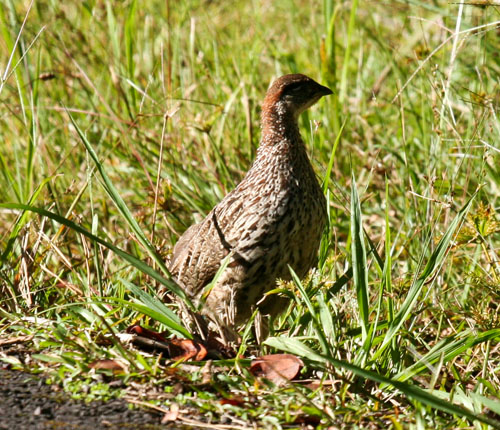
We then drove back through Lihue (and heavy rain) to Waimea where we stayed over night at a rustic motel.  The next morning (October 2) we met our bird guide, Jim Denny, at the end of the Grand Canyon of the Pacific where he helped us find a couple of new birds for me, an Elepaio (a native Hawaiian bird, one of the few that has not become extinct), and an Erckel’s Francolin, an introduced game bird species.
 
ercklels-francolin
 
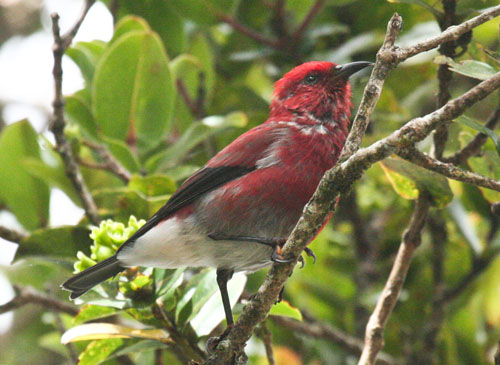
The only other native forest birds seen were  Apapanes, which were fairly numerous.
 
 
apapana
 
 
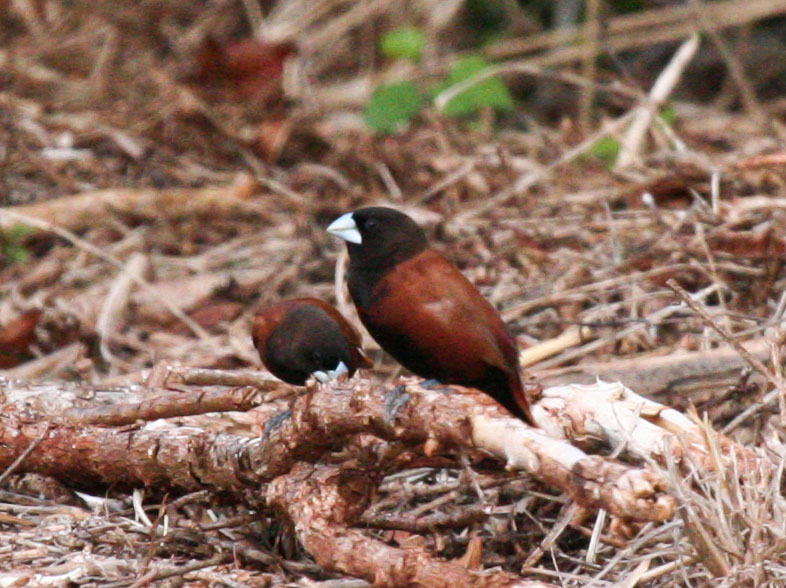
We flew to Maui on October 3 and enjoyed the rehearsal dinner for my great niece’s wedding.  On the 4th we drove up to the Coffee Plantation near Kanapali, where we saw a number of interesting birds, including Chestnut Manakins,
 
 
chestnut-mannikin
 
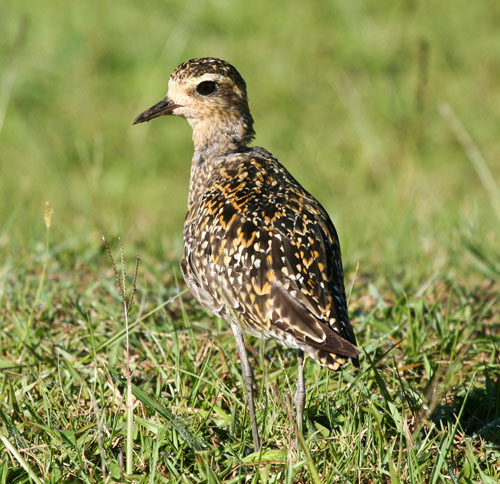
Pacific Golden Plovers,
 
 
plover
 
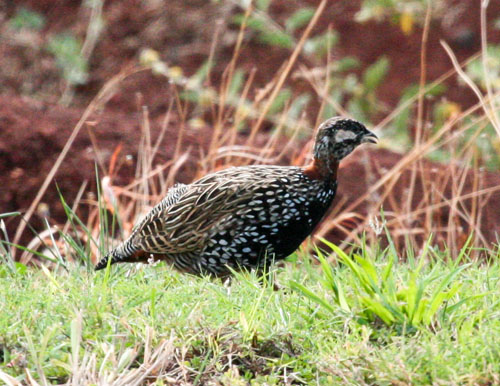
and Gray Francolins.  Later we spotted several beautiful Black Francolins.
 
 
black-francolin

Swans, Geese and Ducks at Maffit Reservoir

Dale Maffit Reservoir is a 200 acre lake constructed in the 1940s as a backup water source for the City of Des Moines, Iowa.  It is surrounded by about 1500 acres of woodland and prairie, intended to keep the runoff to the Lake reasonably unpolluted.

This winter the lake froze over early and has remained frozen over to this date, March 10.  Frozen, that is, except for a small hole that  Canada Geese managed to keep open throughout extremely cold winter.  With rapidly warming weather the past 2 days, the hole has greatly expanded.  It is at the north end of the lake, easily viewable.

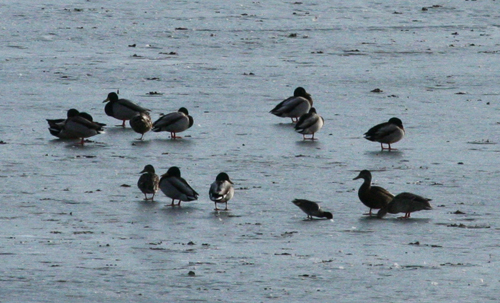
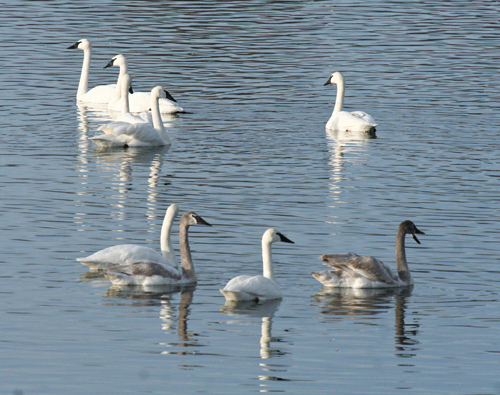
I live about 6 miles from Lake Maffit.  On January 20th I stopped by to see what was there, and was pleased to find several Trumpeter Swans, some Common Goldeneyes, a few Common Mergansers, and the usual plethora of Canada Geese and Mallards.

On February 13th among the Canada Geese and Mallards were Cackling Geese, Redhead Ducks, a Ring-necked Duck, and the continuing Goldeneyes and Common Mergansers.

On February 21, the swans were back, and there were a few Pintails to add to the mix.

On February 27th, all of the species of ducks, geese and swans mentioned above were still present at the little water hole surrounded by ice, and adding to the mix was a single Bufflehead.

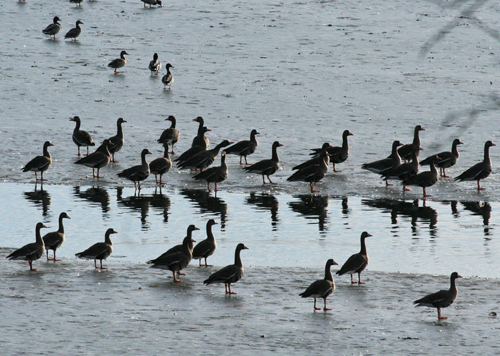
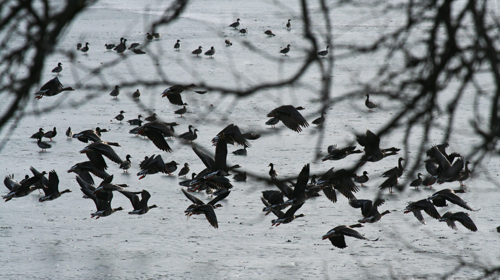
On March 7th, the number of Anatatdae (the Latin name for the family  consisting of swans, geese and ducks) had dramatically increased.  Joining the Canada Geese were 2 White-fronted Geese

img_2221-sml

img_2227-sml

and 4-6 Cackling Geese.  The number of duck species now included 2 Green-winged Teal, 6 Ruddy Ducks, 4 Lesser Scaup, 8-10 Pintails, 2 Ring-necks, 1 Bufflehead, 50 or so Redheads, 100 or so Common Goldeneyes, 10 Common Mergansers, and, of course the ever present and quite numerous Mallards.

On March 8th, there were 37 Trumpeter Swans in or around the hole.  Canada Geese numbers were well over 1,000.  A flock of at least 40 White-fronted Geese and about 10 Cackling Geese completed the list of geese present.  All of the duck species seen the preceding day were still present, but in increased numbers.  And, as the bonus for the day, cavorting among the Mallard Drakes was a dramatically dark Black Duck.

img_2262-sml

I was very happy to see this big duck, because in many years I fail to see any of this more easterly cousin of the Mallards in Iowa.

On March 9th the weather turned warm for the first time this calendar year.  All of the same cast of characters were still present, and added to the mix were 6 beautiful Hooded Mergansers.  There were 49 Swans at the hole. They began to depart about 10:00 a.m.

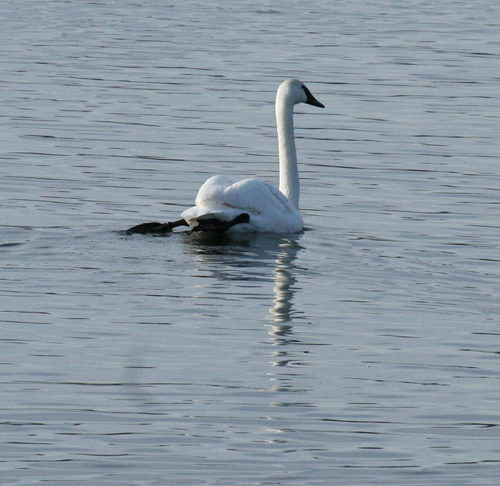
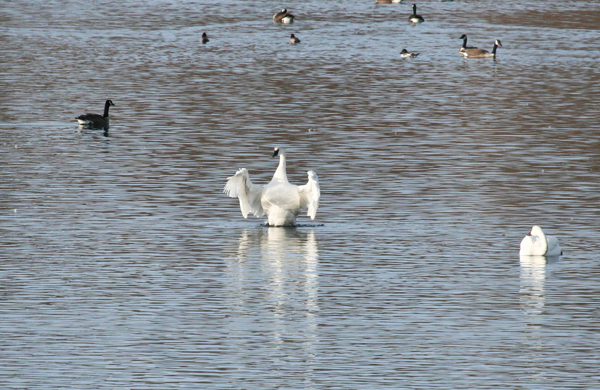
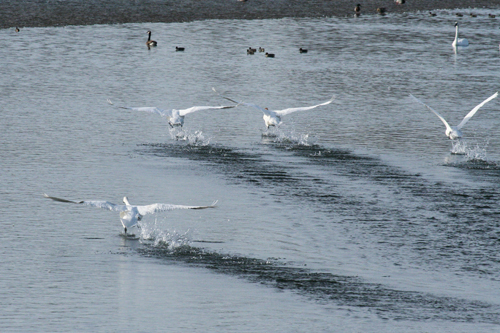
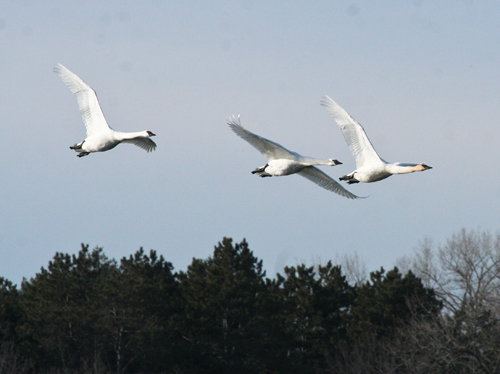
March 10 dawned bright, calm and very warm and the days of the small water hole on the lake are obviously numbered.  Barbara joined me on an early morning trip to the Lake, hoping to photograph swans, if present.  And they were:  71 of them, to be exact.  It is wonderful to contemplate that from the brink of extinction, these magnificent birds can now be seen regularly and in good numbers.  Several of her photos of the Trumpeter Swans, at rest

img_2201-sml

img_2276-sml

img_2217-sml

and in flight.

img_2287-sml

img_2315-sml


Hopefully, the Black Duck and one of the 2 Buffleheads present this morning will also show up in the photos.  All of the other species, except Cackling Geese, were still present, and, except for Canada Geese, in larger numbers.  When I returned to Lake Maffit about 5:00 p.m., there were at least 2,000 White-fronted Geese, and very few Canadas; a nice change.  In addition I saw my first-of-the-year Red-breasted Mergansers (3) and a single Wigeon.  Ring-necks were much more plentiful than in the morning.  That made it a 14 duck day.  I think that’s a record for me.  I will be anxious to see what’s new there tomorrow.  Canvasback or Shoveler are the most likely, because my other three expectancies, as yet unseen in 2014, the Wood Ducks, Gadwalls, Blue-winged Teal, don’ fancy the big open lake.

Maffit Reservoir is a jewel.  Hopefully it will continue to be available to the migrating flocks to provide rest and nourishment on their cold fall, winter and spring stopovers.

I can’t stop without mentioning the nightcap:  at about 6:30, as the sun was setting, V after V of Snow Geese flew high over our house, heading northwest.  Spring is surely here.

Albino or Leucistic Possum? – February 20, 2014

     I haven’t posted anything on Emptynestbirder.com since September of last year.  Not much of interest has happened to justify a report.  I returned from Spain in August ready for back surgery to relieve the increasingly debilitating pain that I had experienced all year.  On October 31 I had a laminectomy, which has been successful.  Recovery has taken a few months and is somewhat complicated by hip problems that may require hip replacement in the near future.  Suffice to say, since August last year I have not travelled out of Iowa and therefore there were no interesting birding results to post.

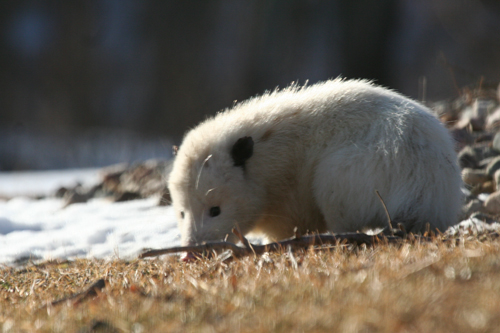
     On the other hand, I have increased my concentration on my own back yard.  I have kept a birding journal for quite a number of years.  In it I note the species seen each year in (1) my yard, (2) in Iowa, and (3) in North America.  I spent a lot more time in my yard in 2013, especially since August, than in any prior year, and I did set a new record for species recorded in here in 2013: 110.  The previous annual counts ranged from 94 to 104.  The total number of species seen in my yard since we moved here in 1985 is 153.  At this point a new yard species is rare and good reason for celebration. The count thus far in 2014 has been rather small compared to similar periods in prior years:  26 to date.  Nothing unusual has shown up, although the attractive Fox Sparrow that came to my feeder during the most inclement of our inclement weather is somewhat uncommon here in winter.  Eastern Bluebirds, normally seen in January, did not show up until today.  I have been able to drive around central Iowa on a few of our nicer days to see what other birds may be moving about.  The best of those is the male White-winged Scoter, a very unusual bird for Iowa, that has been fishing below the Red Rock Dam, about 40 miles away, for the past 2 weeks.  The northern birds that often invade Iowa in harsh winters have been notably absent this winter.  Snowy Owls have been somewhat of an exception and a number of them have been seen about the state.  Others, such as Purple Finches, Pine Siskins, and Red-breasted Nuthatches that I sometimes see in winter have been absent from my yard and largely absent from Iowa this year.  The food supply must be good in Canada. The scarcity of birds has been offset somewhat by the large number and variety of mammals that have frequented my yard this year.  They include numerous White-tailed Deer and Fox Squirrels, plus occasional Raccoons, Cottontail Rabbits, Coyotes, and Red Foxes.  Yesterday a very rare white Possum (“Opossum”) came to clean up the seeds fallen from my bird feeder.

possum-1

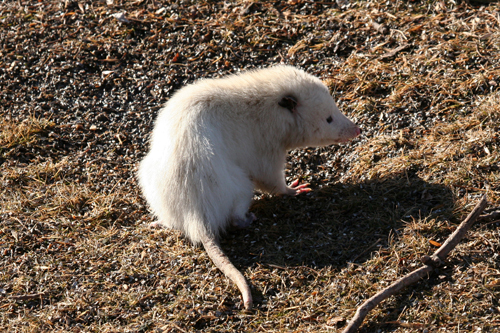
I suspect this is the same individual that I saw in the woods behind our house several years ago, when it was a half-grown juvenile.  Because of its obvious divergent coloration I wondered if it would survive, but it seems to have.  Barbara was able to get some pictures of it.

possum-2

I think that it is not truly an albino, but rather a leucistic variant, because the eyes  appear to be dark, rather than the distinctive albino pink.  What a strange animal.  How it survives our winters, especially this one, is a mystery to me I am really hoping that one day I will spot a Bobcat in my back yard.  Very surprisingly, they are increasing in Iowa and I keep thinking that one will show up here, but none has, so far.  Bobcats were common in Iowa before settlement in the 1800s.  By the 1980s they were practically extirpated here.  Since then, they have increased steadily in southern and western Iowa, with a current estimated population of 3000.  The Iowa Department of Natural Resources now allows trapping or hunting bobcats in about 40 of our 99 counties.  I hope that doesn’t cause a severe decrease in the number of these beautiful creatures in our state.  Some consider them a pest because they do take a number of our birds, especially game birds such as pheasants and bobwhite quail.  I guess it is all a matter of balance.

China-Tibet June 6-7, 2013

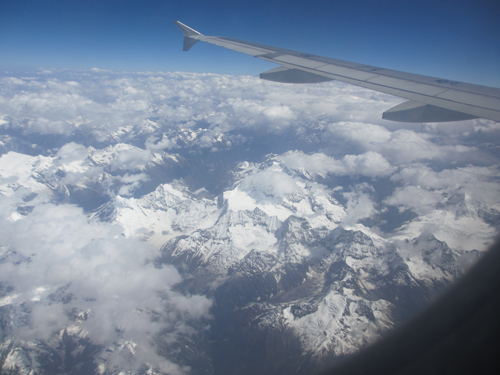
We were up at 4:00 a.m. for an early breakfast and a ride to the airport.  During the flight we saw a few cracks in the clouds, and below them, some of the snow-capped peaks of the Himalayas.

himalayas

From the Lhasa airport to the town itself is a 60 mile ride on a good road.  The scenery is very interesting.  We followed the course of the valley created by the Kyichu River (sometimes referred to as the Lhasa River, or with different spellings).  All along the river valley farmers were in the fields working on their crops.  The amount of agricultural production at this high altitude was surprising.  The green of the valley contrasted sharply with the brown of the bordering, treeless mountains.  The river is wide and fast.  Along the way I saw some Brown-headed Gulls and Common Terns working over the water.

Tibet was absorbed by China in 1950.  It is designated as an Autonomous Region, rather than as a Province.  Before then it was virtually inaccessible from anywhere.

There are now 3 ways to reach Lhasa: by air, by train or by highway.  The advantage of air travel is solely the time saved.  Among the disadvantages are inability to see the great scenery that could be seen from a train or a motor vehicle, and the altitude sickness often incurred upon arriving abruptly at 12,000 feet.  Fortunately, we all had taken altitude sickness pills.  This worked well for me (I have never had a problem with altitude sickness anyway) and several of the others, but Barbara had some adverse effects the first day, until she increased her dosage.  Our guide, Michael, suffered greatly during the whole stay, and apparently this always happens to him in Tibet.

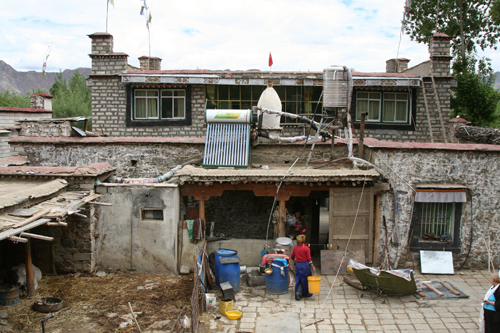
As we approached Lhasa we stopped in a small village to visit a farm family.  The husband was out working while the wife was home with a little baby.  Another lady was there to help her.  They lived in an old limestone structure, enclosed with “outbuildings” in a wall-like fence.

tibet-house

Within the compound was a barn with several cattle and chickens.  Dung patties lined the top of the wall, presumably fuel for the cold nights ahead.  It smelled just like the barn I remember as a boy, but much closer to the living quarters than I experienced.

Among the immediately noticeable differences in Tibet from Beijing and Xian were the features of the people and their clothing.  Most of the residents of Lhasa are Tibetan, and many of them wear the traditional garb of Tibet.  Many of the people looked more like American Indians than like Han Chinese.  Lhasa has the feel of a very different culture.  The practice of Buddhism here is obvious, whereas in Beijing and Xiang, there was almost no evidence of any religious observance.

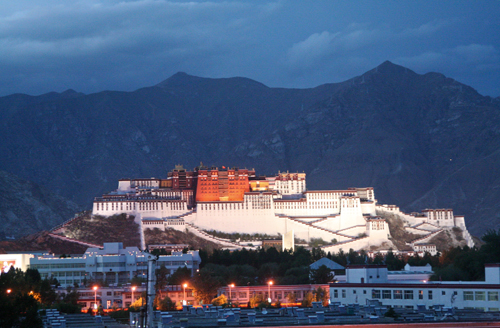
We checked in at the Xin Ding Hotel and rested for the remainder of the day and evening.  Michael had told us that the hotel wasn’t the highest rated in the city, but the rooms had the best view of the 1,000 room Potala Palace, the home of the Dalai Lamas since the 17th century.  Indeed, the view was spectacular and almost made up for the deficiencies in the other amenities, like cleanliness, food, temperature control and service.  At night, the Palace was lighted and presented an even more spectacular view.

potala-palace-at-night

Barbara experienced a bad night with nausea and headache.  I was tired.  We are at 11,975 feet altitude and it definitely feels like it.  The shower leaked badly so we had a lake in the bathroom.

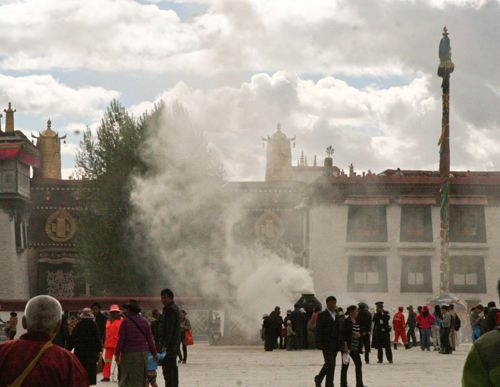
Our first activity was go to the holiest temple of the Tibetan world, Jokhang.

johkang

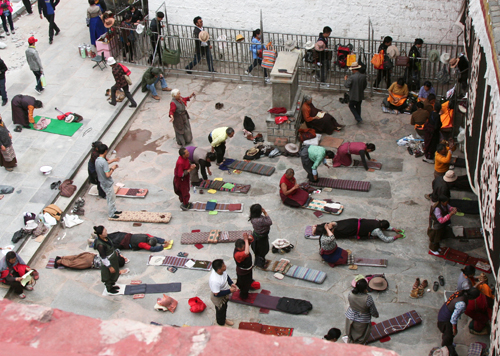
Jokhang is for Tibetan Buddhists much as Mecca is for Muslims:  a visit there in one’s lifetime is essential for a happy after-life.  Although Tibet is part of China politically, and is experiencing some assimilation, it still preserves an ancient culture all its own – which we began to encounter more intensely as we moved to the eastern part of the city toward Jokhang.  Many pilgrims in traditional garb (which I found most attractive), were walking to the Temple. Near the doorways to the Temple, pilgrims, many quite elderly, were  prostrating themselves (stand with hands together above head, come down to kneeling position, put hands, usually with protective mittens, on the ground and slide them forward until the hands are again above the head and the face is on the ground; stand and repeat).

prostrating

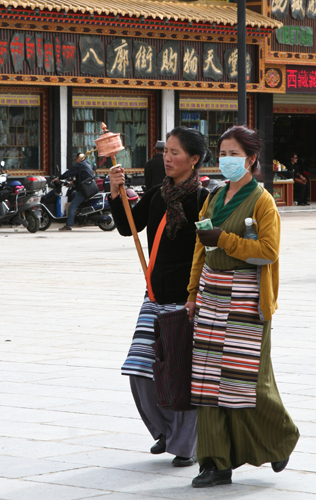
Many were spinning their golden prayer wheels.  

tibet-pilgrims

There was a giant prayer wheel outside the Temple, at which we each took our “turn”.  “Incense” (from juniper branches tossed on a big fire in the square) was burning away with abandon, adding to the sensory overload.  Within the Temple itself, the crowd was dense and making one’s way through required effort and ingenuity.  Within, red-robed monks chanted prayers and collected money.

We climbed to the roof of the Temple, from where we enjoyed a panoramic view of Lhasa, including the Potala Palace from a different direction.  We walked back a half mile or so through the Barkhor Bazaar. It was teeming with vendors of religious and other items, and with people.  Lunch was at a local restaurant at the corner of the Bazaar.

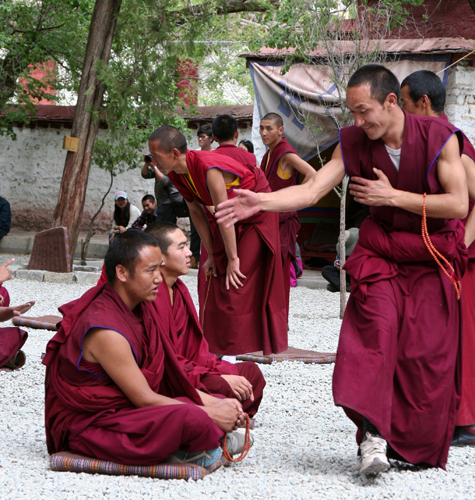
In the afternoon we went to the Sera Monastery, which is more like a seminary or university than a place of worship.  Once home to over 5,000 warrior “Dob Doa” monks, fewer than 500 now reside there.  Many (150 or so) red-robed monks were engaged in debate in the open courtyard.
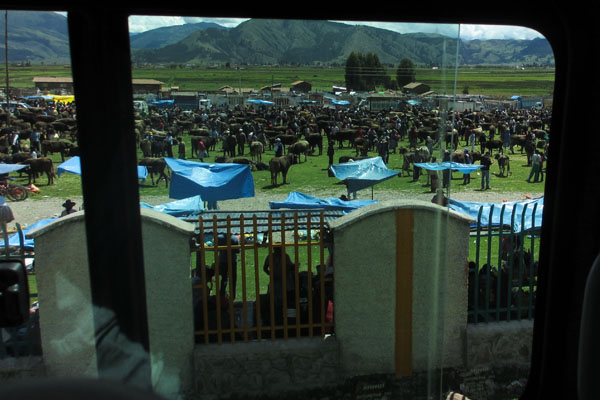
monks-at-sera

The debate is vigorous.  A monk stands in front of 1-3 others who may be seated, speaking loudly and emotionally, punctuating his speech with sharp hand claps and foot-stamping lunges toward his audience.  The listeners, on the other hand, maintained a fine decorum, smiling often, nodding, sometimes as if in agreement, sometimes as if not in agreement.

From the Monastery, we returned to the hotel for a couple of hours rest before dinner.  The food was adequate and the dinner was accompanied with a show featuring traditional Tibetan dancers.  The yak butter tea tasted fine.  Tomorrow we climb to the main attraction, Potala Palace.


China Travel – Beijing

On Friday, May 31 we met our four fellow travelers and tour leader for breakfast at the Hotel. Our first impression, never to be changed, was that this would really be a good trip.  The Freyermuths from LeMars and the Rices from Muscatine are excited about the trip, as are we.  Our tour director is Michael Song (Anglicized, and of course not his real Chinese name except for the “Song” part).  He has been doing this for Odysseys Unlimited (the Tour Company) for about 20 years.  His deep knowledge of his country, his attention to detail, his excellent English and his good humor make him an ideal tour leader.
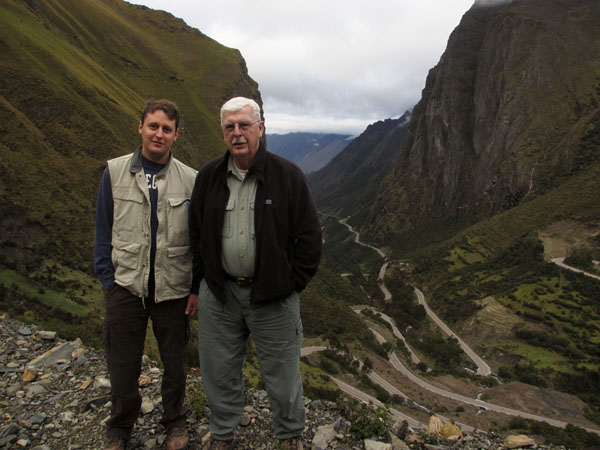
Before the trip we bought a copy of “DK Eyewitness Travel China”, to which we will refer regularly in my blog.   From Eyewitness:

The Yellow River, the wellspring of Chinese culture and civilization, carves a course through the country’s parched northern terrain, the historic homeland of the Han Chinese and location of the most significant monuments.  Thus most visitors to the Middle Kingdom usually concentrate on these historic sites, beginning with the nation’s capital, Beijing.”

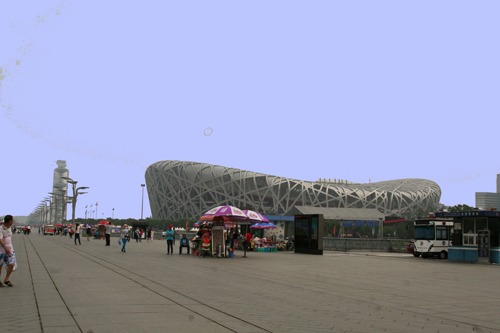
Our first stop in our tour of Beijing was the 2008 Olympic Village.

olympic-village

There we encountered the well recognized splendid architectural attractions of the Olympics, few visitors and many vendors.

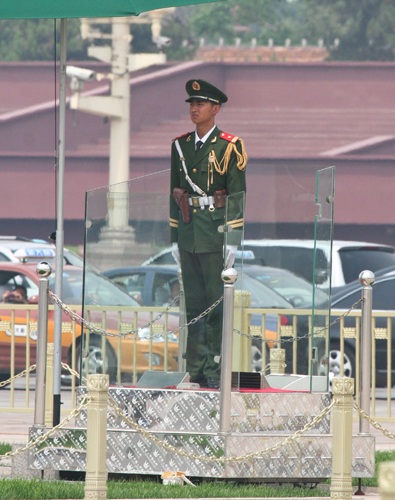
We proceeded on to Tiananmen Square.  It is much larger than we anticipated.  There was tight security, mostly very young-looking fellows, probably between 17 and 20 years old.  Security cameras are everywhere.

tiananmin-guard

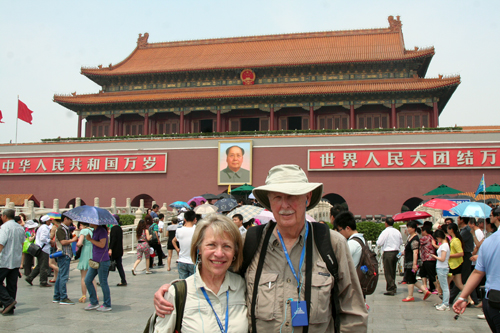
We enjoyed a long morning just strolling about the Square.  We even had our picture taken framed by a giant portrait of Chairman Mao.

tiananmin-square-db

We understand it is changed every year so that it always looks fresh.  Though widely discredited, even in China, after his death, because of the big mistakes he made, his reputation as an inspirational leader has been revived and his image is quite commonly displayed.

During the lull in one of our bus rides to and from our destinations, and prompted somewhat by my sketchy recollections of the events of a few years ago at Tiananmen Square, I asked Michael to think about how he would answer this question:  Who were the most influential Chinese of the 20th century?  A few days later we had a chance to follow up and his answer was Dr. Sun Yat Sen, General Chiang Kai Shek, Chairman Mao and Deng Xiaopeng.  I was surprised only in that he did not name Chou En Lai, and I asked why Deng Xiaopeng and not Chou En Lai.  He explained that while Chou was an excellent administrator, Deng, who in the 1980s emphasized the need for and led the move of China toward economic power, was a more inspiring and effective leader and led China into its present prosperous and promising future, to the great improvement in the economic lives of many Chinese.

China has such an interesting history, and to me the 20th Century has been an earth shaking period not only in Chinese life, but in the place in the world that China has achieved and appears ready to continue to occupy and strengthen.  Not to change this into a second rate Chinese history, but rather to quickly outline in the broadest possible terms the long-term history of China, one must begin with the awesome power of the Chinese Emperors.

China was ruled by Emperors since long before the Christian era.  Without some knowledge of this history, one cannot appreciate the China of today.  So here goes, and try to hang in there.

Here is Eyewitness Travel’s briefest historical summary of China:

“China boasts one of the longest single unified civilizations in the world.  Its history is characterized by dramatic shifts in power between rival factions, period of peace and prosperity when foreign ideas were assimilated and absorbed, the disintegration of empire through corruption and political subterfuge, and the cyclical rise of ambitious leaders to found each new empire.”

The earliest presumed dynasty was the semi-mythical first dynasty, the Xia, which is thought to have lasted from 2200 to 1600 B.C.  From 1600 B.C. to 1911 A.D. (in aggregate, for over 4000 years):

China was ruled by a succession of dynasties, broken by periods of fragmentation and civil war.  The emperor’s authority was divinely granted through a mandate of heaven and was thus unlimited.  Leaders of succeeding dynasties claimed that the previous leadership had displeased the gods and had therefore had its heavenly mandate withdrawn.”

Many of the dynasties lasted for several hundred years.  The Mongols established their foreign rule from 1279 through 1368 A.D.  Mongol rule was overthrown by the Ming Dynasty (1368 to 1644), which was in turn replaced by the Qing dynasty, from 1644 to 1911.  Amazing durability.

This long history of dynastic rule was ended the year my parents became engaged to be married:  1911.  During that year the last Chinese imperial dynasty, the Qing dynasty, fell and Dr. Sun Yat-sen was elected provisional President of the new Republic of China.  He was overthrown in a military coup a few years later, plunging China into civil wars, interrupted by the Japanese invasion and occupation in the 1930s and 1940s.  The two primary contenders for leadership of China, the Communists led by Mao Tse-tung and the Nationalists led by General Chiang Kai-shek (who seized power in 1926), cooperated (with American help) to defeat the Japanese.  Then they went at each other, and Mao and the Communists prevailed in 1949, when Chiang retreated to Taiwan where he established the remnant Nationalist government.

And so our visit to Tiananmen (“Tian’an Men”) Square in Beijing placed us in this center of Chinese history, continuing today.  At the Square we enjoyed an excellent lunch and then spent most of the afternoon walking about the Forbidden City, built in the early 1400s, and listening to fragments describing its long and interesting history.  Much is written about Tiananmen Square and the Forbidden City that can be accessed on line and I will not even attempt any summary.

forbidden-city

Our travels by van and taxi through Beijing left several general impressions:  numerous and excellent roads; architecturally interesting buildings; an unbelievable amount of high-rise construction, mostly residential condominiums (the National Bird of China: the Crane); western style dress; many, many good looking, cheerful and professional young people on the streets; many high-end shops; lots of nice, new cars crowding the streets (nothing over 10 years old can be driven in the City, to help with the pollution problem); few, if any, bicycles, at least along the main drags; overall, a huge city on the move as a 21st century power center.   Our timing for this visit was exceptional in that Beijing was experiencing bright, sunny, yet cool days and little smog, at least on a relative scale.  And finally, the food is really good.


Peru Birding – April 2012 – Part 2

We rose early on April 21 for a pre-dawn start, and skipped breakfast to try to catch the morning appearances of several of the birds found best, or only, near Abancay.  We drove in the dry Apurimac Canyon on the road to Andahualas (below Abancay) and stopped frequently along the river after crossing the Sahuite Bridge. Here we saw quite a few White-tipped Doves and Andean Swifts, Tyrian Metaltails, a Shining Sunbeam, White-bellied Hummingbirds, and, as we were about to head back to town for breakfast, 2 of our primary targets, Creamy-breasted (Pale-tailed) Canasteros.  Adam spotted a lovely Black-backed Grosbeak from the van, and we saw another a little later on.

After breakfast we began our journey toward the Sacred Valley of the Incas, and the tourist mecca of the area, Ollantaytambo.  Along the way we spent a considerable time looking for the extremely elusive Ampay Tapaculos, without success, although at least 3 individuals were heard.  Along the way we stopped for a late lunch off-road on a nicely secluded hillside on a high pass, where we spent several hours enjoying the scenery, the pleasant weather and the abundant bird life.  It was here that we saw one of the only 2 wild mammals of the trip: a Montane Guinea Pig.  (The other was a Mountain Viscacha, seen during our lunch stop the day before).  The area was quite open, so for the most part, the birds that were present could be seen, except for the vocal Antpittas, who stayed under cover.

Among the birds seen today were Black-chested Buzzard Eagles, a Mountain Velvetbreast, a White-bellied Woodstar, Cream-winged Cinclodes (fairly common), a Rusty-fronted Canastero (Adam only), a Black-billed Shrike Tyrant, Red-crested Cotingas, common old Red-eyed Vireos, a beautiful Rust and Yellow Tanager, a Blue and Yellow Tanager, a Scarlet-bellied Mountain Tanager, Cinereous Conebills, Black-throated Flowerpiercers, Peruvian Sierra-finches, Plain-colored Seedeaters, Golden-billed Saltators, and an Apurimac Brush-finch,

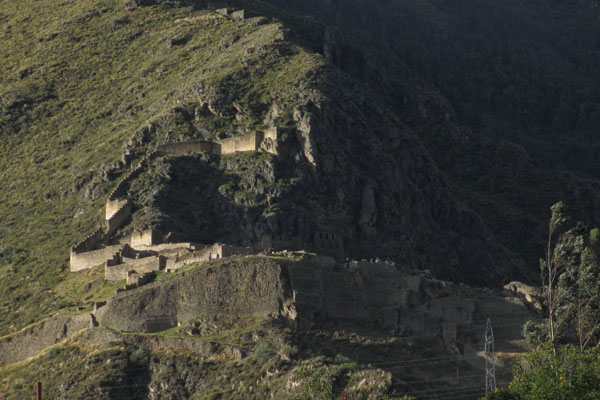
After a long day on the road, we arrived at Ollantaytambo and our Lodge, the very nice Pakaritampu Hotel, where we would spend three nights.  The contrast between Abancay and Ollantaytambo was very distinct.  I was glad that we were spending 3 nights at Ollantaytambo, not at Abancay.  Among other attractions, Ollantaytambo is the site of the second most noted Incan ruin in Peru.  We did not make the trip up to the ruins, but we enjoyed the view.

bimg_0756a

The next day, April 22, proved to be one of the most physically challenging days of my life.  I had questioned Silverio at dinner the night before about the difficulty of the hike down the west slope of Abra Malaga.  He left it up to me, and I decided to give it a go.  That was a mistake.  We drove from Ollataytambo up to the top of Abra Malaga, about 14,000 feet.  The drive was spectacular, with the beautiful mountain scenery.  Along the way we saw a cattle auction.

bimg_0705a

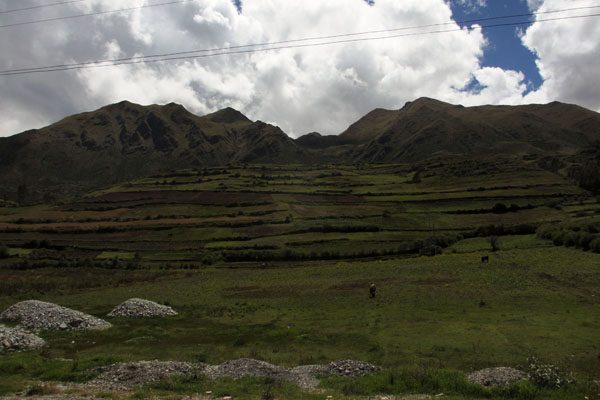
According to Silverio, a good bull (and all the males remain bulls) is worth about $500.  The ancient methods of agriculture are still practiced on the terraced steep mountain sides.

bimg_0709a

Not much room for tractors to turn around.  Thus, the importance of beasts of burden such as the bulls and the burros.

The design of the road should have been a tip-off as to the difficulty of the descent to follow, but I was oblivious.

bimg_0724a

The weather wasn’t very good.  Mist, wind and sporadic rain greeted us as we began our descent from the top of Abra Malaga.

bimg_0737a

There were some nice birds at the top, including 2 impressive Andean Flickers, and a Streak-throated Canastero.  We started down about 7:30 a.m., on what was billed as a 4 hour hike.

Fast forward, we finally got down 8 hours later, about 4:00 p.m., for “lunch“. Toward the end, my knees were nearly gone, and but for my decision to take my cane and wear knee braces, I would not have been able to walk out.  I crashed on my rear-end three times on the rain-drenched grass slopes, in the mud.  Thankfully, we were past the narrow mountain paths by then.  We nearly lost Adam as he careened down hill trying to catch his footing, coming to a halt stuck in a big mud hole, but standing tall.

As we left the treeless top of west slope of Abra Malaga we entered the Polyepsis woodlands, one of the few remaining in the world.

bimgp7518_edited-1

These are very short trees, with distinctive trunks and branches.  The Polylepsis contains some of the rarest birds in Peru.  I was very happy, after hours of searching the prior day, to finally see a Tapaculo, specifically a Puna Tapaculo.  This secretive, drab little bird walked out into an opening in the Polylepsis trees down-hill from us and I was greatly relieved that the pressure to find a Tapaculo was now off.

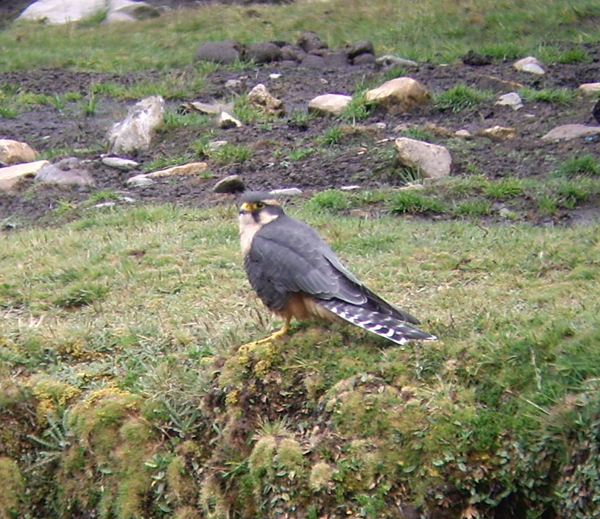
Among the birds that we saw during this marathon hike were Mountain Caracaras, Aplomado Falcons,

bimgp7544_edited-1

Andean Parakeets, an Olivaceous Thornbill, a White-browed Tit-spinetail, a Line-fronted Canastero, a Stripe-headed Antpitta, a rare and endangered Ash-breasted Tit-tyrant, Rufous-breasted Chat-Tyrant, Brown-backed Chat-Tyrants, D’Orbigny’s Chat-Tyrants, Rufous-naped Ground Tyrants, a Puna Ground Tyrant, Cinereous Ground Tyrants, and Plumbeous and Ash-breasted Sierra Finches. Actually, quite good in retrospect.

I was famished, exhausted and in pain by the time we exited the Valley and arrived at the van.  We devoured our late lunch and headed back to the hotel. Between my knees and Adam’s apparent altitude sickness, we had a bad night, but by morning, April 23, we were ready to go again, provided we stayed in or near the van and all walking was on a nearly flat road with the van close by and on call.  With those limitations, we actually had a good day of birding.  This time we went back up to the top and explored the east slope of Abra Malaga.

We missed a couple of the birds that I had hoped to see here: Andean Goose and Puna Ibis.  The weather, again, was not good.  There was a lot of fog (Neblina), and sporadic rain.  But we did get good looks at a lot of interesting birds today, either on the east slope of Abra Malaga or on the road back to Ollantaytambo. These included a nice flock of Yellow-billed Teal, good looks at a Variable Hawk, more Andean Lapwings, a spectacular Sword-billed Hummingbird, Cream-winged Cinclodes, a beautiful White-tufted Sunbeam, and an equally beautiful Great Sapphirewing, Puna Thistletails, Marcapata Spinetails, Rufous-breasted Chat-Tyrants, Brown-bellied Swallows, Spectacled Whitestarts, Citrine Warblers, a Paramo Pipit, Parodi’s Hemispingus (I love that name), more Scarlet-bellied Mountain Tanagers, White-browed Conebills, and both Black-throated and Masked Flowerpiercers, as well as the abundant Rufous-collared Sparrows.

Back at the hotel, I had time to bird the grounds and was pleasantly surprised to find a nice variety of birds right on the hotel grounds.  These were Spot-winged Pigeons, Sparkling Violet-ears, Green and White Hummingbirds, White-bellied Hummingbirds, and a female Rusty Flowerpiercer.

Yellow Rails on a Fall Day in Iowa

I have made several trips in the past few years for the specific purpose of seeing Yellow Rails.  This spring Barbara and I went to the Anahuac Grassland Preserve east of Houston, Texas to participate in one of the annual “Rail Hunts” sponsored by Friends of Anahuac.  I reported on that trip earlier on this blog.  Suffice it to say that effort was extremely difficult and, in the end, fruitless.   Yellow Rail has been the only ABA Code 1 or Code 2 species that (1) I have never seen, and (2) can be seen regularly, though rarely, in Iowa.  So, if I could find one in Iowa, I would have a double delight-both a North American and an Iowa Life Bird.

A few years ago Carl Kurtz reported on the Iowa Bird Line that while harvesting prairie seed on his farm near St. Anthony, Iowa, he has seen Yellow Rails flush from the prairie grass in front of his moving combine.  I met Carl about 10 years ago when I went on the Board of Trustees of the Nature Conservancy (Iowa Chapter).  Carl had been a member for some time before I joined the Board.  About a month ago I contacted Carl and asked if it would be OK with him if I came up and rode the combine with him when he harvests this year, to try to add Yellow Rail to my Life List.  Last Saturday (October 16) he called me and told me that he had seen a Yellow Rail that day while harvesting, and that if I wished to come up to his farm on Sunday, if it wasn’t raining, he would be continuing the harvest on the field where the Yellow Rail showed up on Saturday.  I accepted readily.  Staining the deck would have to wait.

It did not rain on Sunday, and, in fact, it was a beautiful, sunny autumn day.   I arrived at Carl’s farm about 1:30.  He was just gassing up the combine.  I climbed up and we drove to the field and began combining the prairie seeds.  Within minutes, a Yellow Rail flushed from a few feet in front of the combine, and fluttered away from us  to a nearby ravine.  I got a great view, particularly advantageous from 10 feet up on the combine for spotting from above the white trailing wing patch which quickly differentiates the Yellow Rail from the Sora Rail.  We were both elated.  Carl asked if I wanted to go back, or continue with the combining.  I quickly accepted his offer to stay, and within an hour we had flushed 2 more Yellow Rails, both equally close and clear in the brilliant autumn sunlight against the golden-brown of the prairie.  After the 3rd sighting, Carl offered to let me operate (drive only; I certainly couldn’t be trusted with the other controls) the combine.  Although I grew up on a farm, we did not have a combine while I was there, so this was an exciting, first time experience.  I readily accepted and did a darn good job, too.  We finished the field and drove back to the house, where Linda, Carl’s wife, served delicious hot Lattes and homemade banana-chocolate chip bread.   This was the frosting on the cake of a truly delightful and memorable day, especially due to the warmth and hospitality of the Kurtz’s on their Iowa farm.

Carl then took me for a drive to see another 80 acre prairie that he has developed from what was formerly a badly degraded pasture.  He bought it a few years ago and it is now a place of rare beauty.  A small stream meanders between the hills and the area was populated by pheasants and sparrows, particularly a large number of Vesper Sparrows.

The Yellow Rails become my North American Life Bird number 706, and Iowa Life Bird number 328.  Thank you, Carl and Linda.

Birding in Belize: Crooked Tree, Lamani, and Chan Chich

Barbara and I planned a trip to Belize with the help of Caligo Ventures.  Our primary objectives were to see the interior of Belize, find birds and see the Mayan ruins.  We were scheduled to leave Des Moines on January 11th, fly Delta to Atlanta and Delta from Atlanta to Belize City.  Bad weather in Atlanta required a quick change of plans.  We ended up going through Houston on American and arriving in Belize City pretty much on schedule as if we had been able to keep our original itinerary. 

The weather was generaly quite warm and humid in Belize although the nights and early mornings were very comfortable.  We were met at the airport by the driver arranged for by Crooked Tree Lodge, where we were staying for 3 nights.  Our cabin, one of only 6 at the Lodge, was spartan, but clean.  The lodge where we took our meals was nice, and the food was very good.  There were very few guests, so we nearly had the place to ourselves.  The next morning we were out early with our guide, Glenn Crawford, for a morning bird walk.  Crooked Tree is in flat terrain, on an island surrounded by fresh water bodies.  Most of the birds we saw that first morning were the same ones we see regularly in migration in the U.S.  Glenn is a 4th generation Belizian and knows the territory and the birds.  We learned of the local agricultural activities, including harvesting cashews, perhaps the biggest local crop. (Later, due to the hospitality of a young couple that joined us for dinner at the Lodge, we sampled the local Cashew Wine.  It reminded us of a nice Sherry.) Much of the land is quite sandy and still in a natural condition, providing good habitat.  We walked hard and covered a good deal of territory. 
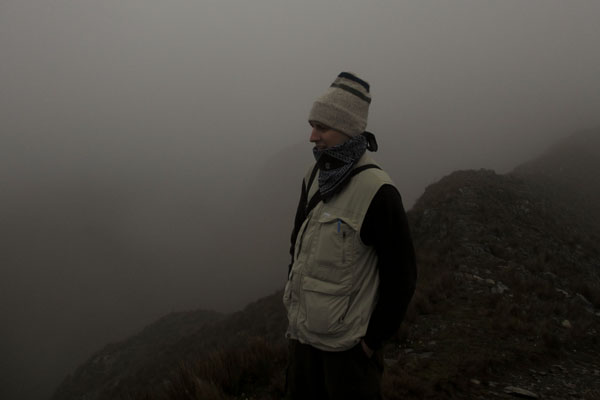
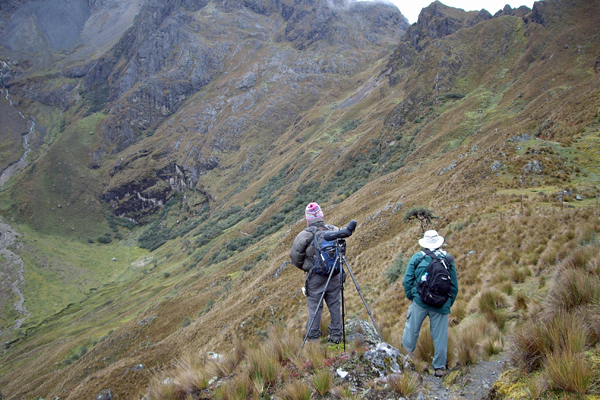
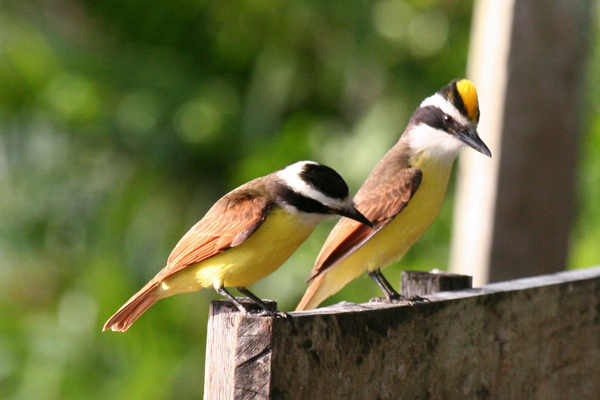
Good birds for the morning, which started at 6:30 a.m., included a Gray-necked Wood Rail (previously seen in Costa Rica), and the following new life birds:  Pale-vented Pigeon, Plain-breasted Ground Dove, Olive-throated Parakeets, Rufous-tailed Hummingbirds (numerous), Red-vented Woodpecker (formerly known as Yucatan Woodpecker), Lineated Woodpecker, Ivory-billed Woodcreeper,  Tropical Pewee, Yucatan Flycatcher, Variable Seedeaters, Blue-black Grassquits, and Black-cowled Orioles.  Substantial numbers of other birds of species I have previously seen were also present.  We were excited to see the Great Kiskadees in courtship mode. 

kiskadee

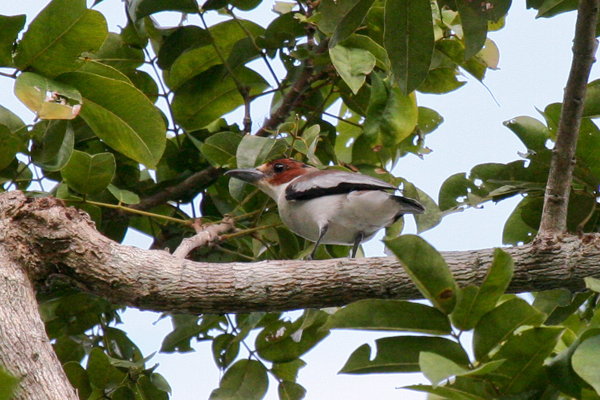
We had lunch and ventured out around the Lodge area for a couple of hours before Glenn met us for an afternoon walk.  My most exciting finds were a Black-crowned Tityra and a Spot-breasted Wood -wren. 

black-crowned-tityra

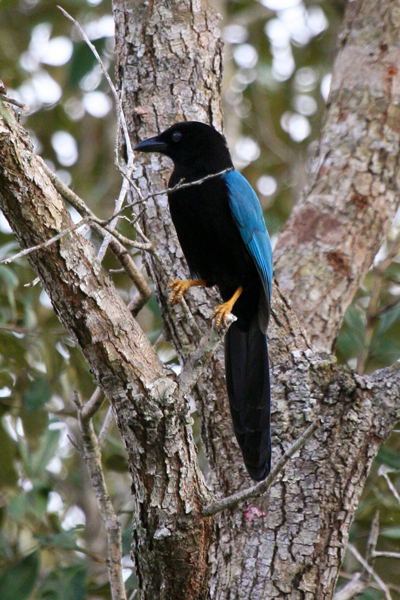
Migratory wood warblers of the various species that we commonly see in spring or fall, were present in good numbers.  We spent the afternoon with Glenn, exploring other areas near the Lodge.  Among the more interesting  birds spotted this afternoon were: Crane Hawk (not new), Ruddy Quail-dove (a fleeting glimpse), Canivet’s Emerald, and, after a long search, the best bird of our stay at Crooked Tree, Yucatan Jays.  There were at least 30 of these beautiful birds harvesting the insects that were leaving their burrows in the woods to escape a marauding Army Ant swarm.  They ignored us and allowed close approaches in their greed for more bugs.

yucatan-jay

Day 2 at Crooked Tree began with a short drive to the lagoon, where we were joined by 2 other couples for an early morning cruise.  Glenn’s brother, Rudy, served as guide and another brother, Robert, was in charge of piloting the boat.  Rudy proved himself very proficient in spotting and identifying the birds.  Today produced several more interesting birds, including a Bat Falcon, numbers of common water birds, including a Bare-throated Tiger-heron and numbers of Black-bellied Whistling Ducks, a Lesser Yellow-headed Vulture, a Black-collared Hawk, a Black-headed Trogon, a Yellow-billed Cacique and a Yellow-tailed Oriole. 

black-headed-trogon

We returned to the Lodge for the afternoon and birded on our own for the rest of the day.  The next morning Rudy drove us the 1 hour to the Lamani Outpost Lodge river transfer point on the New River, where we boarded a fast boat for the long ride up-river (south) to the Lamanai Outpost Lodge.  The morning was clear and cool and the boat ride was fantastic.  For the next 3 nights we would be staying at Lamanai Outpost Lodge and would include in our itinerary a tour of the Mayan temples at Lamani. I will write about that segment of our trip soon.

Late October Sparrows in Iowa

I participated in the Iowa Ornithologists’ Union field trips this past weekend.  These were run in connnection with the fall meeting of the IOU at Neal Smith Prairie Preserve near Prairie City.  On both days I elected to participate in the field trip which  “walked” the prairie in search of Smith’s Longspurs, Lapland Longspurs and the various sparrows (e.g., the Emerizinae Subfamily) that can be expected in central Iowa in late October.  No Smith’s Longspurs were seen, probably because they have not gotten this far south yet.  A few Lapland Longspurs were observed in flight.  The sparrows were a better story. 

 The best observations were of LeConte’s Sparrows.  We saw several each day and they made themselves very obvious by coming within a few feet of the group and posing close-by on whatever little stalks or twigs that they could find.  The photographers in the group were especially ecstatic.  Everyone remarked that never before had they observed so many LeContes at such close and sustained range.  Clearly, they were the highlight for many of the birders, including me. 

The other sparrows that I was able to identify were:  White-throated, White-crowned, Savannah, Vesper, Swamp, Song, Fox, Lincoln’s, Harris’s,  Field and Juncos.  Some other particpants reported finding a Clay-colored, one or two early Tree Sparrows, and a late Grasshopper Sparrow.  Oddly, I do not recall if anyone saw any Chipping Sparrows, and I would have thought they would still be present.   Another less surprisingly absent (I believe) species was Nelson’s.  Henslow’s, which are now quite common at Neal Smith in summer, were all gone.  Nor, as I recall, did anyone see a Lark Sparrow. 

It looks like a good year in Iowa for the northern finches.  A fair number of Pine Siskins and a few Purple Finches were observed.

Fawn Ornaments


fawns-1

This week, on the hottest afternoon of our summer, we had 2 little fawn ornaments enjoying the shade in our front yard.  When I came home about 4:00 p.m. I was able, without spooking them, to drive past them and get in the house to alert my wife to their presence.  The twins were not a bit camera-shy, so she was able to get some nice pictures. 

fawns-2

fawns-3

And thus we had our own private experience of the Afternoon of the Fawn(s).  If you are interested in some really ethereal poetry, check out Mallarme’s poem bearing that title, (inexplicably misspelling “Fawn”, as “Faun”).  Or, perhaps I misunderstood it.

fawns-4