I have decided to not follow my usual practice of reporting on Emptynestbirder.com chronologicaly and instead take a different approach. So, Installment 1 was Kiwis. Installment 2 was my Pelagic trip. And Installment 3 herewith is Endemic Families, and “new families” for me.
The main reason Empty Nest Birder initially planned this trip to New Zealand was to see one species of bird in as many new endemic families of birds as are possible in New Zealand. There are 6 endemic families of birds in New Zealand (families which have “species” that exist only in New Zealand). Here is a short explanation of bird families and species. Carl Linnaeus of Sweden lived from 1707 until 1778. He created a system of classification of all living things, including the taxonomy (classification) of birds. The Linnaean system of classification of birds is still followed to a degree by ornithologists. and is as follows:
- KINGDOM: Animalia (animals);
- PHYLUM: Chordata (having a spine);
- CLASS: Aves (birds);
- ORDER: (there are now 50 Orders of birds);
- FAMILY: (according to the Clements list managed by the Cornell University Ornithology Department, there are now 253 families of birds);
- Genus; Genus is a classification that I do not record.
- SPECIES (genetic testing has led to expansion of the number of recognized species to 11,145, an increase of about 100 from 2023).
For the past 5 to 10 years or so, driven mostly by advancing age, emptynestbirder has focused on seeing as many of the 253 Families of Birds as possible. I had a banner year in 2024. A trip to Ghana in January, previously reported on this blog, produced 5 new Families (out of 5 possibilities in Ghana). The trip to New Zealand produced a gain of 5 new Families (out of 6 possibilities in New Zealand).
The 6 endemic families in New Zealand, and the species in each endemic family, are as follows:
- 1-Kiwis (Apterygidae, usually seen in the wild only at night: 5 species: Rowi, Brown, Tokoeka, Great Spotted and Little Spotted);
- 2-Stitchbird (Notiomystidae with 1 specie, also called “Stitchbird”);
- 3. New Zealaand Parrots (Strigopidae with 3 species, Kaka, Kea and the very rare Kakapo);
- 4-Whiteheads (Mohouidae, with 3 species, Whitehead, Yellowhead and Brown Creeper);
- 5- New Zealand Wattlebirds (Calleaidae, with 3 species, North and South Island Saddlebacks and the rare Kokako); and the one I failed to see,
- 6- New Zealand Wrens (Acanthisittidae, with 2 species, Rifleman and Rock Wren).
This was my second trip to New Zealand. In 1994 my employer sent me to Australia for a meeting. I wanted to see New Zealand so I went 10 days early to see it. I had not, after age 13, followed my boyhood interest in birds because between the ages of 13 and 65, I concentrated on my education, sports, friends, marriage, fatherhood and the need to make a living. Consequently I was largely ignorant of birds that I had not seen around the farms I lived on in northern Iowa for my first 13 years or worked on in my later teens. So, although I tried to see some birds in New Zealand in 1994, I did not know much about NZ birds or the ethics of birding. I went to New Zealand mostly to see the countryside and the people, and taste the food and wine. An unexpected diversion was skiing in the snow and ice covered Remarkable Mountains near Queenstown.
I went to Rotorua in 1994 because it was, and still is, the center of Maori culture. I saw a Brown Kiwi in Rotorua, but it was a captive bird. After I retired in 2000 and gone on my first of many later international birding trips, I started a world bird list, and listed Brown Kiwi. I gradually became aware that it was probably not considered “listable” by the birding community because it was a captive. So, when I went to New Zealand this time, 30 plus years later, I went on a night walk at Zealandia in Wellington. The reservation was for my wife and I, but she did not want to go, so my son-in-law took her place. On that walk we both saw several Little Spotted Kiwis, my first legitimate “listable” kiwi.
Long before starting my 2nd trip to New Zealand I had reserved 6 places for a night walk for Tokoeka (Brown) Kiwis at Stewart Island. Later I discovered that would conflict with a pelagic bird tour I badly wanted to take on the waters around New Zealand and the subject of Installment 2 on emptynestbirder for New Zealand. New Zealand is sometimes described as the “capital of the world” for pelagic birding. So having seen my first listable New Zealand endemic, Little Spotted Kiwis at Zealandia, I arranged to leave Stewart Island before the long-scheduled night walk for Tokoeka Kiwis, and travelled alone to Tutukaka north of Auckland to embark on a pelagic birding trip with Petrel Station Seabird Tours. The rest of my family all stayed on Stewart Island for another day in order to go on the night kiwi walk on Stewart Island. That was a good decision for them, because they all had great and easy views of Tokoeka Kiwis. Pictures, including a fine video, taken that night are in Installment 1 of this New Zealand blog.
On the morning after our night walk at Zealandia, Adam and I returned to Zealandia to take an unguided walk. We saw many Kakas, one of the New Zealand Parrot species. Then I stopped to sit for a while. Adam went on ahead and before he returned, I became impatient and took off from my resting area, unwisely, by myself. I walked what seemed like a long time and was about to give up when a New Zealander named Ian came to my rescue and offered to help me walk up to the Stitchbird feeding station. Just before we came to the feeding station, Ian spotted a flock of Whiteheads high up in the sunlit canopy. I looked up through my binoculars, and after seeing the Whiteheads, as I lowered my binoculars I lost my balance on the steep trail and fell, hard. Ian, luckily an emergency medic, expertly took charge, cautioned me not to hurry getting up, applied an antibacterial to my head, helped me up and nursed me back to functionality, using his learned skills and appropriate medical emergency supplies. How lucky I was to be in Ian’s company. We proceeded the few more feet to the feeding station, where we saw many Stitchbirds, both males and females, at close range, along with several Bellbirds. So, the North Island, at Zealandia produced for me sightings of 4 endemic families, Little Spotted Kiwis, New Zealand Parrots (Kakas), Whiteheads and Stitchbirds. And we still had days to go.
On our last day at Wellington (Day 5 in New Zealand) we met Sally and her family at the Kapiti Boat Club in Paraparaumu, about an hour’s drive from Wellington. Boats depart from the Boat Club and arrive in about 15 minutes at Kapiti (pronunciation emphasis on the “Kap” as in “all”) Island. Kapiti Island is a predator-free and protected reserve where endemic species thrive, including Kakas, Stitchbirds, Little Spotted Kiwis, North Island Kokako, (a rare species of the Wattlebird family) Whiteheads and North Island Saddlebacks, bothseen on Kapiti and pictured below:
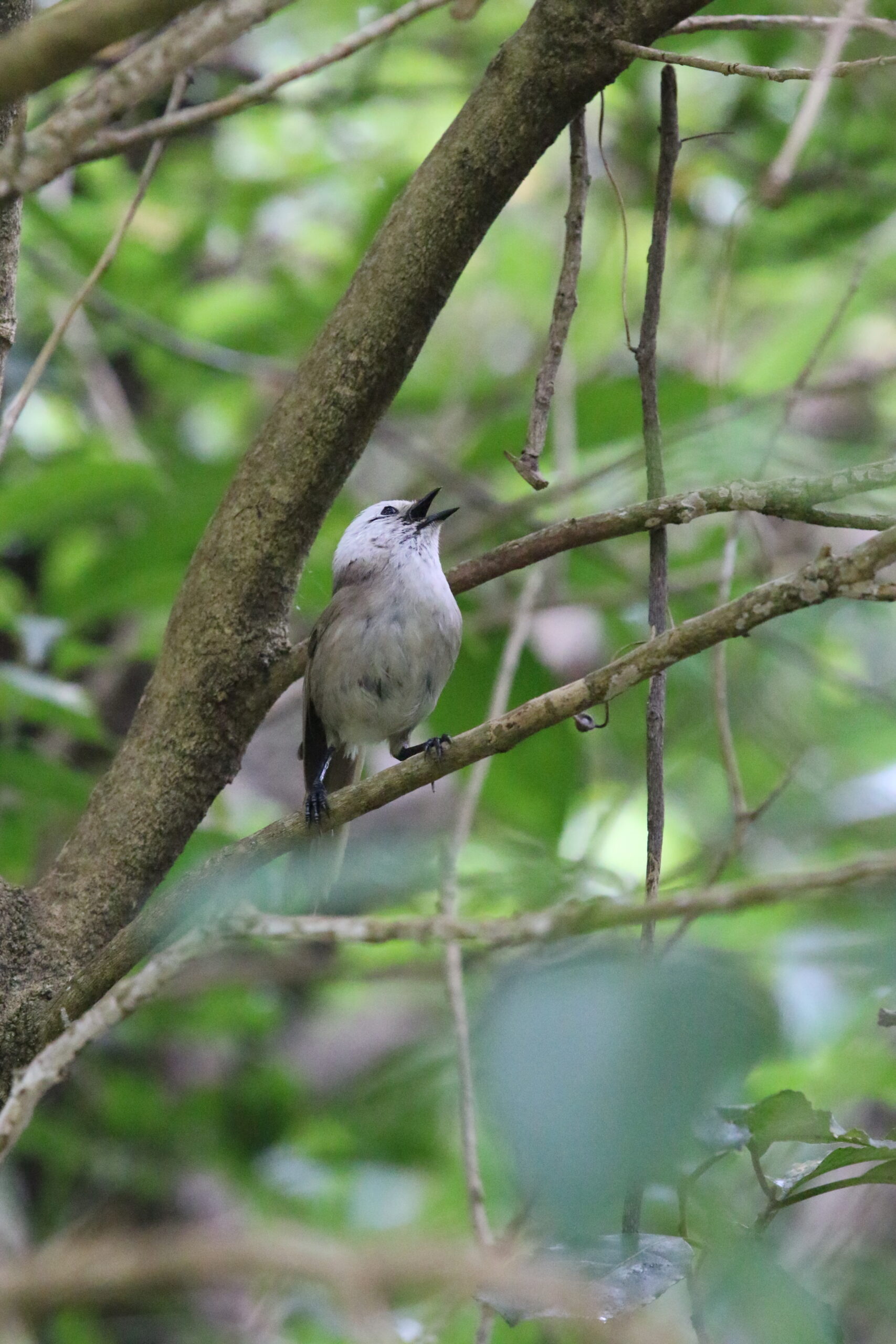

Kakas were numerous both at Zealandia and at Kapiti Island as well as later at Stewart Island. Here are several pictures of Kakas, the most common species of New Zealand Parrots in predator free locations.
Insert video PXL 20241201-01091549
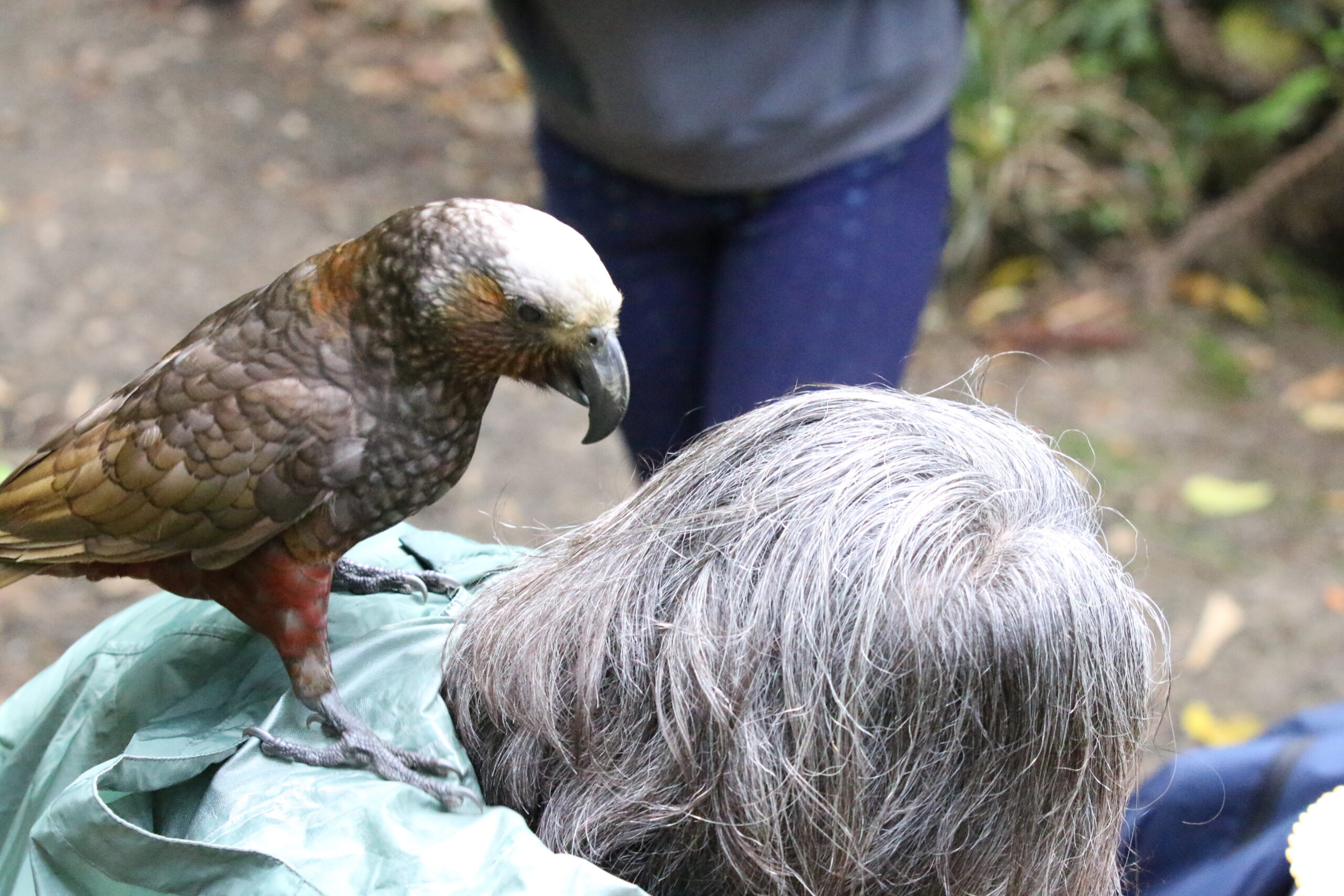
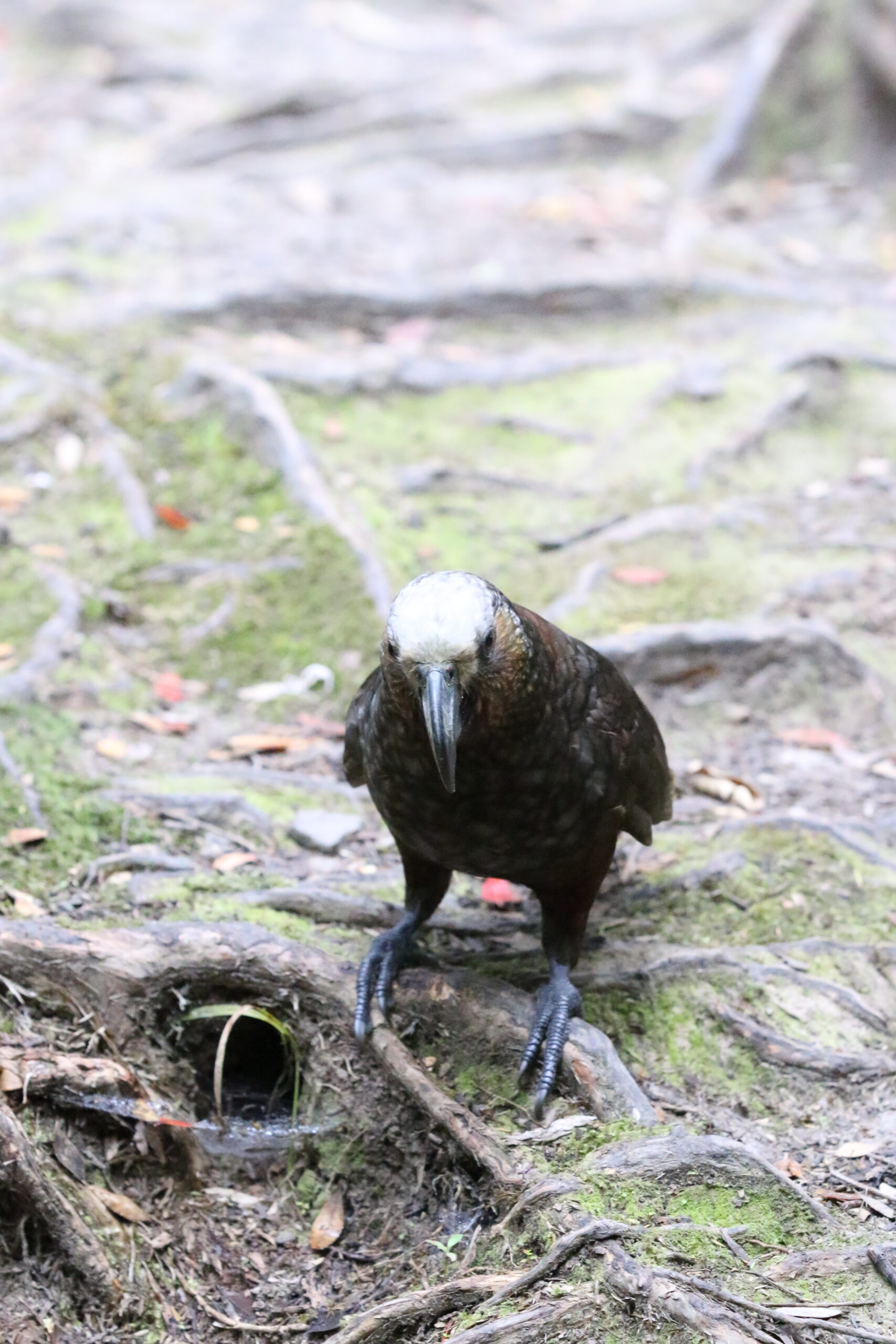
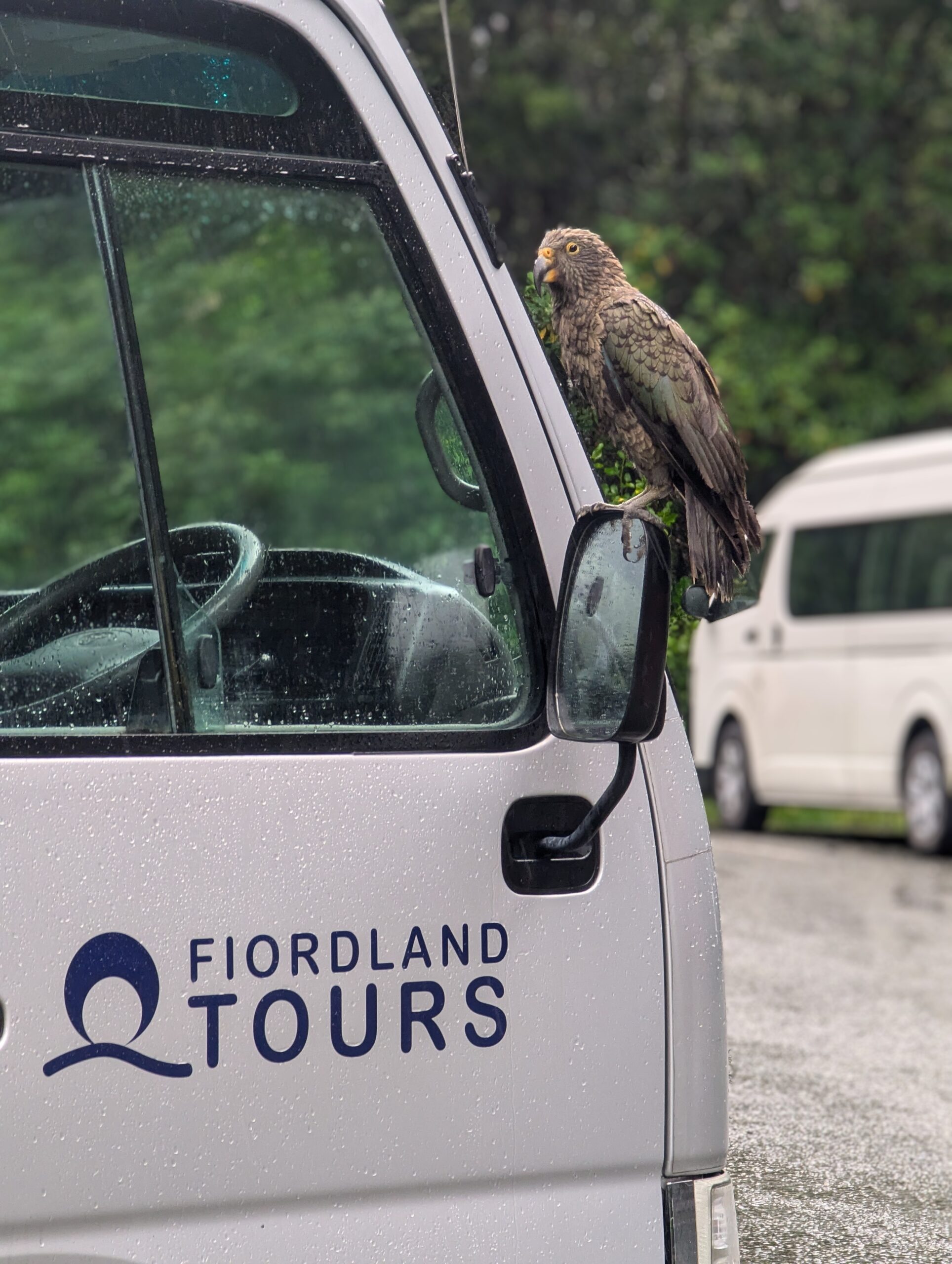
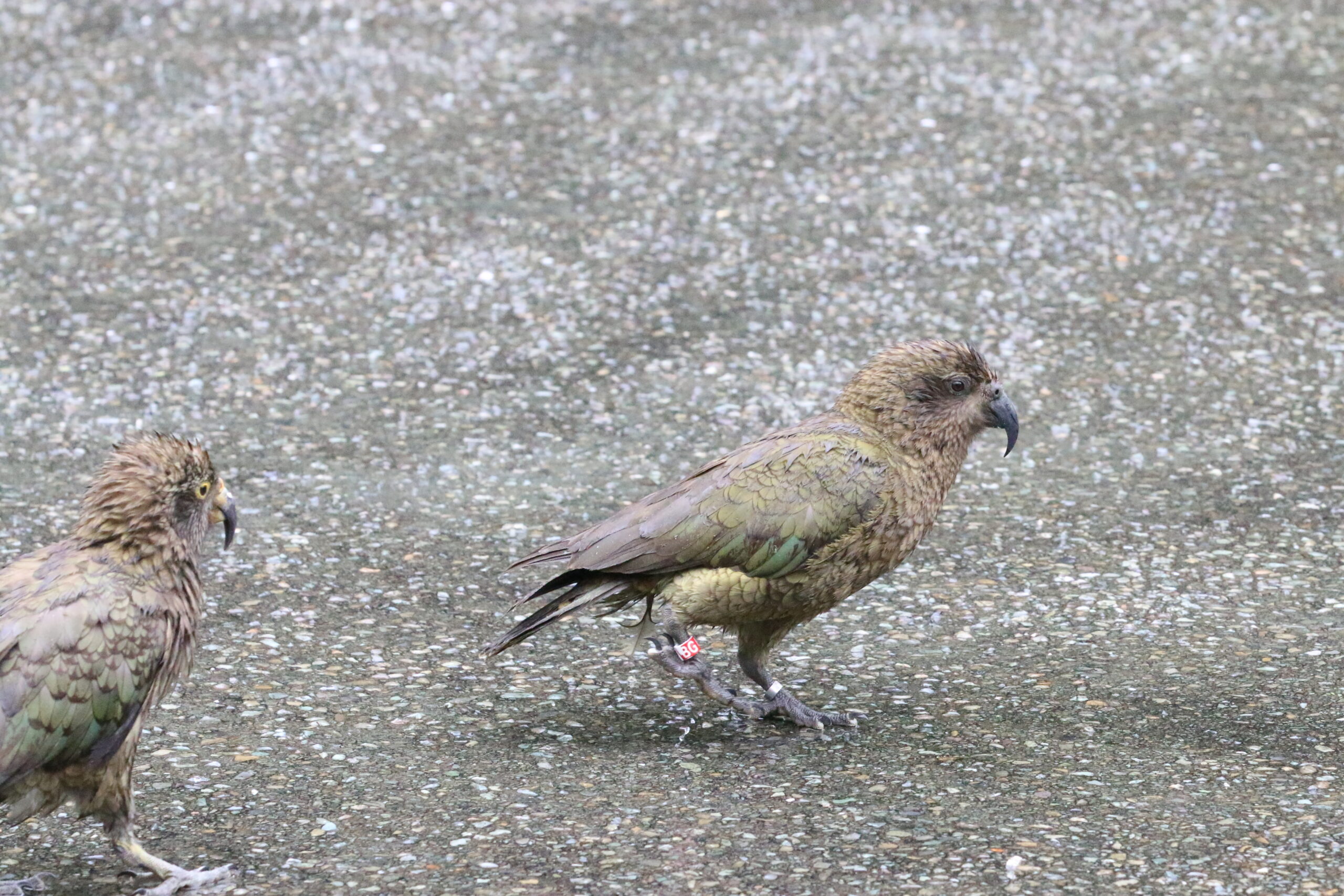
We saw a second species of New Zealand Parrots, several Keas, in a parking lot after our cruise on Milford Sound on Day 7. They were very tame and approachable, even mildly aggressive, as is their reputation.
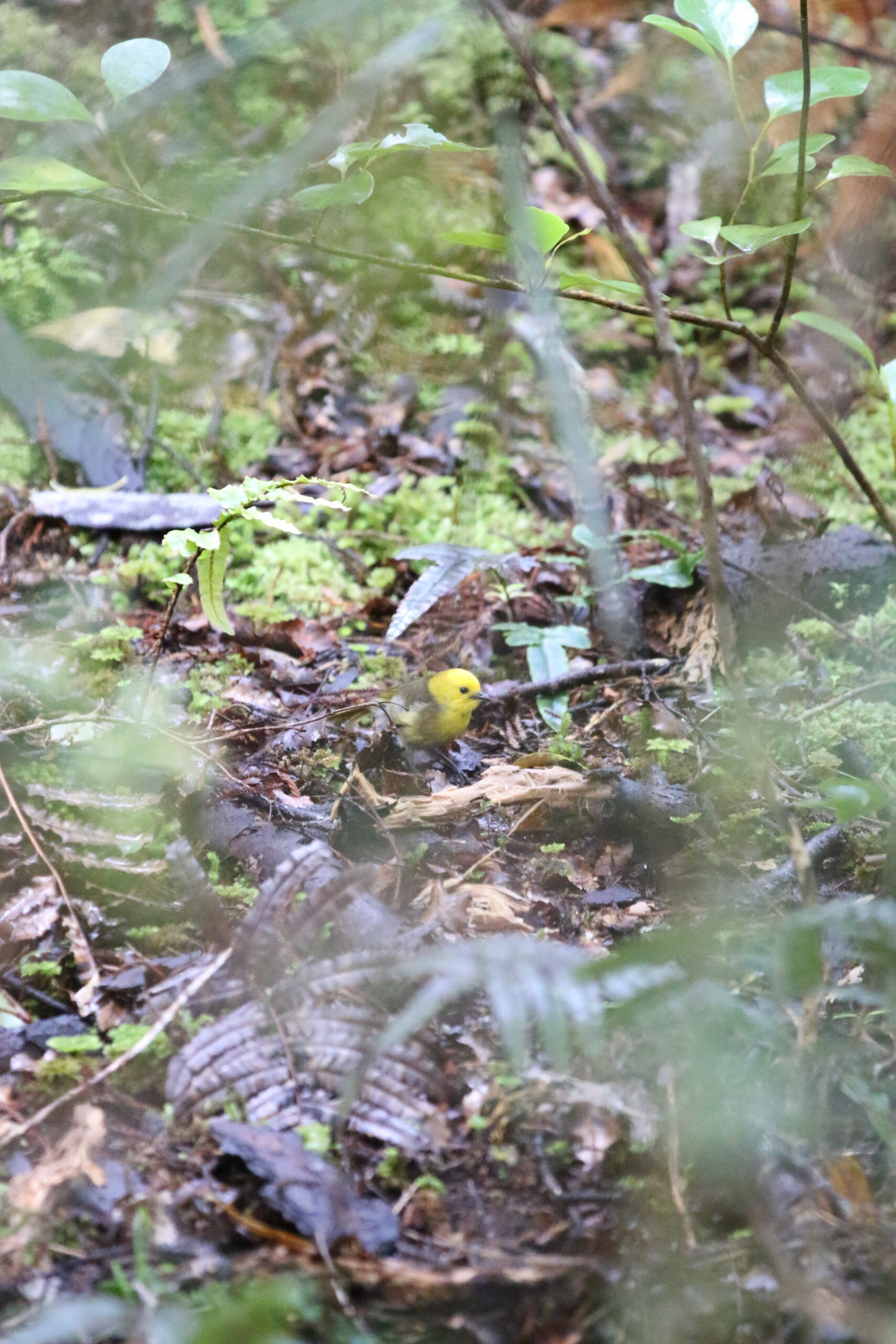
Later, during our walk on Ulva Island at Stewart Island, we saw a second species of Whitehead a “Yellowhead” which, in spite of its name, is a species in the Whitehead (Mohouidae) Family. The Whitehead species, found only on the North Island, was seen at Zealandia and on Kapiti Island
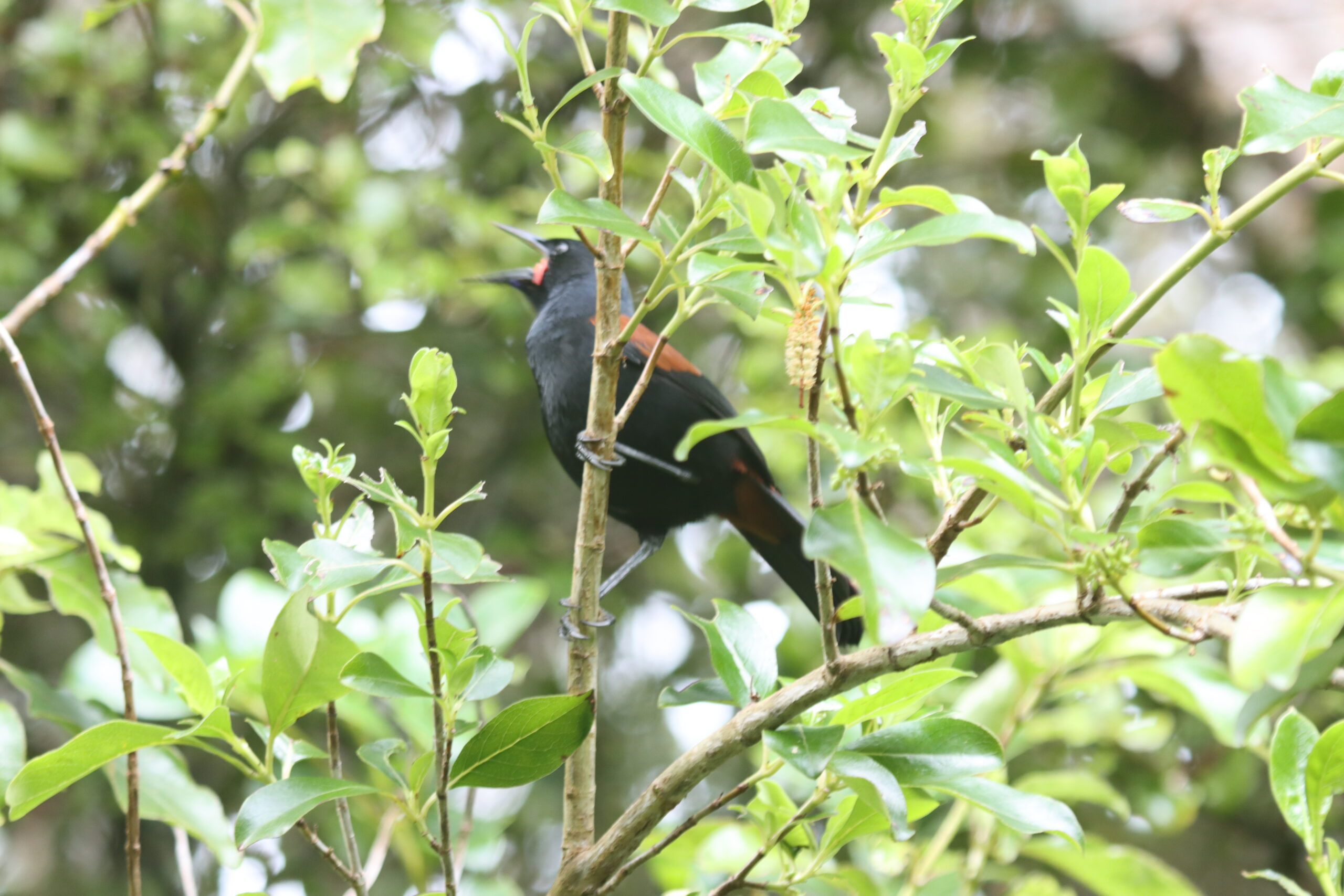
The 5th endemic family, New Zealand Wattlebirds (Calleaidae) is represented by 3 species: a rare species, Kokako, which we did not see and North Island Saddleback and South Island Saddleback, both of which we saw. Here is a South Island Saddleback.
None of us saw any New Zealand Wrens, the 6th potential new Endemic Family.
Emptynestbirder has, including New Zealand, now seen 235 out of 253 bird families, for about 93%. I added 4 new families in New Zealand and now can legitimately list a 5th, Kiwi, by substituting a Little Spotted Kiwi for a Brown Kiwi. I have no plans to look for more families, but anything is possible. I do plan to go to Suriname within the next year for additional species that should put me over 4,000 species. Birding, with emphasis on my yard, my State of Iowa, North America and world-wide has been a good hobby in my retirement.
My next blog will focus on the endemic species of New Zealand that are not members of an endemic family in New Zealand (covered in this Part 3), nor seen on my pelagic trip (covered in Part 2. Those in that category that were new to me include a duck, Brown Teal, the rare Fiordland Crested Penguin, Spotted Shag, Black-fronted Tern, Red-crowned Parakeet, Bellbird, Tomtit, North Island Robin and South Island Robin.