Serengeti – The Migration

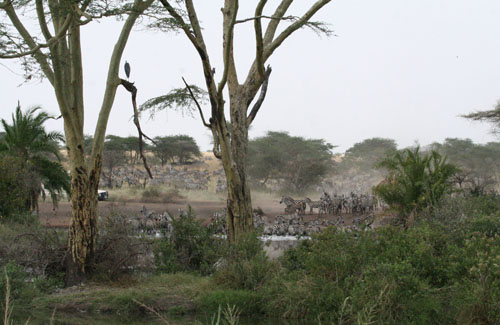
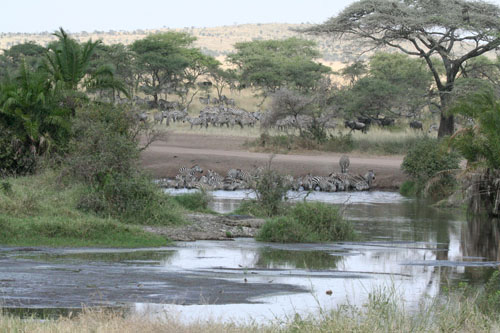
Day 10 we left Kensington Tented Camp for a day in the Serengeti on our way to our last camp, Olakira Tented Camp.  What a day it turned out to be.  Very soon after entering the Park we began to see and hear hundreds, then thousands, of moving Zebras, now accompanied by an equal or greater number of Wildebeests.  The Zebras were very loud, some braying and some barking.  As far as we could see, for hours, the grasslands were full of moving animals, heading north toward better grass and water.  The numbers were amazing.
migration-1

I have no idea how many we saw on the move that day, but it had to be in excess of 100,000 of each of the two species.  This was what we most hoped to see in the Serengeti, and we were very fortunate to be in the right place at the right time to witness this great migration of large animals through the African grasslands.
migration-2

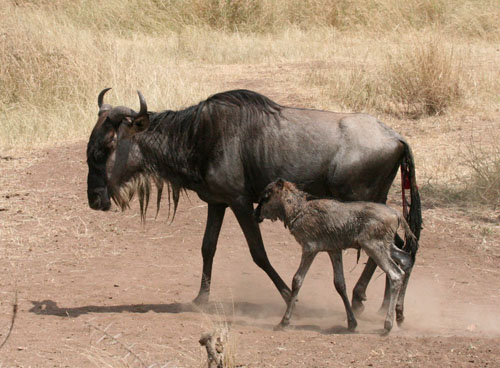
The Wildebeests were early in their birthing process here in the Serengeti, unlike at Ngorongoro Crater, where a few days earlier most of the females had calves in tow.  Here, very few had yet given birth.  One of the early arrivals, wet from the birth process and with umbilical cord attached, was up and running with its mother, who still carried the afterbirth with her as she joined in the march northward.
wildebeest

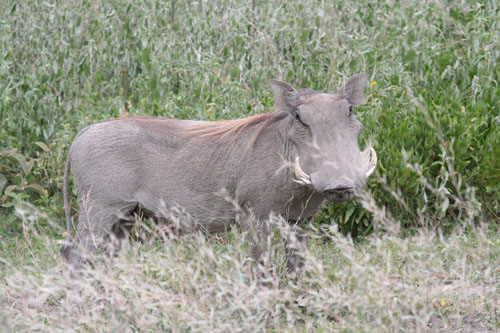
Interspersed with the Zebras and Wildebeests were Elephants, Hippos, our only Crocodile of the trip, a couple of Leopards in their usual tree habitat, Warthogs,
warthog

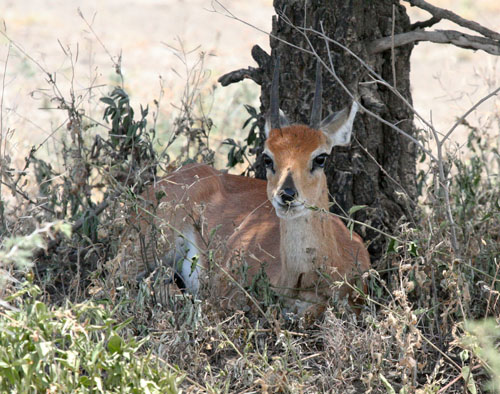
Lions, Townsend’s and Grant’s Gazelles, Topi, Hartebeests, a few Waterbucks, our first diminutive Steenbok (about the size of the little Dik-Diks that we had been seeing on a regular basis).
steenbok

This is prime time for the predators.  Among the most interesting of these were 3 beautiful Cheetahs, probably 3 brothers, that were on the hunt.
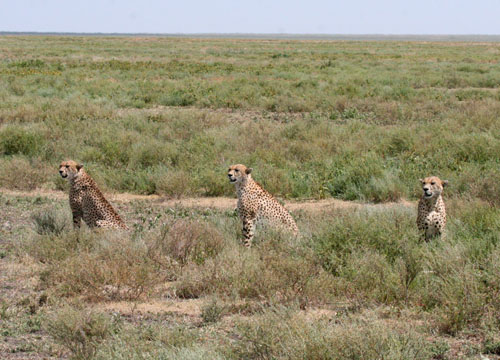
cheetah-3

We watched for quite some time as they stalked a small herd of Wildebeests, with no success.  As they watched their intended prey move away, the brothers decided to take a break and bask in the morning sun of the Serengeti.

We were able to get a close-up view of both Lesser and Greater Flamingos feeding in a shallow lake.
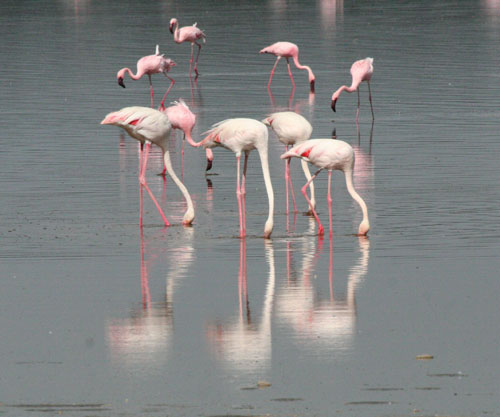
flamingos

A pair of Bat-eared Foxes were enjoying the late afternoon sun along the dirt track.
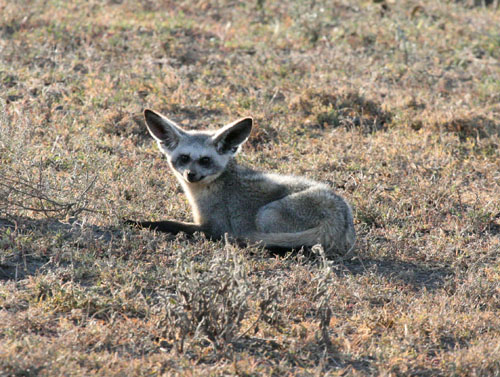
bat-eared-fox

This Two-banded Courser was walking through the grass.
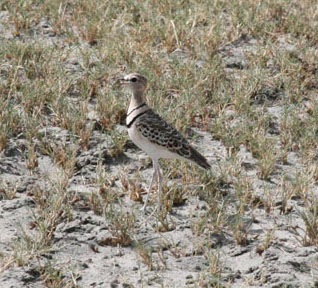
two-banded-courser

We saw all 3 of the Sandgrouse species that can be found in northern Tanzania.  This one is a Yellow-throated Sandgrouse, which was the most numerous that we saw.
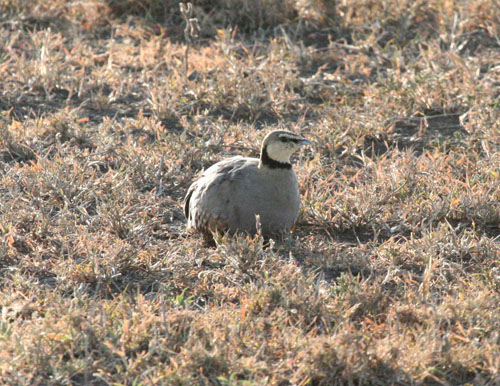
yellow-throated-sandgrouse

The Sandgrouse family is especially interesting to me, especially their ability to find water in deserts, and to survive in such harsh, dry conditions.

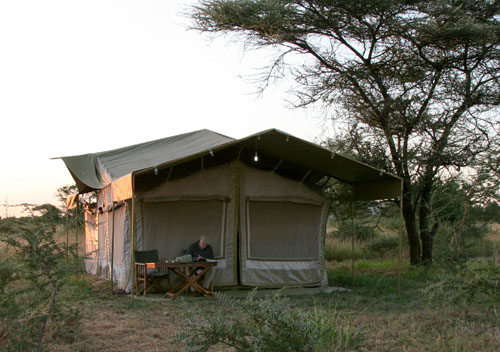
We arrived quite late in the day at Olakira Camp.  We were pleased with this facility.  This picture shows the “shower” system:  a couple of bags suspended above the tent, which would, upon our request, be filled with hot water by camp personnel.
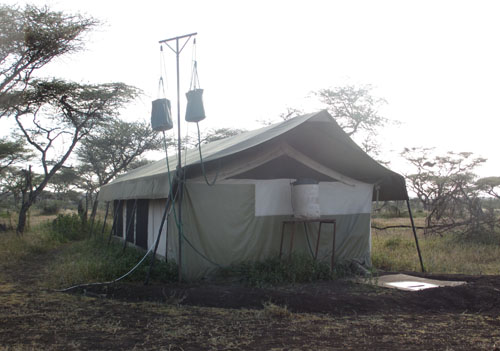
olakira-tent

The next day we saw more of the same types of animals that we had seen on our trip the prior day.  On our final morning we focused on trying to find Elands, Africa’s largest antelope.  This was the one remaining species of antelope that we had not been fortunate enough to find on the previous days.  Although Elands had been seen in the area in prior weeks, it seems that it had become too dry for them and they had moved on and we did not find any.

Our flight from the Serengeti to Arusha was late, and as a result we were very tight on time to transfer by car from Arusha to make our flight at Kilimanjaro.  With the help of one of the Kensington drivers, Jimmie, we made it with a few minutes to spare.

We were very pleased with our Safari in Tanzania.  The people were cordial, the country side was spectacular and the bird and animal life was abundant and at times dramatic.  Our lodging was suitable and the food was excellent.  We recommend it to others.
Tanzania – Olduvai Gorge and Serengeti

This was Day 7 of our safari.  Raymond picked us up at the Coffee Farm after an early breakfast.  We have a long drive ahead of us.  We will leave the Ngorongoro Conservation Area, driving northwest, and enter the Serengeti with a stop at the Olduvai Gorge.  Sometimes referred to as the “Cradle of Mankind”, this desolate and dry plateau marks the place where the Leakeys discovered the oldest known footprints of human beings.  Many believe that this is where humanity first evolved.  Over the next many millennia, humans spread northward into Europe, across Asia, into North America by way of the narrow channel between Siberia and Alaska, and thence south and east throughout North and South America.

We liked the Visitor Center displays, which provided a wonderful pictorial of the presumed changes in the Gorge over many centuries and the spread of mankind.  I also enjoyed a few minutes of quiet reflection on a wind-blown bench looking down over the Gorge.

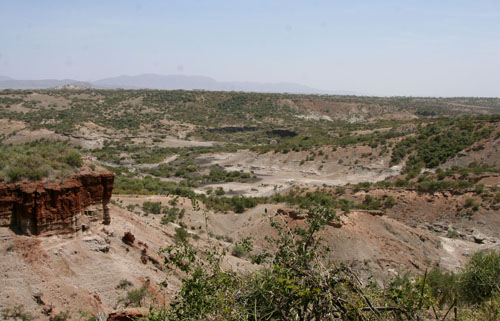
oldavui-gorge

Centuries of erosion expose many layers of vari-colored rock and sediment marking the historic, one could say cataclysmic, changes that the Gorge has undergone.

When we were satisfied with our visit to the Gorge and its Visitors Center, we quickly ate our box lunches before embarking into the Serengeti.  We expect to be on the road for about 6 hours before we reach our camp for the night, the Kensington Tented Camp.  This Camp lies just outside the Serengeti National Park, by the west-central part of the Tanzanian portion of the Park.

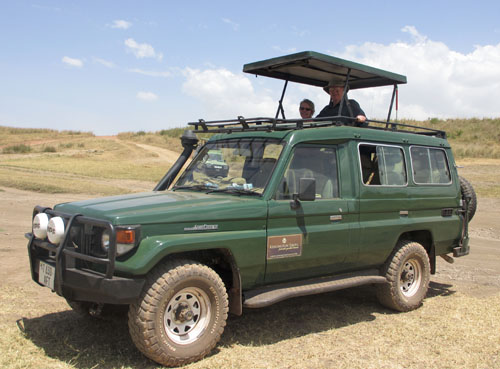
As we enter the Serengeti, we note the dryness of the landscape.  Even where there is ample grass, it is mostly brown.  The road is dusty and the wind is always blowing.  We protect ourselves from the dust of other Safarists as best we can, with Raymond ultimately breaking the turning mechanism on his driver’s side window as he constantly cranked it up for protection from dust and down for protection from the heat.  There were some stranded vehicles here and there with efforts being made to revive them with fluid or pumped up tires.  The courtesy of the driver/guides to one another was notable, with the exception of one particular company, whose vehicles invariably charged by at a high rate of speed with dust billowing in all directions. Here is our vehicle.

vehicle

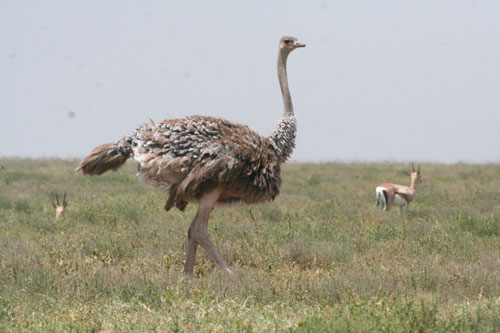
This is what we were hoping for.  Animals abound, often in mixed groups, such as Ostriches and Thompson’s Gazelles.

ostrich

We see the graceful Hartebeests in several locations.

hartebeest

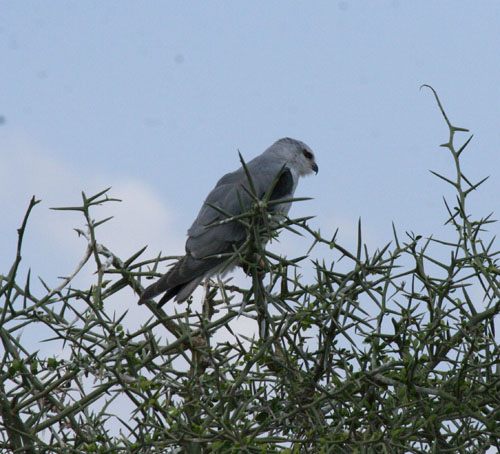
The first of several lovely little Pygmy Falcons perches near the road in an Acacia Tree.

pygmy-falcon

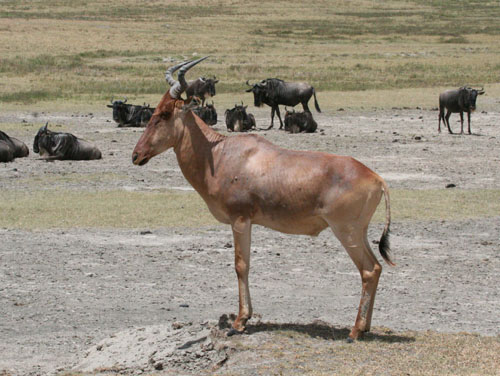
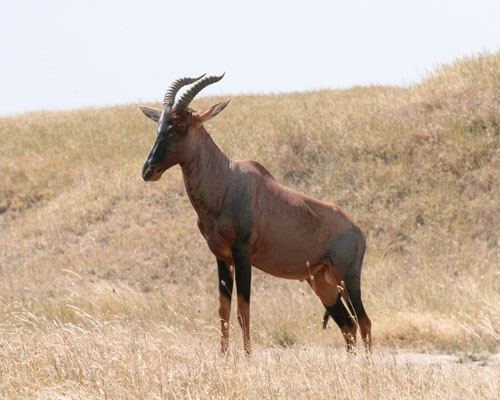
Topis occur sporadically on the landscape.

topi

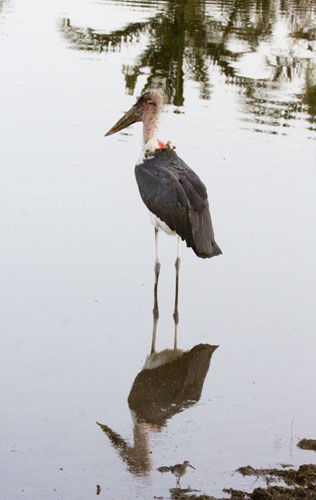
Dozens of ungainly Marabou Storks show up in trees around the waterholes, or on the wet shoreline.

marabou-stork

The predominant species are the Zebras and the Wildebeests. They number into the many thousands, with far more Zebras than Wildebeests seen today. They are noisy and nervous as they jostle toward and into the water, ready to plunge away, knowing that the Lions know they need to go there.  A Zebra kill lies under a tree by a waterhole, with Lions nearby.

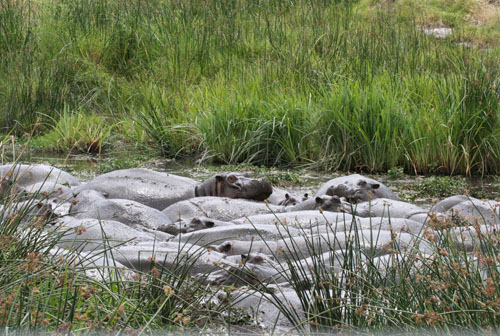
Hippos crowd into reeking water holes (sewers).

hippo-pool

The day grew long and we seemed to drive forever before jiggling over endless cow-paths and rocky, rutted stream crossings, to finally arrive at our Kensington Tented Camp.  We were warmly received, and quickly found out why:  we were the only guests.  It felt a bit lonesome.  Things did not go very well.  The “shower” didn’t work, so, even after a long, hot, and dusty drive, we went without one that evening.  The lights went out frequently.  The water supply for the shower and the toilet (you don’t drink this water) malfunctioned.  Dinner was good, and the staff tried their best to please.  We felt well protected by the Camp Guard, but I am not convinced his weapon would stop a lion.

guard

We could hear the lions and hyenas roaring during the night.  You don’t leave the tent at night without hailing a guard.  A few large insects showed up on the floor of our tent.  But, hey, it’s all in a day’s safari.

The next morning, Day 8, dawned bright and beautiful and I worked on my bird list on the “veranda” while sipping the morning coffee that was brought to our tent.

tent

The water supply has been restored, so we got wet.  After a very good breakfast, we were off again on the road through the local village, and toward the entrance to the Serengeti Park.  The birding was very good along this road and we saw quite a few new birds as we poked along toward the Gate.

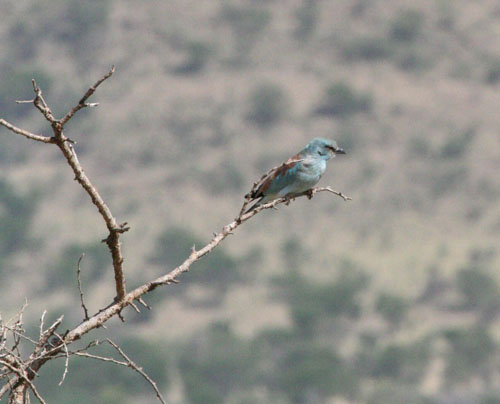
Rollers, both Lilac Breasted and this Eurasian Roller, perch in conspicuous spots.

roller

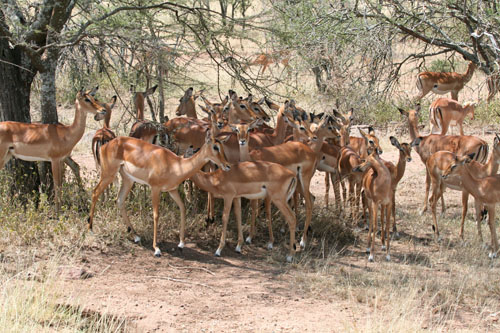
Elephants are everywhere.  Impalas (boys and girls segregated) show off their lovely colors.

impalas

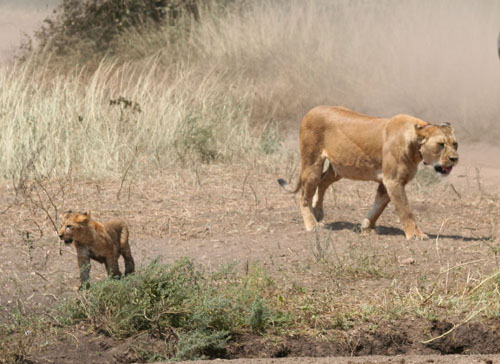
Lions, many with cubs, are quite common sights now.

lion-cub

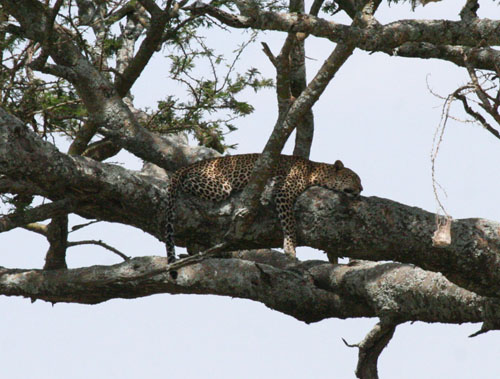
Later in the afternoon, we spot our first of several Leopards, always lounging in trees.

leopard

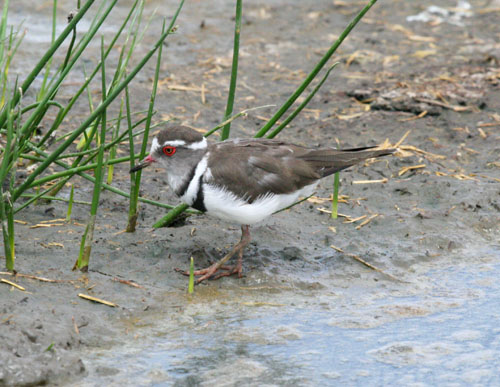
We can’t completely neglect the birds.  This Double Banded Plover makes a pretty picture.

plover

We endured another long and bumpy ride back to our Camp.  Tonight there are two more guests there.  The event of the night was a “cookout” in the wilderness away from the camp.  First, Raymond got lost trying to find the way to the cookout.  When we arrived at the designated tree, we were quite taken aback.  The staff had set up a lovely “dining room” in the grass under the tree, with hanging lanterns, all in the middle of nowhere.  We thoroughly enjoyed this bit of extravaganza.  I can’t imagine how much work it all was for the camp staff.  We got back to our tent quite late, exhausted from the long day on the dirt roads and the surprising ending.

Tanzania – Ngorongoro Crater

On day 5 of our safari we left Serena Lodge overlooking the Rift Valley near Lake Manyara and started toward Ngorongoro Crater.  The drive was a long one and we broke it up by stopping mid-morning at the Endoro Gate entrance to the Ngorongoro Conservation area.   There Barbara and I, accompanied by a very tall Park guide, hiked in mountainous terrain for several hours to see the “Elephant Caves” and the Endoro Water Falls.  We initially assumed our guide must be a member of the Maasai tribe because of his extreme height, but he was not; he was a member of the Sukuma tribe that occupies the western part of Tanzania near Lake Victoria.  They constitute the largest of the 126 tribes of Tanzania, numbering about 10,000,000 out of the total population of about 40,000,000.

As an aside, most of the 120 or so tribes are members of the extensive central and southern Africa Bantu family.  The nomadic, cattle-owning warrior-tribe, Maasai, are not part of the Bantu family, and there remains a sharp local distinction between them and most other Tanzanians.  Until recently in their histories, each of the 126 tribes spoke a different, though often somewhat related language with Bantu roots.  These many languages are gradually being displaced by a common Bantu lingua franca, Seswahili, which has gained national acceptance, and international as well, as there are a number of Bantu-dominated societies in other African countries.  Almost all of the Tanzanians we encountered also speak English, many quite well, others rudimentary.  Raymond is a member of the prominent Chagga tribe generally located along the eastern coast of Tanzania and inland from there.  They are noted for their entrepreneurial attitudes, and certainly that was evident from our exposure to the many guides, most of whom are Chagga.  Raymond studied English (British style) in elementary school, and at the secondary level all classes are taught in English rather than in Swahili.

The hike to the Elephant Caves was longer, hotter, and more strenuous than we anticipated.  We finally arrived after a couple of hours on the trail.  It seemed like more!  We saw a few birds along the trail, but nothing very exciting.  Our guide was aware of our interest, however, and made a good effort to point out those few birds that could be seen along the tree-shrouded trail.  He knew a lot about the local plants and birds, including the scientific names.  He would love to go to college and become a biologist, but at his age, 30, that will be tough.

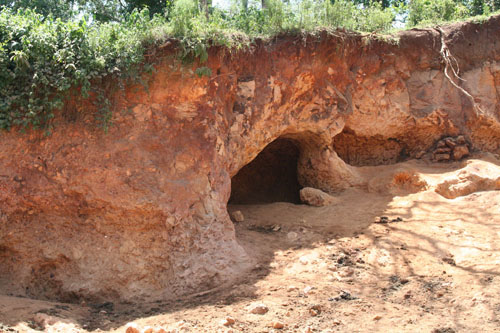
The Elephant Caves were not impressive.

elephant-caves

The clay along the river in this area contains minerals that elephants crave.  For centuries they have come here to dig up the clay and eat it.  A few years ago, as a result of exceptionally heavy rains, the wall of the caves facing the river collapsed, so that the cave is now quite small.  The elephants still come and eat away at the wall.  Maybe someday they will create another good-sized cave.  We had taken quite a long time to hike up to the cave.  Our guide suggested that we might want to skip the Endoro Water Falls because the season had been very dry and there was very little water in the river.  We readily agreed.

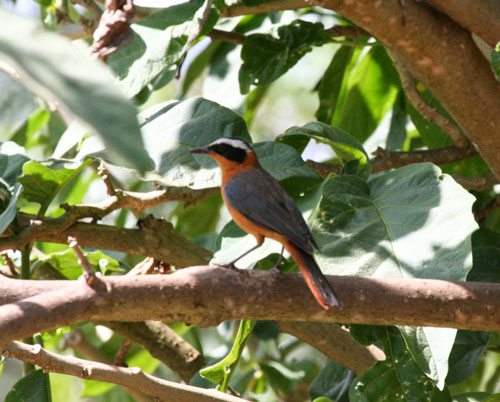
After a quick box lunch at the parking lot of Endoro Gate, we headed off for our lodging for the night, near Ngorongoro Crater.  Originally we had been tentatively booked into the Sopa Lodge, which is an upscale lodge on the grounds of the Ngorongoro Conservation area, but it was over-booked.  Our back-up was an out-of-park facility known as the Coffee Farm.  We were actually quite pleased with this facility.  The units are strung out along the edge of the coffee groves.  They are very old, drab and unattractive from the outside, but spacious and comfortable inside.   We enjoyed good food, beer, and great coffee at the large and comfortable central lodge.  We also enjoyed some decent birding on the grounds including a White-browed  Robin-Chat.

robin-chat

One of the culinary surprises was the quality of the bacon throughout our trip.  At every stop we were able to select bacon for breakfast and it was invariably excellent.  It is cut like Canadian bacon, but thin, and fried like American bacon.  There is very little fat in it, yet it is tasty.  The other delight was the fruit, which was plentiful and flavorful.  Passion fruit, water melon and papaya were especially good.  Chicken is a staple, and we had a lot of fried chicken in our packed lunch boxes.

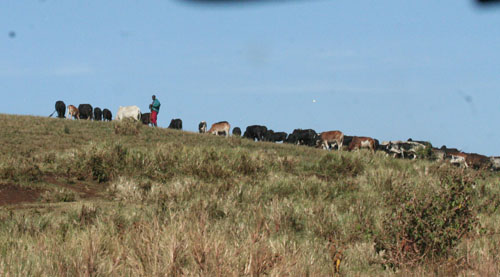
After breakfast on Day 6, we drove to the Crater.  Maasai still reside around the Crater and tend their herds.

herders-1

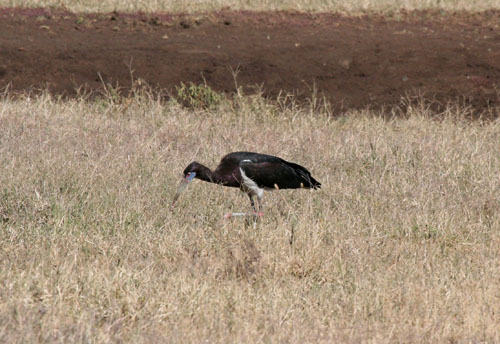
The Crater itself is immense.  It is its own environment.  As we descended to the floor of the Crater we saw hawks of various kinds, many Abdim Storks,

abdim-stork

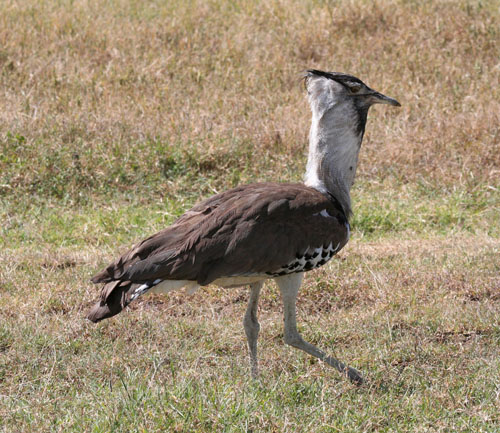
grassland birds, including Red-crowned and Rufous Naped Larks, and Great Bustards.

great-bustard

There were a number of Black Kites and water birds near the relatively small ponds found throughout the Crater.

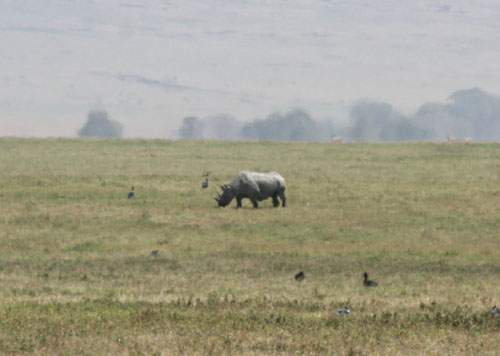
We knew that the Crater was our best chance of finding the second of our top two targets for the trip, Rhinoceros.  Mid-morning we were thrilled to see our first Rhino, grazing on the short grass of the Crater floor, but at a considerable distance from us.

rhino

The Rhinos are greatly threatened by poaching for the Asian aphrodisiac trade.  The prices paid for a dead Rhino are fantastic, such as $250,000 for one, primarily just for the powder that comes from its horn, supposedly a great aphrodisiac.  As a result there is a constant warfare, and I mean warfare, between poachers and wardens wherever Rhinos still exist.  About 10 years ago, the population at Ngorongoro, one of the few places where they still live in the wild, was reduced to 8 individuals.  Stepped up protection has resulted in an increase to 15.  The rate of progress is not great because the rate of reproduction among Rhinos is very slow.  The females reach baby-bearing age at between 5 and 7 years, they produce one baby at a time, and they don’t have their next one for another 5-7 years.

After having our box lunches at a picnic area near a pond, we resumed our drive through the Crater.  We spotted a Wildebeest mother giving birth.  The baby was up and running within minutes.  They do not want to be left behind, because that spells doom in the heavily predated plains of Africa.  The instinct to survive has created amazing physical adaptations.

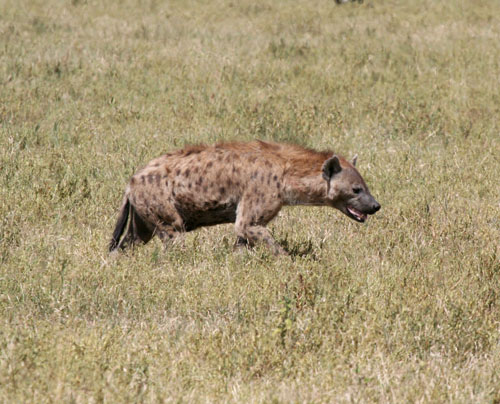
A few Golden and Black-backed Jackals were out looking for food.  The Spotted Hyenas were jogging along among the zebras and wildebeests.

spotted-hyena

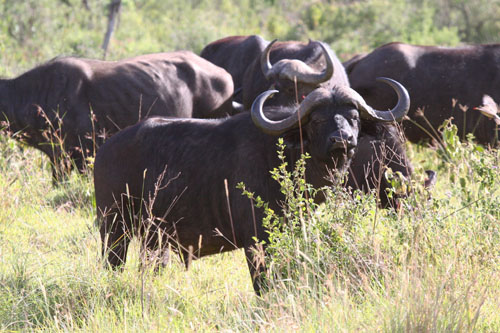
We didn’t pay much attention to the herds of Cape Buffalo.

cape-buffalo

We assumed we would see many more in the days to come.  As it turned out, we saw very few after we left the Crater.

We did see two more Rhinos just before we exited the Crater.  They were lounging in the shade of a tree quite a long distance from the road.  We returned to the Coffee Farm and enjoyed a relaxing evening.

Tanzania – Tarangire National Park and Lake Manyara

On February 5th Raymond picked us up in his Land Cruiser. First stop was a large souvenir shop that offered, among many other items, Tanzanite jewelry. Tanzanite is a beautiful blue stone found only in Tanzania. It was discovered about 40 years ago. We had considered buying Tanzanite jewelry as a memento of our trip. We did not have the energy or the time to look at the outlets in Arusha. In any event, when we looked over the items, which were indeed beautiful and expensive, we were unsure of their real quality and actual value, so we chickened out and did not buy any.

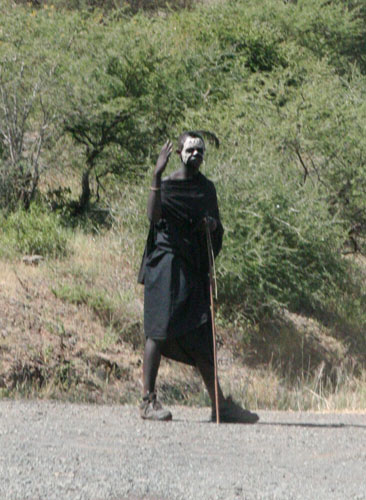
On the way to Tarangire National Park we saw colorfully dressed people of the Maasai tribe. Their villages covered the landscape. They have many herds of cattle which they move to various water supplies and grassy areas each day. Their society is organized into male age groups. We saw a few boys who were passing through initiation to become a warrior and eventually an elder.

masaai

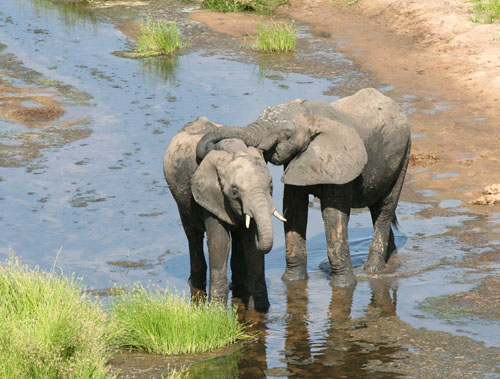
Once at Tarangire we drove through expansive, acacia-dotted dry savannah. Elephants and Giraffes were plentiful.

elephants

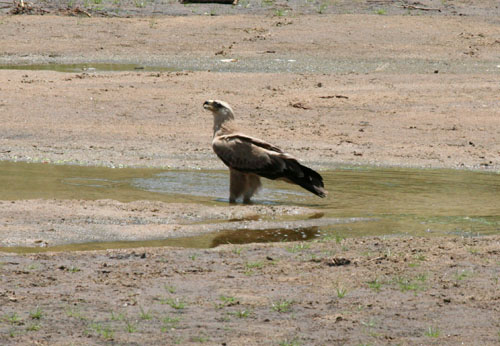
There were numerous small Weavers and other grassland/acacia scrub inhabitants. We stopped for a picnic lunch on a bluff overlooking the Tarangire River, which was nearly dry. From there we observed a pair of Tawny Eagles hanging out at the water’s edge.

tawny-eagle

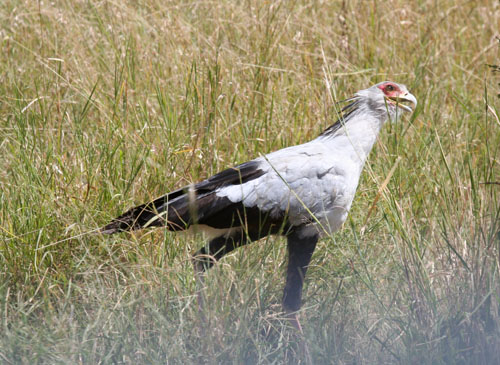
A Secretary Bird was walking through the grasses near the water.

secretary-bird

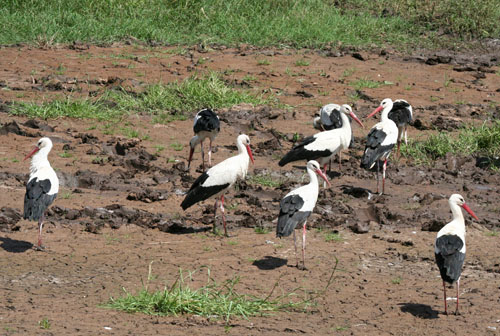
White Storks by the hundreds stalked insects in the grass.

white-storks

We arrived at Kikoti Camp fairly late in the afternoon. This is a permanent tented camp with 10 tents. The accommodations were excellent and we enjoyed a very delicious meal in the dining tent. We were escorted back to our tent by a Camp Guard, because the Camp is unfenced and all sorts of large animals roam through it at night. On the way back we spotted a Bush Buck just a few feet from the path.

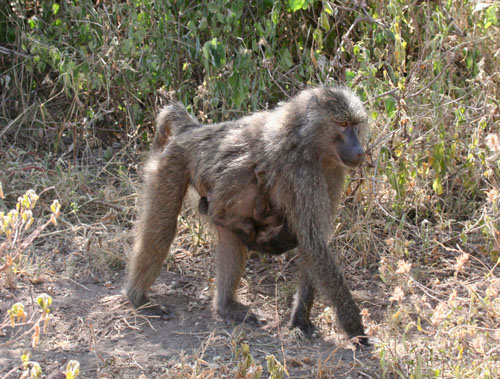
After a bountiful breakfast, we returned through the Park driving toward Lake Manyara. Many monkeys and Baboons were out and about.

baboon]

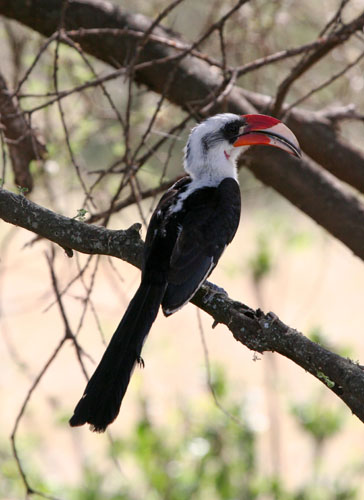
We also spotted a Von der Decken’s Hornbill.

van-der-deckens-hornbill

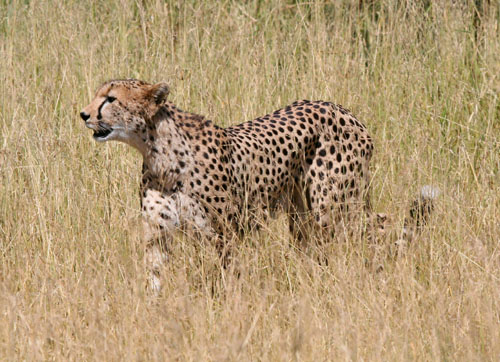
As the afternoon wore on, I faded out as we made our way to Kikoti Camp for the night. I came to when Barbara shouted “Stop, stop, there’s a Cheetah”. To my surprise, and, I think, to the surprise of Raymond, indeed there was a Cheetah, slinking along in the grass beside the dirt road.

cheetah-blog

Primary objective number 1 was accomplished, and very early in the trip. The pressure waned noticeably, as Barbara excitedly shot numerous photos of the Cheetah as it moved ahead of us and crossed the road. It is a beautiful animal and I will never forget this first sight of one in the wild.

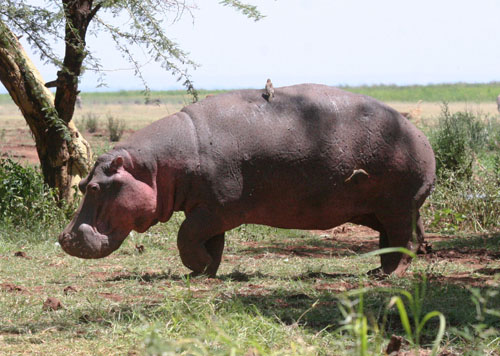
On, then to Lake Manyara. Not many birds were to be seen along the way today. We stopped at a “hippo pond” which appeared to be no bigger than a swimming pool. We debated stopping, finally did, and were rewarded by a great view of a Hippo on land, for a change.

hippo

The Lake itself was full of Flamingos. Late in the afternoon we arrived at Serena Lodge. We enjoyed a couple of cool Kilimanjaro and Safari beers while we sat by the pool and the pool bar as evening descended. Interestingly, quite a few birds came to the pool to drink. Among them, Black Bishops, Baglafecht Weavers, and several other “firsts” for the trip. Dinner again was delicious and we retired early to prepare for an early start toward Ngorongoro Crater the next morning.

Tanzania – Arusha National Park

Barbara and I were in Tanzania from February 3 through February 14th, 2012.  Our previous visits to Africa were to Egypt quite a few years ago and to Botswana and Zambia in 2007.  Egypt was rich in history and culture, to which we were exposed during a trip north on the Nile River from Aswan to Cairo and in Cairo itself.  Botswana possesses great natural beauty in a pristine and safe environment.  We stayed at 4 very different camps in Botswana.  The birds, animals and vegetation were of wonderful variety and observable close-up.  Our final stop was at Livingstone, Zambia, the site of the incomparable Victoria Falls.  Our choice of Tanzania in 2012 posed a dilemma for us, as we wanted to see the great migration of the zebras, wildebeests and other animals through the Serengeti, and we had thought of the Serengeti as a Kenyan destination.  Our research led us to conclude that we might see more in Tanzania, on the southern part of the Serengeti.  We hoped especially to see Rhinoceros and Cheetahs, and it seemed that our chances of that would be better in Tanzania.

We worked with Kensington Tours to help us plan our itinerary.  We flew Ethiopian Airlines from London to Kilimanjaro, Tanzania, (by way of Addis Ababa).  Our approach to Kilimanjaro was rough and the Mountain was obscured by clouds.   We were met at the baggage area by the young man, Raymond, who was to be our guide and driver during our entire Tanzanian tour.  He was excellent company and a great guide, with a thorough knowledge of Tanzania’s animals, birds and vegetation.  We could not have asked for a better companion for our trip.

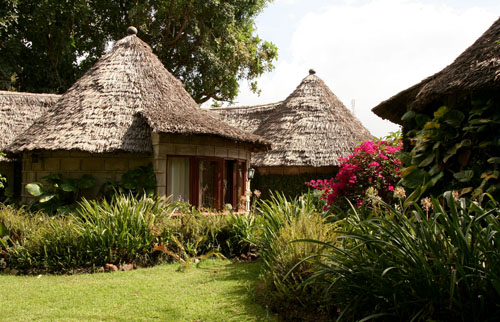
Raymond drove us to our first accommodation, the Serena Mountain Village Lodge near Arusha.  It is modeled on an African village with separate guest facilities, each covered by a thatched roof.

mountain-lodge

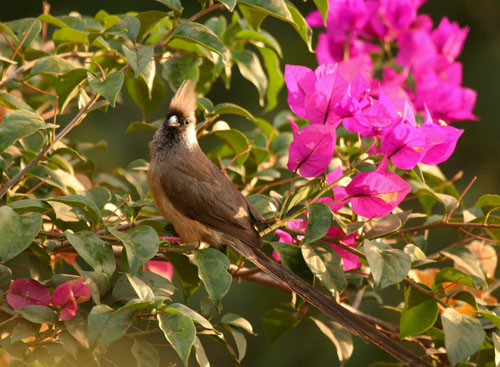
We had a late, light lunch and slept for an hour or so.  Then, in spite of intermittent rain and thunder, we did some late afternoon birding on the Lodge grounds.  Our birds for this first day in Tanzania included Pied Crows, Variable Sunbirds, Collared Sunbirds, Common (very common) Bulbuls, Speckled Mousebirds,

speckled-mousebird

a Red-headed Weaver, a Lizard Hawk and a lot of unidentified fly-overs.  Dinner at the Lodge was very good and we enjoyed meeting a few of the other guests during the pre-dinner cocktail time.

We had thought about doing some shopping on that first day, or the next day, especially for some Tanzanite jewelry, but we were too tired the first day and we wanted to use the second day exploring the nearby Arusha National Park.

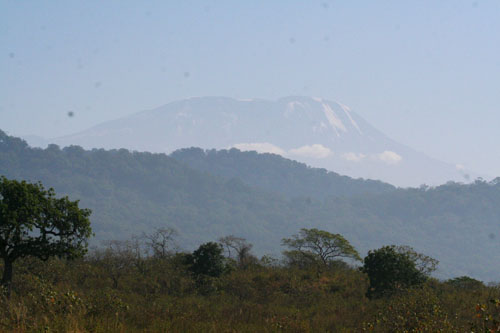
Raymond picked us up about 8:00 a.m. and drove to the Park.  In the distance we could see Mt. Kilimanjaro, the tallest mountain in Africa at an elevation of 19,300 feet.

mt-kilimanjaro

It is also the tallest free-standing mountain rise in the world, rising 15,100 feet from its base.  It is comprised of three distinct volcanic cones.  The period from 1912 to the present has seen the disappearance of more than 80% of its ice cover.  26% of the ice present in 2000 had melted by 2007.  The prediction is that it will become free of ice between 2022 and 2033.

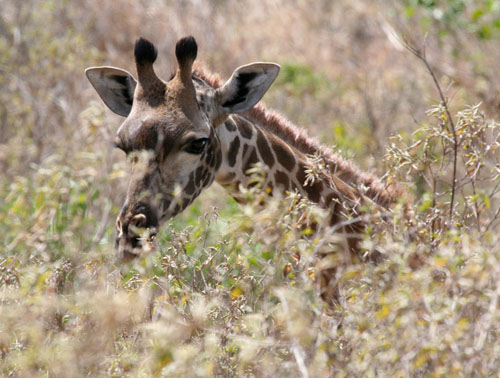
We had good looks at a number of Zebras, quite a few Warthogs, some beautiful Giraffes,

giraffe

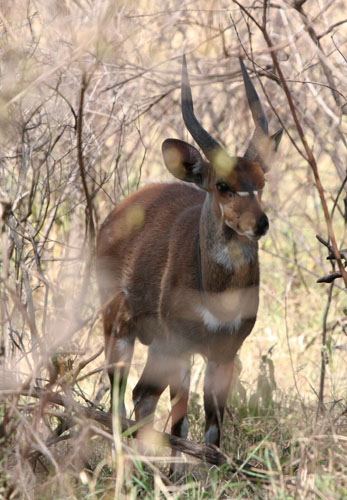
Cape Buffalo, the diminutive Kirk’s Dik-Diks, and Bushbucks.

bushbuck

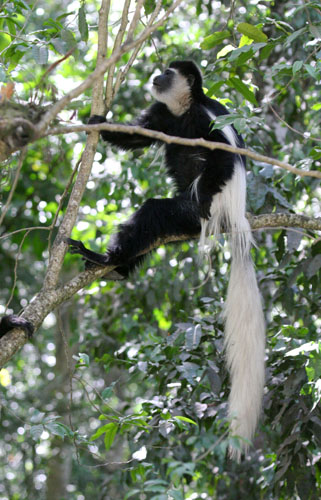
The best find of the day were the Black and White Colobus Monkeys.

colobus-monkey

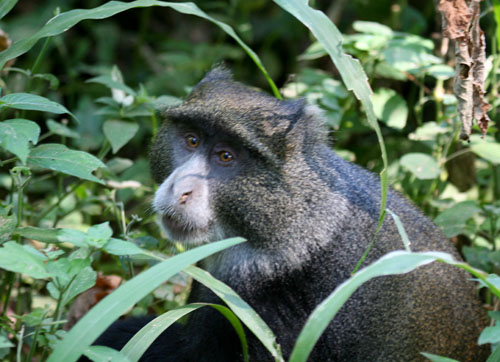
A close second were the Blue (Sykes) Monkeys.

blue-monkey

Olive Baboons(a subspecies of the Chacma Baboon) were present in big numbers here, as they were throughout the remainder of the trip. 

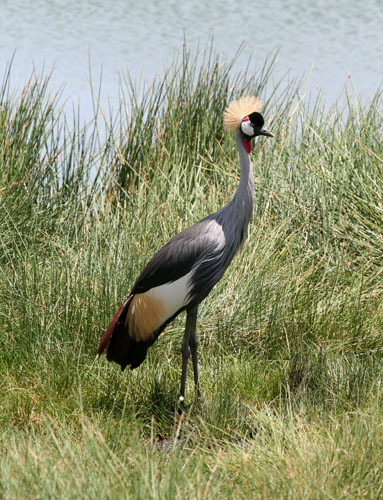
Among the more interesting birds at Arusha National Park were Gray Crowned Cranes,

gray-crowned-cranes

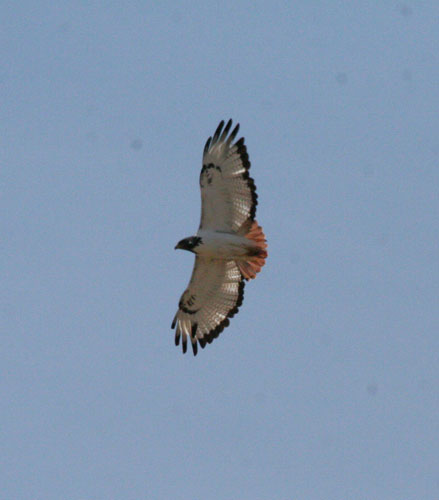
Cape Teal, Black Saw-wings, several species of Bee-eaters, and Augur Buzzards.

auger-buzzard

We spent a long day in the vehicle and returned to Serena Mountain Village in time for another good Tanzanian beer and a very good dinner before walking back to our hut under a beautiful starlit sky, and retiring for the night.  As everywhere, mosquito netting enveloped our bed, but we saw virtually no mosquitoes anywhere.


Purple Sandpipers in Maine

Prior to January 15th of this year I had never seen a Purple Sandpiper. Now, Purple Sandpipers are easy to find; at least, The American Birding Association has said so, by giving them a number 1 (easiest to find) classification in the hierarchy of difficulty of finding the various species in North America. After locating Calliope Hummingbirds and Cassin’s Vireos in western Washington last spring, the Purple Sandpiper was my only unseen bird (with an exception to be explained) of the ~500 category 1 birds in North America. So with a few spare days on my calendar, I contacted my friend, Derek Lovitch, in Freeport, Maine, to see if he would be available as a guide. Derek owns the Freeport Wild Bird Supply store and works as a bird guide on the side. He was available and he met us early on the 15th at our Freeport hotel with one objective in mind: find the Sandpipers.

The weather was bitter cold, at 0 degrees Fahrenheit, and the wind was strong. The sky, however, was bright with the early morning sun. Maine had just experienced its first real snow of the season, but unfortunately it had been followed by warming weather, rain, cooling weather and a glaze of ice over the snow. These are not the ideal conditions for exploring the rocky seacoast of Maine in January. Nevertheless, we bundled up in multiple layers of warm clothes, including the necessary long underwear, and began our exploration of some of the more likely coastal areas.

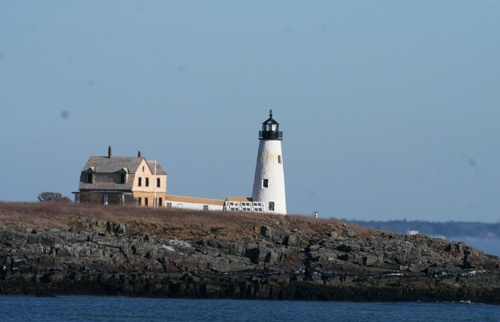
lighthouse

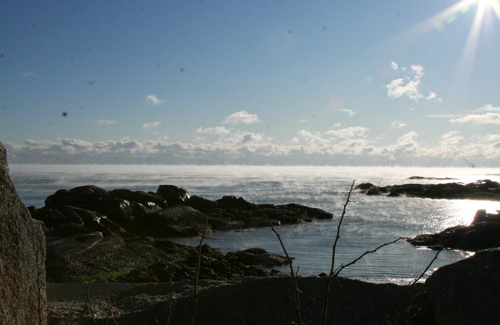
At mid-morning we arrived at Biddeford Pond and walked out to the coast. There we witnessed the beautiful phenomenon called “sea smoke”, as white clouds, formed at sea level because of the interaction of the very cold air on the warmer water, rose from the surface and were swept out to sea.

sea-smoke

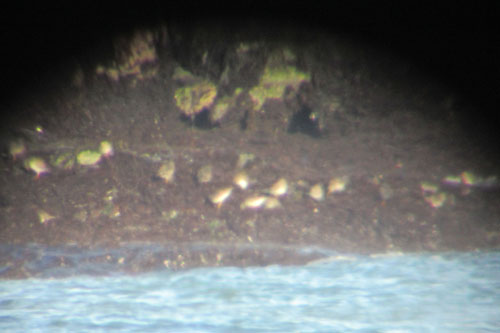
After a few minutes, as the sea smoke lessened, Derek spotted a flock of small sandpipers foraging at the surf-line on the black rocks of a small promontory several hundred yards across the water. Scope views quickly revealed them to be a flock of about 25 Purple Sandpipers. Voila!!! The bright orange legs were alone sufficient to differentiate them from the potentially present Ruddy Turnstones and the much whiter Sanderlings, neither of which we saw.

purple-sandpiper

We watched them foraging on the rocks for several minutes. They then flushed and flew about in tight, whirling silvery arcs before coming back to rest out of sight on the back side of the promontory. In flight, there appeared to be about 35 in the flock. Derek says you never see one Purple Sandpiper; they are always found in flocks, and they tend to stay together.

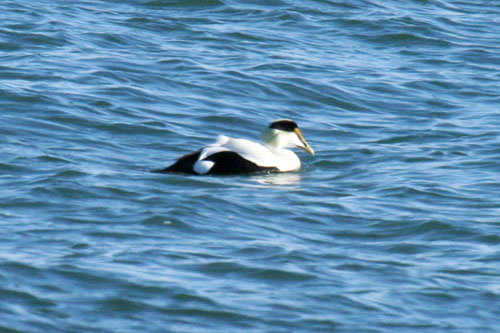
With mission accomplished, we had time to spare and proceeded along to coast. Among the birds seen well were Common Eiders, Harlequin Ducks, Common Goldeneyes, Black Guillemots, Great Black-backed Gulls, Herring Gulls, Ring-billed Gulls, and a few other water-oriented winter residents.

common-eider

We enjoyed our brief stay in Freeport. Lunch at Jameson’s Tavern and dinner at the Azure Restaurant were both outstanding (lobster, of course). Barbara enjoyed an afternoon exploring (shopping) the amazing L.L. Bean’s flagship store in Freeport.

Snowy Owl in Iowa

This winter has witnessed the largest Snowy Owl invasion Iowa has ever experienced, at least in my 77 year memory. Normally residents of the tundra in northern Canada and Alaska (and elsewhere in that latitude around the world), Snowy Owls in 2011 experienced a population explosion in their northland (probably due to an abundance of their main food source, lemmings), followed by a crash in the lemming population and a southward surge of young Snowy Owls, looking for food.

During the Christmas Bird Count at Red Rock, a Snowy was reported south of Monroe, Iowa, just outside the official Red Rock Count Area. The 8 or 9 of us conducting the count caravanned to the location and were rewarded with a close view of a young Snowy, on a post in a ditch right by the road.

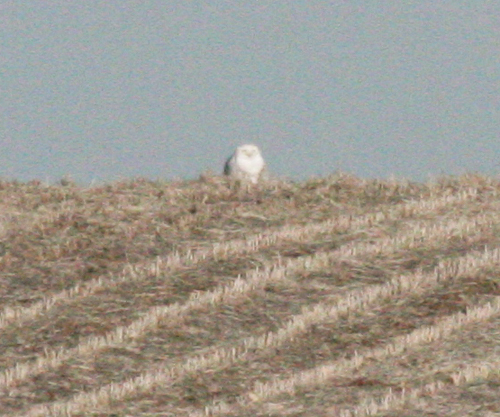
Later reports over the Christmas holidays of Snowy Owls in Story County resulted in a couple of unsuccessful trips with my son-law from Oklahoma to try to find what for him and for my daughter and wife would be a life bird. Again, we apparently just missed the Owl after hours of patrolling the roads west of Ames. Then, early this week another (or the same) Snowy was reported just east of Ames. Barbara and I took off immediately after the sighting was posted on the Iowa Bird Line. We were rewarded with a view, although somewhat distant for photography purposes, of Barbara’s first ever Snowy Owl.

snowy-owl
A recent post to the Iowa Bird Line contains a lovely video of Snowy Owls. You can access it at   http://www.owlpages.com/owlstuff.php?c=2012-01-03-0740

Maui Hawaii Birds in December

Barbara and I spent December 6-11 in Hawaii on Maui. We went there for the wedding of one of my great-nephews. Obviously, the wedding didn’t take 6 days. We spent most of our free time birding.

My main goal was to see the 6 endemic Honeycreepers that can be found on Maui. We succeeded in locating 4 of them at the campground at Hosmer’s Grove, near Mount Haleakala. Seen were the Hawaii Amikihi, Maui Alauhio (Maui Creeper), I’iwi, and Apapane. All of these were present in good numbers near the campground. Especially numerous were the I’iwis and the Apapanes, both lovely red and blacks.

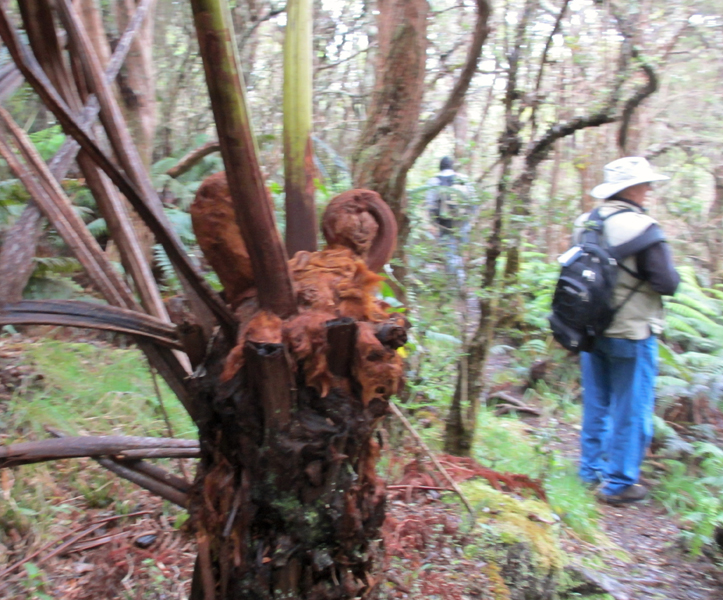
One day we hiked the 2 and a half mile round trip boardwalk on the Waikomoi Preserve, a Nature Conservancy property near Hosmer’s Grove. The primary reason for taking this somewhat strenuous hike was to find the rare endemic honecreepers, the Maui Parrotbill and the Crested Honeycreeper (Akopekohe). We were not able to see either, but our guide recognized the frog-like calls of the Honeycreepers. The unique forest, with its numerous species of ferns, was spectacular. Especially interesting was the Fiddlehead Fern.

img_0066a

The other endemic species that we were able to locate was the Hawaiian Coot. We also found large numbers of the endemic subspecies of Black-necked Stilt. We saw what might have been a pair of Hawaiian Ducks (Koloas), but it was not clear whether they were Hawaiian Ducks of Mallard females or a hybrid of some sort.

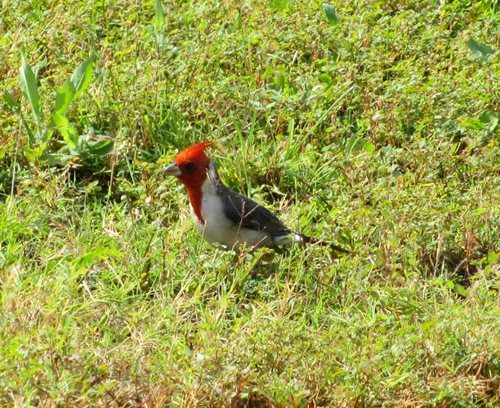
There are a lot of “Alien” species on Maui, i.e., species that have been introduced to the Island by man. The most interesting in this category was the single Hwamei (Chinese Laughing Thrush) that we located along a vegetated area amidst the coffee trees of the Coffee Plantation near Lahaina. Others that we saw in or around Lahaina included a Black Francolin (1), Gray Francolins (6-8), Japanese White-eyes (several), Red-crested Cardinals (many),

img_0177a

Zebra Doves (many), Java Sparrows (many),

img_0006a

Cinnamon Munias or Mannikins (20), Spotted Doves (several), and African Silverbills (4). Present in large numbers were Pacific Golden Plovers, Cattle Egrets, Common Mynas, House Sparrows and House Finches. We also saw a few Mallards, Skylarks, Rock Doves, and Northern Mockingbirds (2), and Chukars.

img_0128a

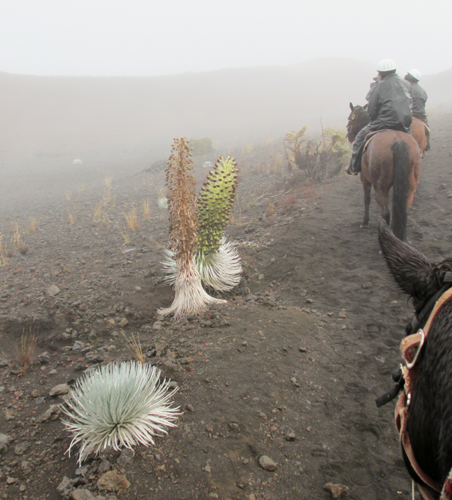
A late-blooming Silversword was near the trail on Barbara’s horseback excursion in the Haleakala crater).

img_0101a

We saw what we thought might be a Nene juvenile or hybrid at the Kealea Ponds, but it seems that it may have been a black brant or some hybrid of the Nene. Fortunately, I had seen Nenes on a trip to Maui some 25 years ago. We did not see any on this trip.

Among the notable changes from 25 years ago was the absence now of pineapple cultivation (we saw none) and reduction in the sugar cane acreage. The lore we absorbed was that pineapple production is too costly relative to the cost of production in other areas of the world, and that the many years of sugar cane production has ruined the soil so that it has become unproductive.

Among the more likely Maui winter residents that we missed, in addition to the 2 endemic Honeycreepers mentioned above, were the Hawaiin Petrel, Nutmeg Mannikin, Orange-cheeked Waxbill, Red-billed Leothrix and Japanese Bush Warbler. We did not spend much time on “Ocean Watch”, but we did not see a single marine species during the week we were on Maui. My field guide was a second-hand volume of “Hawaii’s Birds” published by the Hawaii Audubon Society (6th Edition, 2005). It was very useful.

Galapagos Islands – Days 5, 6, and 7

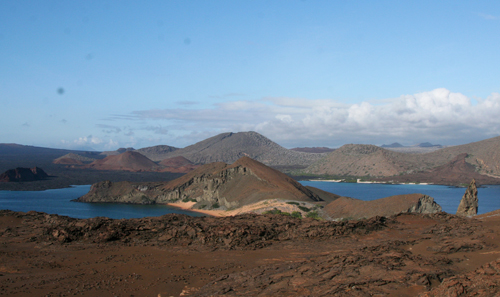
Bartolome and North Seymour. Not far from Santiago lies the small island of Bartolome, and somewhat farther south, the island of North Seymour.  Today we visited both.  Bartolome  resembles a moon-scape.  It is a relatively new volcanic island and not much vegetation has taken hold, and consequently, it holds very little wildlife.  After a dry landing we climbed a relatively steep boardwalk to the pinnacle, a trip of about 30 minutes.  From the top we could overlook the entire island and Pinnacle Rock, an eroded “tuff” cone.

tuff-cone

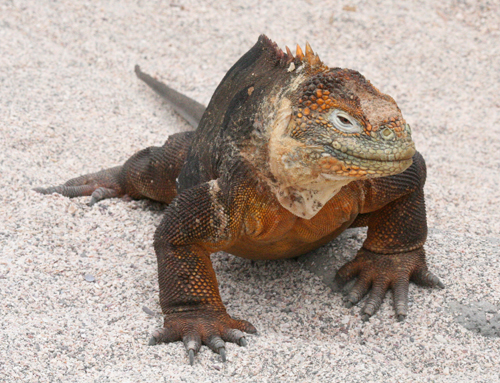
Crystal clear waters offered great snorkeling for those who wished.  We saw a few more Galapagos Penguins as we glided along the rocks in our Panga.  Sea turtles and a white-tipped shark were spotted.  In the afternoon we landed at North Seymour and walked.  Among the sightings were Swallow-tailed Gulls, Blue-footed Boobies, and our first look at the endemic Land Iguanas.

land-iguana

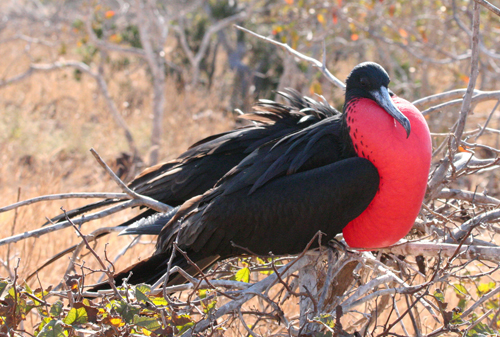
The island was full of Magnificent Frigatebirds, many in nesting mode, and many juveniles preening and exercising their wings.  A few of the males were grandly displaying their red throat pouches.

magnificent-frigate-bird

Santa Cruz. Over-night we cruised to Santa Cruz.  This morning we boarded a bus and traveled to the highlands of Santa Cruz, for our first look at free Giant Tortoises.  This trip provided our first look at agriculture, with cattle again being the primary apparent product, accompanied by flocks of Cattle Egrets.   We stopped briefly at an overlook in a forest preserve, where I saw my first Tree Finches, in this case, Small Tree Finches.

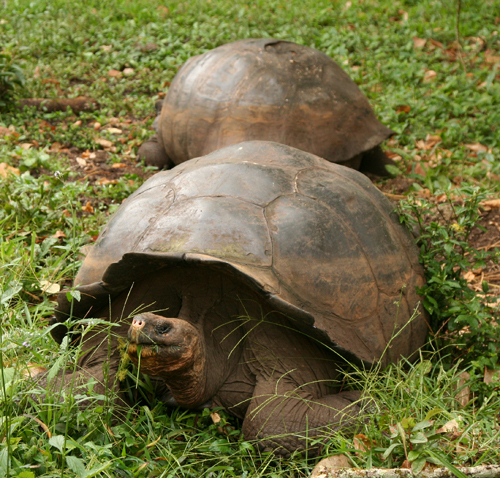
We were surprised to see many Giant Tortoises freely roaming about the private ranch that was the focal point of the morning excursion.

tortoises

We were able to walk about freely among them for quite some time.  We also enjoyed a walk in a “Lava Tube”.  This is a large tunnel formed by the flow of melted lava (magma) from the ancient volcano which erupted upland from the tunnel.  A Barn Owl was resting in a secluded nook near the entrance.  We also had brief glimpses of a couple of Galapagos (Dark-billed) Cuckoos.  Galapagos Mockingbirds have been present in close proximity for several days.

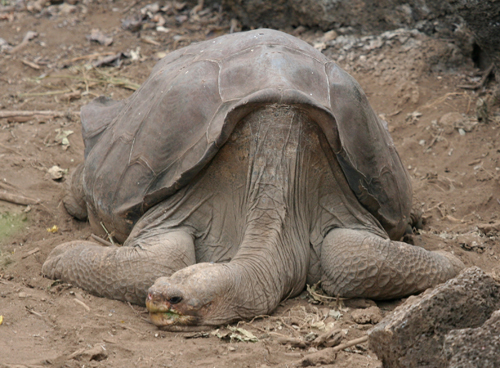
We returned to the boat for lunch and then went to the Charles Darwin Research Station at Puerto Ayora.  This is the largest town in the Galapagos, with a population of about 20,000 permanent residents.  The Charles Darwin Research Station may well  be doing important work, but as a tourist attraction, it did not offer much.  We did see “Lonesome George”, the last surviving member of the Pinta Island subscpecies of Giant Tortoise.

lonesome-george

So far, efforts to mate him with closely related subspecies have been unsuccessful, so Lonesome George may live out his life as the last survivor.  We were told that the life expectancy of Giant Tortoises is not definitely known, but could be somewhere between 150 and 300 years.  That latter part of the afternoon was spent walking around the town, which has a number of tourist shops.  The ice cream was quite good.  Lava Gulls were present in the town, along the water front.

After dinner aboard, we made the long, and quite rough, crossing to Espanola.

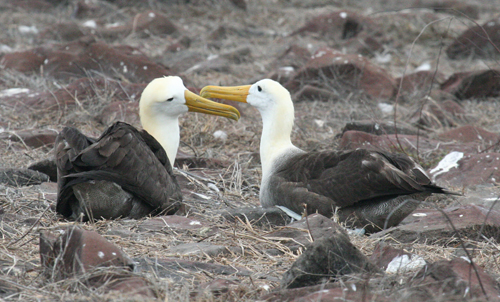
Epanola. Today, Saturday, November 5th, we arrived at Espanola and made a dry landing at Punta Suarez.  This was our favorite place of the entire trip.  We thoroughly enjoyed the long and leisurely walk along the rocky trails.  There was great variety, including a nesting colony of Waved Albatross.

waved-albatross

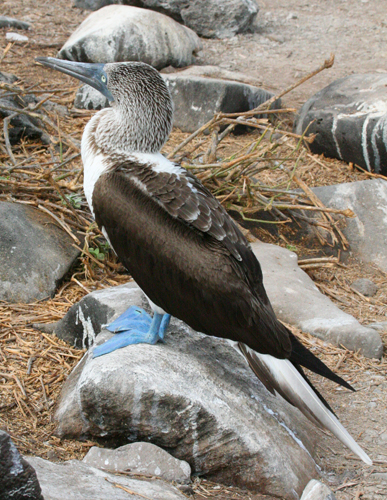
These magnificent birds seemed unperturbed by our presence.  Others in abundance were Blue-footed Boobies,

blue-footed-booby

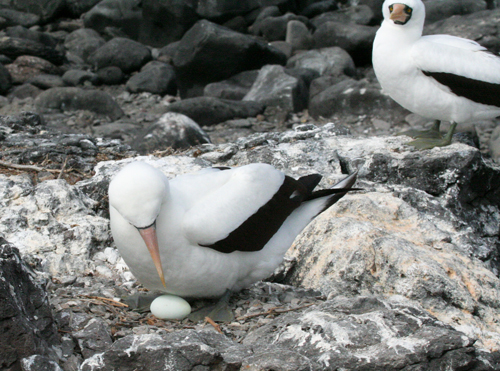
the Espanola specific Hood Mockingbirds, which were very tame, Red-billed Tropic Birds, Galapagos Hawks, Galapagos Doves, Nazca Boobies,

nazca-booby

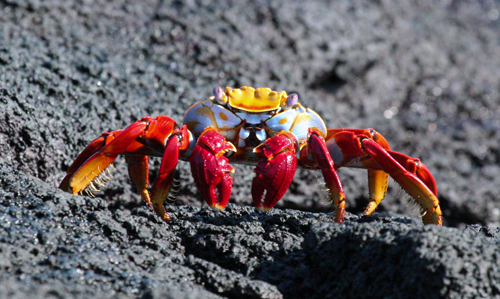
Frigatebirds, Swallow-tailed Gulls, Lava Herons, and, finally, a Large Cactus Finch.  There were Red and Green Iguanas, lots of Sea Lions and innumerable Sally Lightfoot Crabs, strikingly orange on the black rocks.

In the afternoon we made a wet landing at Gardner Bay, with its beautiful white sand beach.  We ventured to wade in the ocean here, our first venture into the water, and found the water comfortably warm and very soothing.  We shared the beach with hundreds of Sea Lions, who simply ignored us.  Many Sea Turtles were cruising just a few feet off shore, poking their heads above water occasionally for a big breath.

We again enjoyed an evening meal aboard, this time with Richard and Marie, one of the British couples on board.  (The passengers  represented  4 countries:  8 from the U.S., 8 from Great Britain, 3 from Germany and 1 from Canada).

Return to San Christobal. From Espanola we cruised back to San Christobal.  Our plane to Guayaquil did not leave until a little after noon, so we were able to visit the Interpretation Center at San Christobal.  This is very worthwhile.  After this visit we had a couple of hours to stroll around the town before boarding our bus to the airport.

Endemic Species and Subspecies. According to Swash and Still in their Identification Guide to the Galapagos, there are 44 endemic species and subspecies of birds (i.e., species or subspecies that are nowhere else in the world) that can be found in the Galapagos Islands.  I was satisfied to be able to see and identify 33 of them, all mentioned in this and my prior blog.  I did not see 8 of the endemic species:  i.e.,  5 of the Darwin’s Finches: Large Tree Finch, Medium Tree Finch (found only on Floreana, which we did not visit), Woodpecker Finch, Vegetarian Finch, and Mangrove Finch (very rare);  Floreana Mockingbird (found only on Florean, which we did not visit); Galapagos Rail; and Galapagos Martin.

Galapagos Islands – Days 3 & 4

Fernandina and Isabella.  It was a rough night at sea.  We arrived at Fernandina shortly before breakfast was served.  After breakfast we landed at Punta Espinoza and hiked.  The view and the wildlife were spectacular.  We walked through lava fields, with thousands of Marine Iguanas, Sally Lightfoot Crabs,

sally-crab

other crabs, and Lava Lizards.  Like the birds, they were very tame and one needed to walk carefully to avoid stepping on them.  There were a few Sea Lions around.  We saw the skeleton of a whale on the lava.  The ocean was especially beautiful here, with shades of green and blue.  Here we also saw our first Flightless Cormorants

flightless-cormorant

and here and later in the afternoon on Isabella, Galapagos Penguins.

galapagos-penguins

Galapagos Penguins are the most northerly distributed of all the penguin family.  During our cruises this day and the previous day, I saw thousands of Elliot’s (White-vented) Storm-petrels, as well as a few Wedge-rumped Storm Petrels and Band-rumped (Madeiran) Storm-petrels.  Red-necked Phalaropes silvered about the boat while we cruised.   We also spied our first Blue-footed Boobies (Barbara’s favorite) of the trip.  The first and only Pied-billed Grebe of the trip was here.  No new finches today.

Santiago (James). After breakfast we went ashore, a wet landing, at Puerto Egas.  Birds were plentiful, as were the Sea Lions and Marine Iguanas.

marine-iguanas

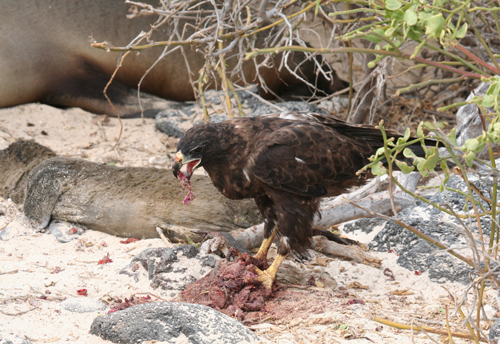
Here we saw the first Great Blue Herons and American Oystercatchers of the trip, along with several other migratory shore birds.  Here, also, we saw our first Galapagos Hawks.  This female was busy tearing up the placenta of a newborn sea lion and seemed impervious to our presence just a few feet away.

galapagos-hawk

After lunch aboard we landed at Chinese Hat, a small island near Santiago.  Again, Sea Lions were plentiful.

sea-lions

Today we saw our first Smooth-billed Anis, an introduced species.