Galapagos Islands – Days 1 & 2

We wanted to go ashore on as many of the Galapagos Islands as we could during a 7-night cruise.  After some (much) research on the internet, we chose to book directly with Ecoventura, which operates 3 identical 20 passenger yachts.  They depart every Sunday afternoon from San Cristobal and return there on the following Sunday.  Ecoventura arranged air flights for its guests on Aerogal to San Christobal, from either Quito or Guayaquil.  They also made our hotel arrangements at the Mercure Alameda.  All of these arrangements were handled efficiently so we had no concerns getting to and from all of our interim destinations.  They also arranged for a bird guide and driver to pick us up and return us to the Hotel Alameda, with a full day of birding in the Quito vicinity prior to our cruise.  See preceding Blog.  The yacht itself was a superior first class vessel, clean and comfortable, with excellent food and services.  I believe Ecoventura tries to group its guests so that there are common interests represented on the various yachts.  The median age of our 18 co-passengers was 65, with only 2 “30 somethings”, both daughters of other passengers.  None of the Eric passengers went Scuba Diving, but about half of us did enjoy several snorkeling adventures during the course of the trip.  Those of us who chose not to snorkel, had ample other opportunities for interesting activities, primarily walks, during the snorkeling stops.

I am a “serious” birder and I did my homework before the trip.  It was well that I did, as I shall later explain.  I highly recommend “Birds , Mammals, and Reptiles of the Galapagos Islands-An Identification Guide” by Andy Swash and Rob Still.  It is very complete and among its various features it has a chart which shows which species may be found on which Islands.  This proved especially valuable because the 2 naturalists on the yacht, though more or less competent, did not go out of their ways to help locate and identify the smaller birds, such as the 13 species of Finches.  This, of course, is partly due to the fact that most of the guests are not serious birders, and probably would not have cared about such details, or at least would not want to spend a lot of time on them.

We were met at the San Christobal Airport on Sunday, October 30.  We were bussed directly to our yacht, the Eric.  After the orientation, we selected wet suits, snorkel gear and flippers, even though we doubted that we would use them.  They were destined to hang, unused, in our cabin for the entire trip.  After lunch we had a wet landing on a San Christobal beach.  A “wet landing” means you get wet up to your knees or so before you reach dry land when you get off the “panga” (one of two small rubber boats that take passengers from the yacht to shore).  Some of the folks went snorkeling, some sat on the beach, and we, predictably, went birding on the edge of the short vegetation around the perimeter of the beach.

San Christobal. The most amazing aspect of birding in the Galapagos is that the birds often come right up to the birder, instead of flying away.  On the beach at San Christobal we first experienced this with Chatham Mockingbirds,
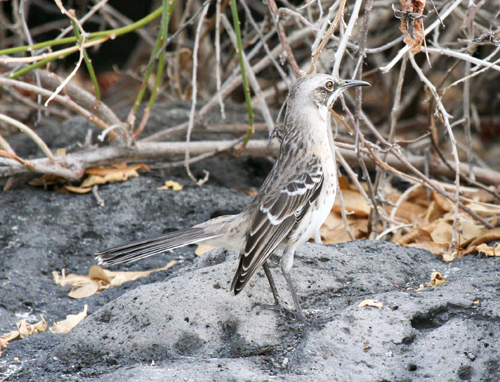
chatham-mockingbird

Small Ground Finches, Medium Ground Finches, Galapagos (Thick-billed) Flycatchers,  and Yellow Warblers.  Flying over the lagoon were numerous Frigatebirds (probably of the Magnificent species, although it was not possible there to tell them apart from the Greats, so I cannot be sure).  We left San Christobal about 3:30 to set “sail” for the rather distant island of Genovesa.  I patrolled the deck as we got started and was rewarded with a good look at a single Waved Albatross, not expected in this area.  We also saw numerous Nazca Boobies, (formerly called Masked Boobies), Brown Pelicans, Galapagos Shearwaters (by the 1000s), and Common (Brown) Noddies.  Around sunset we arrived at Kicker Rock with its vertical cone formation that juts up about 100 feet.  We circumnavigated Kicker Rock for many nice views.    The Rock was densely populated by seabirds, all of the species (except Waved Albatross) just mentioned.  We cruised all night to Genovesa.  The trip was rougher than Barbara had expected, but, due to the “Patch”, she got through the night ok.

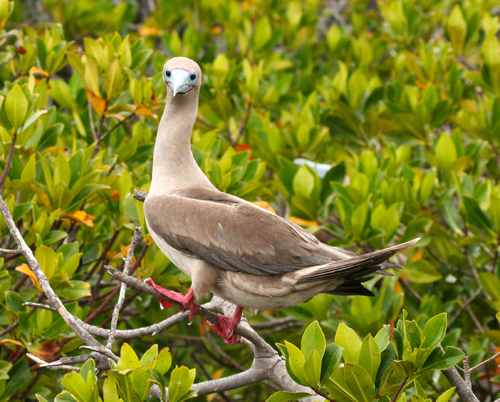
Genovesa. After a long night cruising, we awoke off Genovesa.  We made a “dry landing” (no wet feet) at Prince Philip’s Steps.  Here was another beautiful beach for snorkeling and many of the group did so.  Several of us took a walk with one of our Naturalists, Orlando.  Orlando is knowledgeable and gave us a lot of interesting information about the Islands in general and the flora and fauna of Genovesa in particular.  We went back to the yacht for lunch and then cruised a bit and made a wet landing at Darwin Bay.  We walked inside an area that was formed by a volcano a long time ago.  There were lots of birds along the ocean.  Among the new species, i.e., first seen by us at Genovesa, were Great Frigatebirds (positive id because of the presence of young birds), Red-footed Boobies (both White and Brown phases),
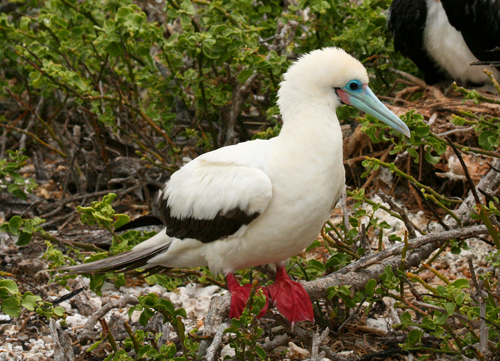
red-footed-booby-white

red-footed-booby-brown

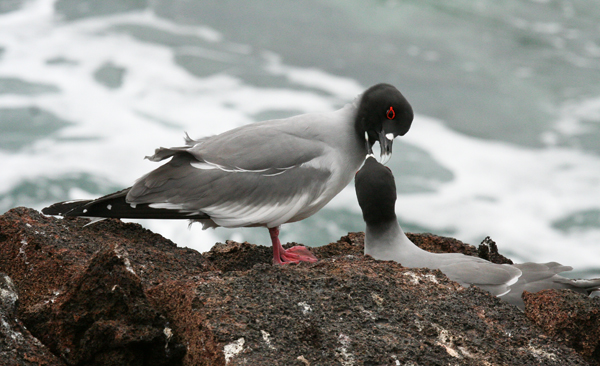
Fork-tailed Gulls,

fork-tailed-gull

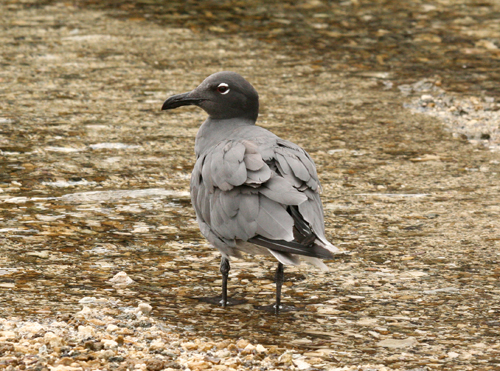
Lava Gulls,

lava-gull

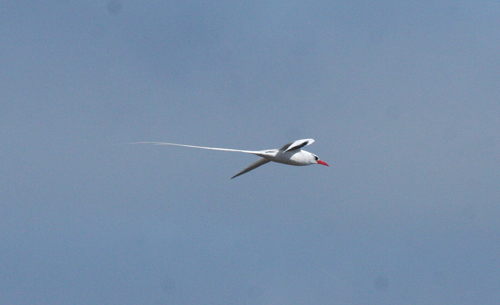
Red-billed Tropicbirds,

red-billed-tropicbird

Yellow-crowned Night Herons, Ruddy Turnstones, Willets, Whimbrels, Wandering Tattlers, Short-eared Owls, Galapagos Doves, Galapagos Mockingbirds,
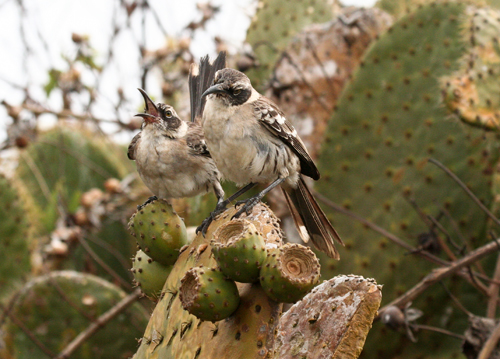
galapagos-mockingbird

Sharp-beaked Ground Finches, and Warbler Finches, and Large Ground Finches.
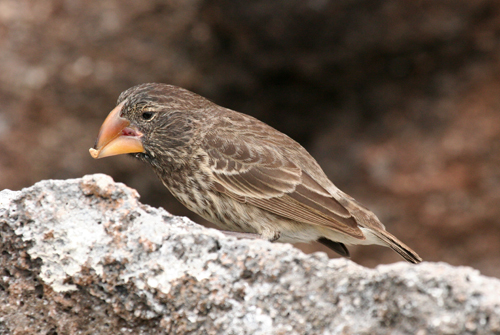
large-ground-finch

We started the long (14 hour) cruise from Genovesa to Fernandina before supper. Fernandina is the youngest of the volacanically formed Galapagos Islands.   Barbara’s “Patch” failed her so she spent a difficult night.

Ecuador Birding: Quito area and the Galapagos

Barbara and I have considered going to the Galapagos Islands for several years, but we put it off until this fall.  We decided to go now because in February, 2012 new rules will reduce by half the number of landings that cruise vessels can make on a 7-day cruise.  We decided to go a few days early to see Quito and to get in a day of birding in the Andes near Quito.

We arrived in Quito on the evening of October 27th.  We were met at the airport by a driver sent by our hotel, the Mercure Alameda.  Our room at the hotel was clean and spacious, but extremely  noisy all night.  We endured it for 2 nights but finally had to ask to be moved to an interior room for our last night so that we could get some sleep.  After a bit of difficulty at the desk, the manager found us an interior room and we were very grateful for the quietude that it gave us for our final night.  Prospective guests of this hotel should be very sure to request an interior room if they hope to get a good night’s rest.

On Friday the 28th we walked from our hotel to the Old City to see the historic buildings.  Some have doubted our wisdom in walking in this area but it appeared to us to be quite safe, at least in daylight.  We visited the Basilica.  The interior is quite stark and the windows are beautiful.  We then walked on to the Presidential Palace and the surrounding square.  There were many people on the streets.  Among the more interesting sights was the open-air flower market.  The variety and colors were amazing.  I cannot imagine how all of those flowers get sold, but it appeared that local customers were buying.

We went on to the Plaza San Francisco and entered the ornately gold-decorated church, where mass was in process.  We stayed for the mass.  At the side of the church was a café with outdoor seating and we enjoyed a lunch including the local specialty soup:  potato, goat cheese, avocado, and other unrecognized ingredients.  From there and from other sites along our route we could see the statue of the winged Virgin of Quito high above the city.  All things considered we were glad that we had spent the day walking around the Old Town.  It was a very interesting day.

At 5:30 the next morning we were picked up at the hotel by bird guide, Juan Carlos Crespo,  and his driver.  Juan Carlos works as a guide for Bella Vista Preserve, a remote natural area which is a long, rough drive from Quito if you go by the Nono Road, which we did, and a short, smooth, 2 hour drive if you take the main highway, which we did upon our return.  The Nono Road is famous among birders for its variety of birds.  The first stop was at the Yanacocha Reserve.  There we took a long walk along an easy mountain path.  The most numerous families of birds in this area are the hummingbirds and the tanagers.

The hummingbird species seen well on this walk were:  Shining Sunbeam, Great Sapphire Wing, Buff-winged Star Frontlet, Sword-billed Hummingbird (very striking),

sword-billed-hummingbird

Sapphire-vented Puffleg, Golden-breasted Puffleg, and Tyrean Metal-tail.  Along with the hummingbirds were quite numerous Masked Flower Piercers and Glossy Flower Piercers, which often compete with the hummingbirds at the hummingbird feeding stations along, and especially at the end of, the path.

Tanagers seen here were:  Scarlet-bellied Mountain Tanagers, Hooded Mountain Tanager, Black-chested Mountain Tanager, Rufous-naped Brush Finches,

rufous-naped-brush-finch

and Golden-crowned Tanagers.

golden-crown-tanager

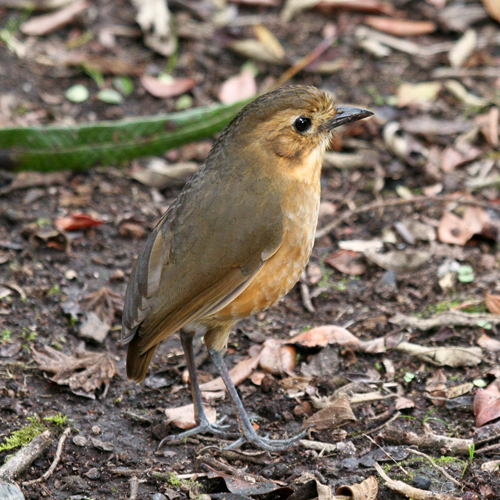
We were surprised and pleased when a Barred-winged Nightjar flushed from nearly under our feet.  We were also able to watch a Tawny Antpitta at close range at the Ranger Station.

tawny-antpitta

The resident Ranger has been tempting it with tidbits of food and he was kind enough to spend some time with us to call the bird out of the brush so that we could get some close-up views.

The other birds we saw at Yanacocha were:  Andean Guan, White-banded Tyrannulet, Smoky Bush Tyrant, Great Thrush, Brown-bellied Swallows, Rufous Wrens, Spectacled Whitestarts, and Cinereous Conebill.  Birds not seen but recognized by their calls were Ocellated Tapaculos, Curve-billed Tinamous, and the Owl-imitating Giant Antpittas.

We left Yanacocha after a couple of hours and proceeded on the Nono Road toward Bella Vista Preserve.  Along the way we saw a pair of Andean Lapwings with a young chick.  The country side is beautiful and rugged.  Cattle farming seems to be the main livelihood of the few folks that live along the way.  The Paramo was lovely in the morning mist and sunlight.

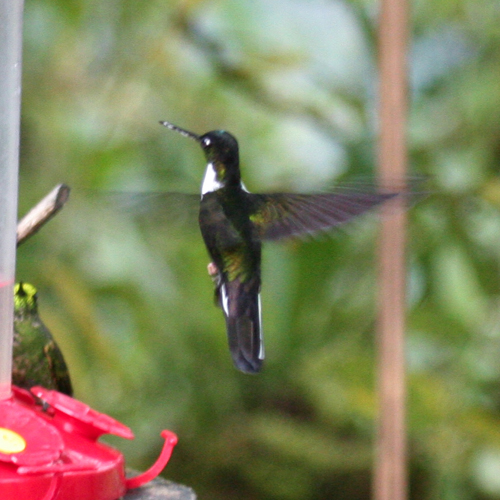
We had a good lunch at Bella Vista and then spent a couple of hours on the premises.  Again, the hummingbirds were the main attractions, including:  Green Violetears, Sparkling Violetears, Andean Emeralds, Rufous-tailed Hummingbirds, Speckled Hummingbirds, Fawn-breasted Brilliants, Collared Incas,

collared-inca

Buff-tailed Coronets, Gorgeted Sunangels, a striking Violet-tailed Sylph, and Purple-throated Woodstars.

purple-throated-woodstar

Other species seen at Bella Vista were: Band-tailed Pigeons, a strangely disguised Common Pootoo,

pootoo

Crimson-mantled Woodpeckers, Montane Woodcreeper, Azara’s Spintetail, Streaked Tuftedcheek, Green and Black Fruiteater, Blue and White Swallows, Grey-breasted Wood Wren, Red-eyed Vireo (Yup!! The same as ours), Russet-crowned Warbler, Blue-winged Mountain Tanager, Rufous-collared Sparrow and more Masked Flowerpiercers.

We enjoyed Juan Carlos’ company and were impressed with his knowledge of the Ecuadorean birds.  We would recommend him to others looking for a day or more of interesting birding in the Quito area.  He is currently on the staff at Bella Vista.

We arrived back at the Hotel about 6:00 p.m. and after a good night’s sleep, flew off to our main destination, the Galapagos, by way of Guayaquil.  The next installments will summarize our experiences in the Galapagos.

Yellow Rails on a Fall Day in Iowa

I have made several trips in the past few years for the specific purpose of seeing Yellow Rails.  This spring Barbara and I went to the Anahuac Grassland Preserve east of Houston, Texas to participate in one of the annual “Rail Hunts” sponsored by Friends of Anahuac.  I reported on that trip earlier on this blog.  Suffice it to say that effort was extremely difficult and, in the end, fruitless.   Yellow Rail has been the only ABA Code 1 or Code 2 species that (1) I have never seen, and (2) can be seen regularly, though rarely, in Iowa.  So, if I could find one in Iowa, I would have a double delight-both a North American and an Iowa Life Bird.

A few years ago Carl Kurtz reported on the Iowa Bird Line that while harvesting prairie seed on his farm near St. Anthony, Iowa, he has seen Yellow Rails flush from the prairie grass in front of his moving combine.  I met Carl about 10 years ago when I went on the Board of Trustees of the Nature Conservancy (Iowa Chapter).  Carl had been a member for some time before I joined the Board.  About a month ago I contacted Carl and asked if it would be OK with him if I came up and rode the combine with him when he harvests this year, to try to add Yellow Rail to my Life List.  Last Saturday (October 16) he called me and told me that he had seen a Yellow Rail that day while harvesting, and that if I wished to come up to his farm on Sunday, if it wasn’t raining, he would be continuing the harvest on the field where the Yellow Rail showed up on Saturday.  I accepted readily.  Staining the deck would have to wait.

It did not rain on Sunday, and, in fact, it was a beautiful, sunny autumn day.   I arrived at Carl’s farm about 1:30.  He was just gassing up the combine.  I climbed up and we drove to the field and began combining the prairie seeds.  Within minutes, a Yellow Rail flushed from a few feet in front of the combine, and fluttered away from us  to a nearby ravine.  I got a great view, particularly advantageous from 10 feet up on the combine for spotting from above the white trailing wing patch which quickly differentiates the Yellow Rail from the Sora Rail.  We were both elated.  Carl asked if I wanted to go back, or continue with the combining.  I quickly accepted his offer to stay, and within an hour we had flushed 2 more Yellow Rails, both equally close and clear in the brilliant autumn sunlight against the golden-brown of the prairie.  After the 3rd sighting, Carl offered to let me operate (drive only; I certainly couldn’t be trusted with the other controls) the combine.  Although I grew up on a farm, we did not have a combine while I was there, so this was an exciting, first time experience.  I readily accepted and did a darn good job, too.  We finished the field and drove back to the house, where Linda, Carl’s wife, served delicious hot Lattes and homemade banana-chocolate chip bread.   This was the frosting on the cake of a truly delightful and memorable day, especially due to the warmth and hospitality of the Kurtz’s on their Iowa farm.

Carl then took me for a drive to see another 80 acre prairie that he has developed from what was formerly a badly degraded pasture.  He bought it a few years ago and it is now a place of rare beauty.  A small stream meanders between the hills and the area was populated by pheasants and sparrows, particularly a large number of Vesper Sparrows.

The Yellow Rails become my North American Life Bird number 706, and Iowa Life Bird number 328.  Thank you, Carl and Linda.

No Thick-billed Vireo in Florida

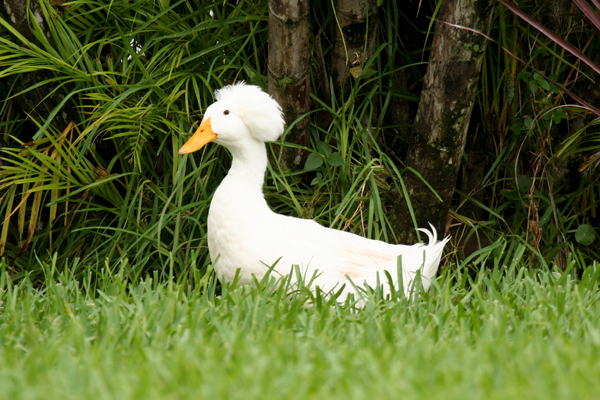
In mid-August Barbara and I went to Miami to try to find the ABA Code 4 Thick-billed Vireo that had been seen during the prior week at the Mattheson Hammock State Park.  We tried hard, but the bird never showed up.  Apparently it had moved on to other locations before we arrived.  I also wanted to locate White-winged Parakeets.  This bird, apparently quite common in the Miami area, has been my Florida nemesis, and it still is.  No luck.  In fact we didn’t see very many of the Parrot family of any kind.  Maybe we were just unlucky.  At Baptist Hospital, Barbara did locate a strange white duck.  I don’t think it is on the ABA List.

duck-resize

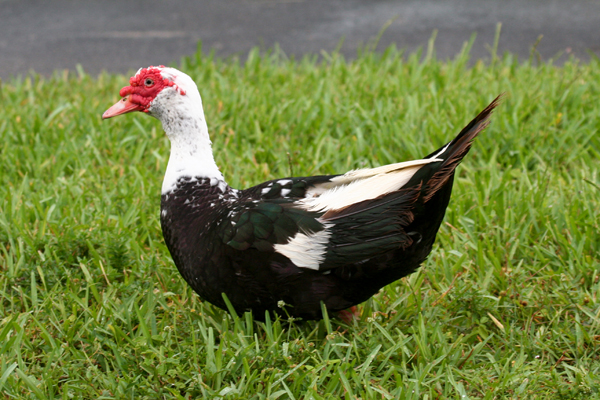
The Muscovy was obviously embarrased by the whole thing.

muskovy-resize

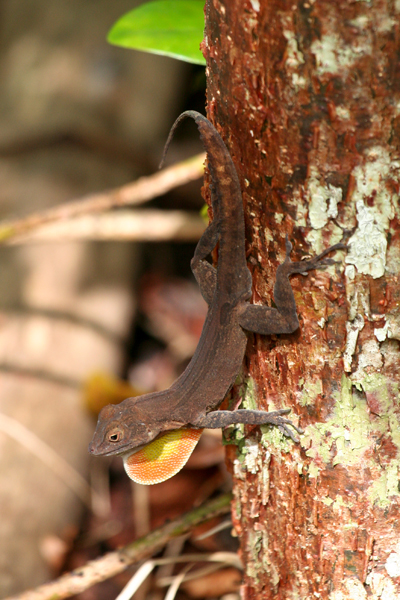
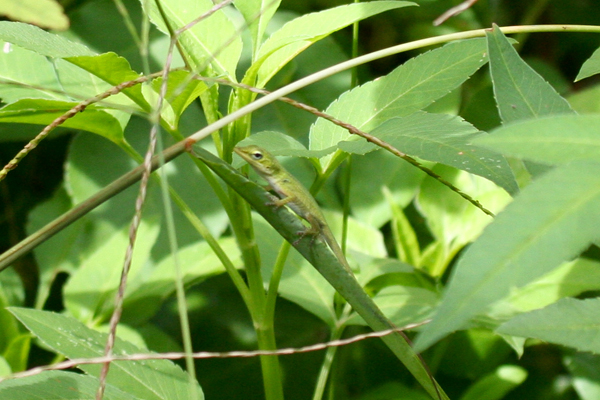
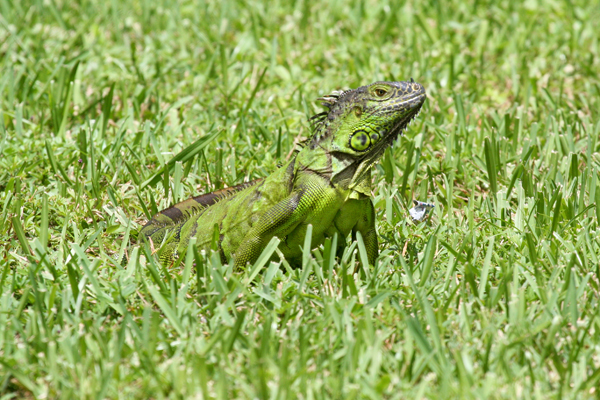
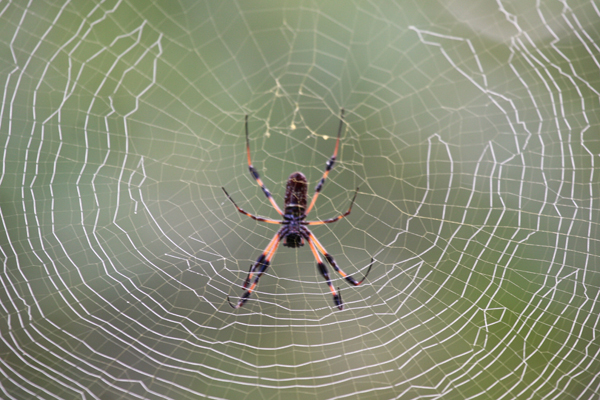
The photographic opportunities were not dampened by the lack of new birds.  Among the strange and wonderful creatures were:

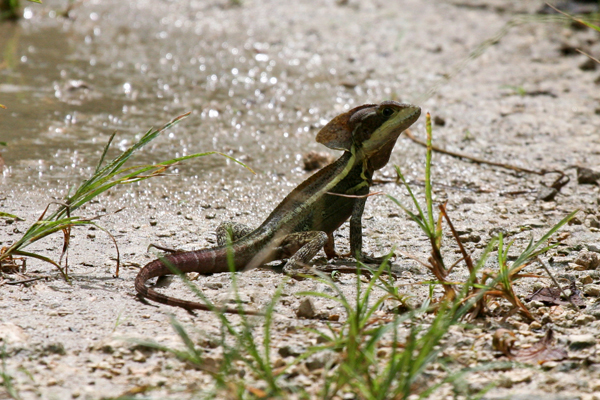
Cuban Brown Basilisk Lizards

brown-basilisk-lizard-resize

Brown Anoles

brown-anole-resize

Knight Anoles

knight-anole-resize

Green Iguanas

green-iguana-resize

and lots of butterflies and spiders spinning webs.spider-resize

Berylline Hummingbird yes; Aztec Thrush no

On August 8 I went to Madera Canyon near Green Valley, Arizona, to try to see a Berylline Hummingbird and an Aztec Thrush.  The Berylline Hummingbird  is considered a somewhat rare ABA # 3, whereas the Aztec Thrush is a very rare # 4.  Both birds had been reported present in Madera Canyon over the preceding week or so, and both birds would be new North American Life Birds for me.  I arrived at the Madera Kubo Bed and Breakfast in the Canyon and very shortly after checking in I was treated to close-up views of a beatiful male Berylline Hummingbird.  He came fairly regularly to the Hummingbird feeders maintained by the Kubo B & B proprietors.  This was particularly rewarding for me because the Berylline Hummingbird was the last of the 18 North American Hummingbird species for my life list, unless I am extremely lucky to find a rare Green-breasted Mango in southern Texas some day.  So now my “Trochyllidae” family list is, by my standards, complete. 

The Berylline Hummingbird proved to be a quick find and gave very satisfactory, close views.  With such good luck, and in spite of the somewhat late hour, I decided to take the hike up Madera Canyon to try to find the Aztec Thrush feeding on the Choke Cherry Tree where many other birders had spotted it in recent days.  The trek up the Canyon proved to be a challenge for this somewhat out-of-shape spetuagenarian,  because of the incline, the elevation, the heat and the humidity.  When I finally arrived at the “spot” about 3:00 p.m., there were a about 6 other birders present and waiting for the Thrush to make its appearance.  It had been seen earlier in the day, most recently at about 1:30 p.m.  The wait proved fruitless.  As the sun began to set, I abandoned the search for the day and trudged back down the canyon for an early, self-prepared dinner of cereal and fruit, and then to bed at the quaint A-frame cabin at Kubo. 

The next morning I rose early, and began the climb back up the Canyon about 6:00 a.m.  One other birder joined me  for part of the trip, then went on ahead as I was not as fast as he was.  I arrived at the Choke Cherry  tree about 6:45, and as the hours passed, about 100 more birders showed up but the Thrush did not.  As we waited we were treated to wonderful views of a beautiful Elegant Trogon that came to the tree several times to gorge on Choke Cherries.  I also was able to see several Southwestern specialties, including Black-throated Gray Warblers, Hutton’s Vireos, Plumbeous Vireos, and a Painted Redstart.  By noon, many of the birders were leaving, and as the bird had now been absent for about 24 hours and the day was hot and humid and rain was starting, I decided to abandon ship also, and hiked back down the Canyon and drove back to Phoenix.  When I arrived home the next day, I checked the NARBA hotline, and wouldn’t you know it, the Thrush had appeared at the Choke Cherry Tree at 1:38 p.m., about 8 minutes after I left.  Oh well, so goes birding.  Maybe next week, if the bird is still being seen, I will try again.

Black Rail, Masked Duck & Yellow-green Vireos

My summer birding has been going well.  After reaching 700 North American lifers, as previously posted herein, I returned to Iowa where I was able to locate, by ear, my first ever Black Rail.  This elusive bird has seldom been seen in Iowa and is very difficult to see anywhere.  This one has been heard and seen near Solon in eastern Iowa for several weeks, and many birders and photographers from near and far have trudged through the muddy and vegetated river-bottom swamp to see it.  I slowly and tediously followed suit, the mud very nearly sucking my boots  off my feet.  I did not see the bird, nor do I intend to try further.  I think it deserves some protection from over-intrusive birders and photographers who have created muddy, matted down trails through the swamp, and have over-used recordings of the Rail’s call in order to get the bird to come close, thinking it has a potential mate or rival. He or she has little prospect of that here in Iowa, so far from the Black Rail’s traditional nesting areas.  My newly adopted personal view is that hearing is as good as seeing if you are absolutely sure of the call, which I am.  Moreover, it eliminates the foolish incentive to disturb unnecessarily the target bird and thereby perhaps damage its prospects of survival or reproduction.  And so, the Black Rail becomes my North American Life Bird number 702, and Iowa Life Bird number 327.  Inconsistent with the opinions of some purists in the birding community, and especially photographers, (and, I must admit, my own past practice), the Black Rail becomes my very first “heard only” life bird.  I feel good about that, for, as expressed by our famous American poet, Ralph Waldo Emerson:

     “A foolish consistency is the hobgoblin of little minds, adored by little statesmen, and philosophers and divines.  With consistency a great soul has simply nothing to do.”

For several days the North American Rare Bird Alert has reported online that at Sabal Palm Audubon Sanctuary south of Brownsville, Texas, a single female Masked Duck and several Yellow-green Vireos have been seen on a regular basis.  Both species are rare in North America (ABA # 3s).  Having never seen either of them, and having nothing better to do, I headed out for Texas last week and was excited to locate both birds.  Others were there for the same purpose, many successful and some not.  Everyone was most cordial and helpful to one another, a common characteristic of birders I have met over the years.  It was of mild interest to me that of the dozen or so birders there for the same purpose I was, all were men. One was doing a “Big Year”.  The heat index was 103, the wind was gusting at 40 miles per hour, and the “dry jungle” which Sabal Palm is, was muggy and uncomfortable. This, of course, added to my satisfaction of finding these two great birds.  Actually, there were 4 Yellow-green Vireos, apparently reflective of a successful nesting effort.  My first “identification” of the somewhat distant Masked Duck is suspect, because when I returned later I thought I saw three of them, again at quite a distance.  I really needed a scope, which I had left home to make my air travel less cumbersome.  These 3 all turned out to be the somewhat similar and far more common Ruddy Ducks.  And so I lingered long at the blind until, fortuitously, the real Masked Duck appeared close at hand enabling me to clearly see the three black lines across the face, and confirm its identity. North American birds number 703 and 704 are now securely on my list.

Birding in Spain

As you may have read in earlier posts on this blog, in late February and early March of this year my wife and I, with our daughter and son-in-law, toured in Spain and Portugal for a couple of weeks.  For the last day of that trip I hired a Madrid-based bird guide, John Muddeman, for one day of birding near Madrid.  I enjoyed it so much that I arranged to go back again in late April for a 6-day birding tour of central Spain with John as my guide.  My decision to return to Spain so soon was based on: (1) my review of my 1998 edition of the Collins Guide to the Birds of Europe, (2) my discovery during that review that I had seen many of the European birds in various places in prior years, and particularly in Spain on my earlier trip, and (3) the conclusion that in late April or early May, I could see in central Spain a majority of the European birds that I have not seen.

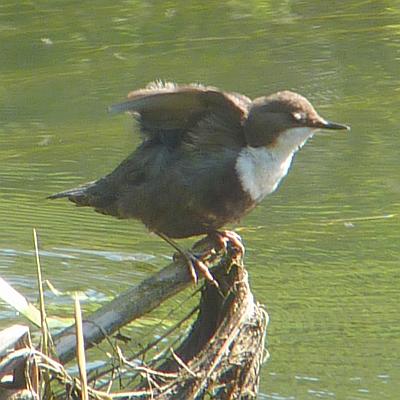
Working with John by email, we compiled a list of 50 potential new species that could possibly be seen in 6 days within the 100 mile or so radius of Madrid that we settled on as our route.  On the first day out we drove north of Madrid, ultimately spending the night at Sepulveda.  This small village in Segovia Province was spectacular in its location and the compatibility of its old buildings with the surrounding mountains, fields, and river.  Driving in late afternoon with the sun-glow on the lovely old, light tan buildings was an unforgettable experience.  Our lodgings in an old downtown hotel were antiquated but comfortable and the food at the local restaurant (lamb ribs) was good.  As for the birding, the first day resulted in the following new 17 species:  Booted Eagle, Melodious Warbler, Western Bonelli’s Warbler, Orphean Warbler, Firecrest, European Pied Flycatcher, Calandra Lark, Greater Short-toed Lark, Woodlark, Dupont’s Lark (very rare and difficult to find), Northern House Martin, Woodchat Shrike, Black-eared Wheatar, Cirl Bunting, Ortolan Bunting, Citril Finch, and White-throated Dipper.

white-throated-dipper

A real highlight of the day was a close-up view of a herd of about 30 wild Spanish Ibex.  Their numbers had been very low until the past few years, when legal protection and habitat preservation have allowed them to recover to some extent.  Other mammals that we saw during the 6-day trip included Red Deer, Fox, Rabbits, and Jack Rabbits.

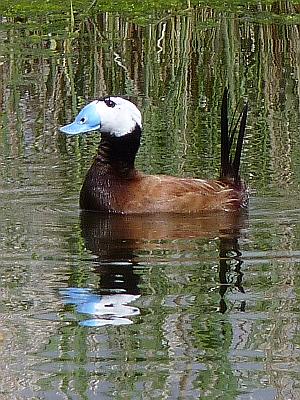
Day 2 we birded south-easterly from Sepulveda through dry and rough habitat, then by a long road trip to end at a lake area in La Mancha Province.  The wet habitat there was instrumental in allowing us to add 11 new species for the day:  White-headed Duck,

white-headed-duck

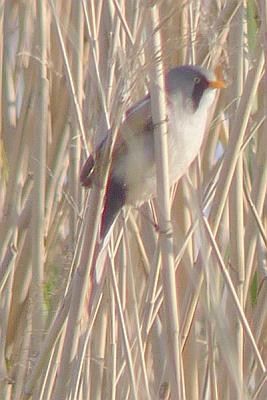
Greater Flamingo (by the 1000s), Montagu’s Harrier, Whiskered Tern, Eurasian Reed Warbler, Great Reed Warbler, Spectacled Warbler, Rufous-tailed Robin Thrush, Cetti’s Warbler, and Bearded Reedling.

bearded-reedling

Concern for the protection of a rare (in Spain) 11th species, primarily from over-zealous photographers, requires, at John’s request, that I not identify it.  Our lodgings and food were far from ideal that night.  I doubt that John will return there with other clients.
Day 3 we birded our way to Daimiel.  The habitat types were quite varied.  Thirteen species were added:  Little Grebe, European Honey Buzzard, Marbled Teal, Common Quail (heard only), Water Rail, Curlew Sandpiper, (unexpected find), Great Spotted Cuckoo, Little Owl, European Bee-eater, Savi’s Warbler, Eurasian Reed Bunting, Eurasian Golden Oriole, and Pin-tailed Sandgrouse.

Our lodging tonight made up for the deficits of the preceding night.  Very nice and very inexpensive.  41 species tallied to date.

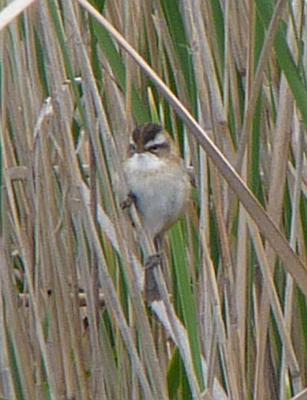
Day 4 we proceeded westward and northward on a long drive through Extramadura Province.  The weather was uncooperative, rainy and windy, so our birding was hampered.  Nevertheless we managed another 6 new species:  European Turtle Dove, European Roller, European Green Woodpecker (finally, we’ve been looking for days), Black Wheatear, Garden Warbler, and Moustached Warbler.

moustached-warbler

We ate lunch in a castle in a smallish village.  The view was outrageously beautiful.  This is where we spotted the Black Wheatears on the crags.  Tally:  47 species

Day 5 we headed north toward Manfrague National Preserve.  This is a lovely, nicely preserved large natural habitat, expecially for hawks, eagles and vultures.  We stayed at the rustic park Inn, which was nice enough, and the dinner served as part of the package (Red Deer) was very good.  Today we added 4 more species:  Black Stork, Little Tern (magically, it seems, it appeared on a flat-water temporary pond where we were looking for shorebirds), Whinchat, and Subalpine Warbler.

subalpine-warbler

We had a considerable amount of success.  Tally:  51 species.

Day 6 we started the morning where we left off the evening, and due to John’s sharp eyes, succeeded in locating both a juvenile Eurasian Eagle Owl and and well disguised adult.  Great views.  Next we had a smashing view of a close above Spanish Imperial Eagle.

spanish-imperial-eagle

This is one of only two species found only in Spain, i.e., a bird “endemic” to Spain.  I had seen one on our earlier trip, so it was not new, but the view this time was terrific.  (The Iberian Chiffchaff, which we did not see, may be an endemic, although it may also be in Portugal).  The Spanish Imperial Eagle was recently split from the Imperial Eagle because those on the Iberian peninsula are clearly different.  At this point, near mid-day, we were down to one potential new species, the Rufous-tailed Scrub Robin.

rufous-tailed-scrub-robin

Reclusive and usually limited to cultivated olive groves and their environs, we headed eastward toward Madrid in hopes of finding this last target.  John communicated with a fellow in a small town half way back to Madrid, who had reported finding these birds in his area.  He readily volunteered to meet us and lead us through the maze of olive groves to the potential site.  After an hour or two of searching, during which the bird could sometimes be heard but never seen, sharp-eyed John located it in an old olive grove by a pig-sty, and we had very good and satisfactory views, of this, my last new species of the trip.  John’s friend insisted on buying a round of beers for us as we departed.  The total, an amzaing 53 new species (one heard only), and a trip total of about 175.  John will be surprised at the number 53, because at the time I thought I was on 49 trying for 50 as we searched for the Rufous Scrub Robin.  I can’t account for the mis-count, although I was not then including Common Quail, because it was heard only.

Interesting non-avian sightings included a Sooty Orange-tip La Mancha, a Narcissus Rupicola, a Common Midwife Toad,a Parsley Frog,and lovely Rosemaria, among many other butterflies, dragonflies, damselflies, newts, lizards, frogs, toads, turtles, snakes, and other creatures noted by John for my benefit, on this much more than a birding adventure.

Bird 700-North American List

On May 30th, 2011, my list of North American Birds reached my long-sought-after number, 700: Calliope Hummingbird.  Actually, I saw several of them in the east Cascades, one in the willows at the reservoir at Conconully and several at a summer home in the Entiat River Valley.  On May 28th I was in Seattle for my sister’s 90th birthday party, after which I took a couple of extra days to drive over to the east Cascades where the chances of finding Calliopes (and Cassin’s Vireos) are good at this time of year. 

But first, I must mention that I was very happy to be my sister’s golf cart driver on the morning of her 90th birthday (91st birthday, 90th anniversary of her birth), when she came so close to shooting her age:  a 93 on the Lynnwood course.  She just needed to shoot (used in its golfing context, not in its hunting context) a darn Eagle (double Eagle?)  on the 18th hole to “shoot her age”.  She had a good round anyway, so away with all the 90-91 technicalities.  Several  members of her family participated in the golf outing as a prelude to a delicious afternoon dinner at her son’s home overlooking Puget Sound.  I don’t play golf, having pursued the superior, equally time-consuming and far less frustrating hobby of birding many years ago.  Even though golf is boring, it was a lovely and interesting day in the company of my wonderful sister and her equally delightful kids.  [I know, I know: I do overuse the parenthesis sign].

With the addition of the Calliope Hummingbird and the Cassin’s Vireo to my North American Life List, I now have only one more ABA “1” rated (e.g., easy to see) bird to find:  a Purple Sandpiper.  I think the number of ABA “1”  birds is 500 or close to it, so I have now collected views of ~499 of the ~500 “easy” birds to find in North America.  It would have been fun to have something rare, like a Blue Mockingbird, for number 700, but I was just as happy to come within one of completing my sweep of the “easy” ones.  The Cassin’s Vireo became North American number 701.  Part of my determination to find these birds on this trip is that I understand that effective in August the American Birding Association will “split” Mexican Jays into two species,  the Arizona type and the Texas type.  I have seen both, so by default, as of August, I would have had to include on my list one of these as number 700 even though I saw it (them) several years ago.  That would be so anti-climactic.  So now, split away, ABA.

One of the pleasures of birding is that you meet very nice and helpful people in the field or on the internet when you are looking for a bird or researching  locations.  In this case, I am especially thankful to Don Hester, owner of NCW Home Inspections, whose blog includes much more than just home inspection information.  He is a birder, or at least a bird photographer, and he puts excellent photos on his blog, which is how I found him through Google.  He has allowed me to include this photo of a Calliope Hummingbird, taken at his feeders at his summer home in the Entiat River Valley. 

calliope-hummingbird

It may be the same bird and the same feeder that I saw there.  Unfortunately, my wife and photographic expert was at a horse show in Madison, WI, winning her first blue ribbon of the year with her beautiful horse, so she missed this photographic opportunity.  Even though she hated to miss the birthday celebration and my number 700, she would probably elect that option again.  Life is full of hard choices.

For more of Don’s hummingbird photos, you can check his blog at ncwhomeinspections@gmail.com.

Lisbon and the Atlantic Coast of Portugal – Days 12 & 13

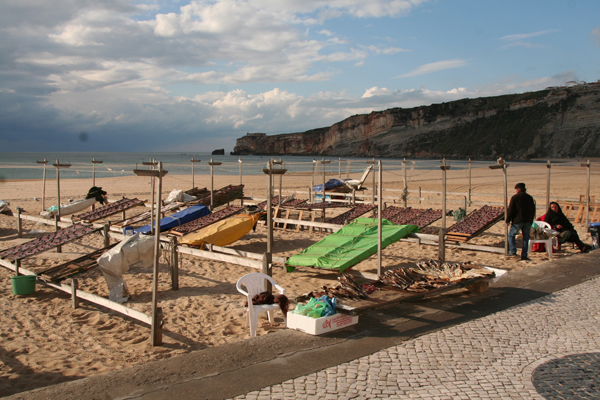
After wandering around the vineyard a while and having a late breakfast, we ventured on through the Duoro Valley on our way to Obidos for lunch.  Our GPS took us to a very small village named Obidos rather than the town we were expecting, so we went to Nazare instead.  I think it was meant to be because it was a fascinating town on the Atlantic coast. Some of the older women still wear several layers of petticoats under their skirts. The local fisherman bring in their catch, clean them, and put them neatly on racks to dry in the sun. Their wives then sell the dried fish.  No, we didn’t try them.  The look and smell of the drying fish were quite unappetizing.

drying-fish

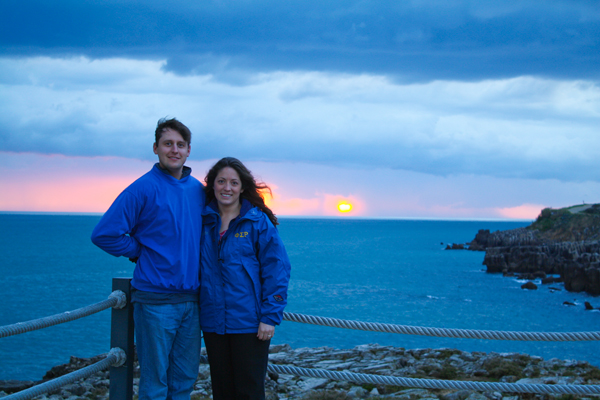
Off to our next destination, Peniche, to watch the sun set over the Atlantic.  Such a sight!

sunset

Due to the layout of it’s beaches and breaks, the town is known for having some of the best surfing conditions in Europe.  Everyone was in Mardi Gras mode for the weekend with lots of costumes and music.  We had such a nice day meandering along the coast that we ended up arriving in Lisbon rather late.

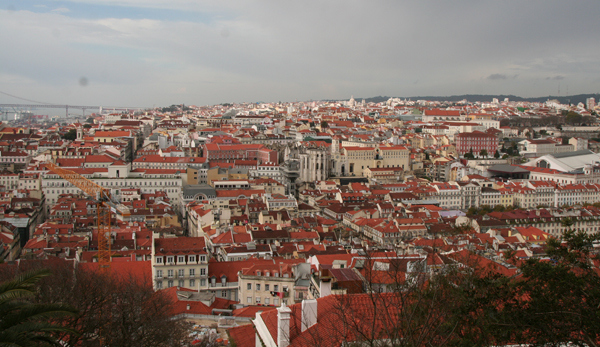
The next morning we started out by going to St. George Castle.  While the castle is interesting to see, the real attraction is the great view of several main squares and avenues and many churches in Lisbon.  We could also see for miles along the riverfront and the 25th of April Bridge.

lisbon-view

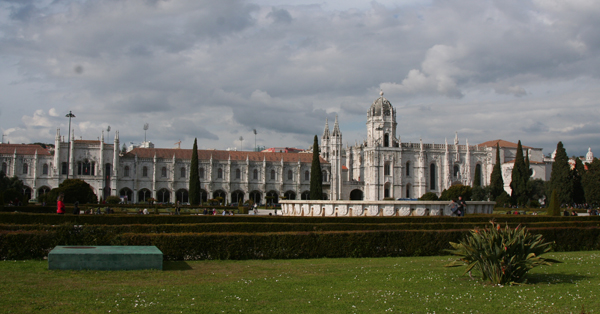
From there we walked down the steep streets to Praca do Comercio to catch the trolley to Belem.  Here we toured the Monastery of Jeronimos.

belem-church

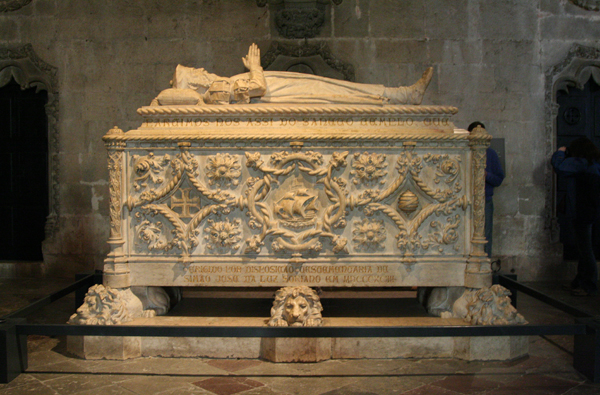
It was built in 1502 to commemorate Vasco da Gama‘s successful voyage to India and now houses his tomb.

vasco-da-gama-tomb

The cloisters are where the signing took place when Portugal joined the European Union in 1986.

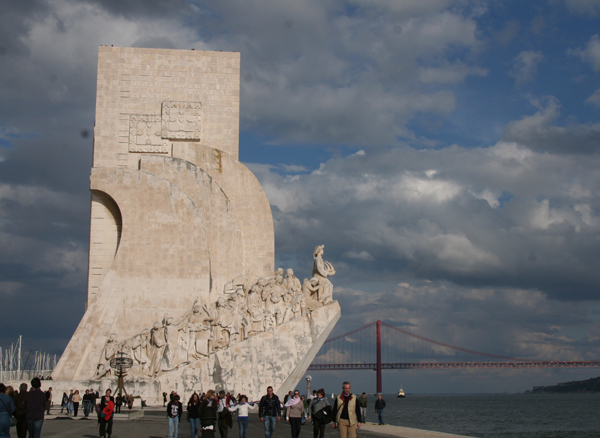
From there we crossed the street to the impressive and massive Monument to the Discoveries.  It was built in 1960 for the 500th anniversary of the death of Prince Henry the Navigator.  It represents a 3-sailed ship ready to depart.  The sculptures are of famous men who were prominent in early maritime exploring.

monument

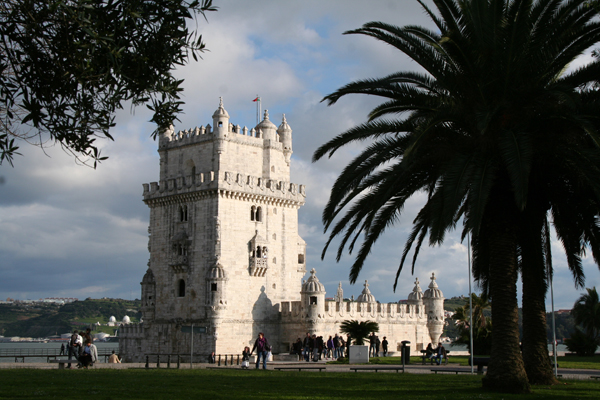
Nearby was Belem Tower, the point from where the explorers embarked on their journeys and to where they also returned.  It was built in 1515 as a fortress to guard the Lisbon harbor.

belem-tower

After waiting quite some time for our bus which would take us back to the area of our hotel, we realized it didn’t run on Sundays.  Good thing there were plenty of taxis available.

In the evening we (my wife and I) thought we should experience the traditional Fado of Lisbon.  Our daughter and son-in-law were their usual cooperative selves and went along with our decision.  Fortunately, the dinner was fine.  The singing is very mournful, and no one is to talk or interrupt in any way.  Now we can say we’ve experienced a Fado.

It was sad to realize our trip was ending.  The next morning we said goodbye to our “kids” at the airport and drove back to Madrid to return the car.  As you know from an earlier post, we enjoyed the next day birding in the Madrid area before coming home.

We found the people and country of Spain to be beautiful and interesting.  We hope to visit there again.

Portugal – Porto & Duoro Valley – Days 10 & 11

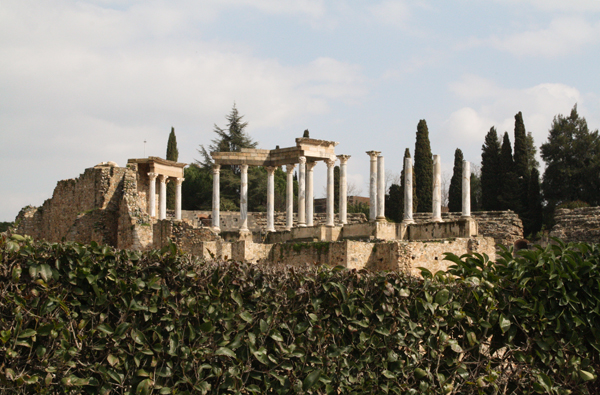
Heading northwest we passed an abundance of oranges, olives, and grapes being grown. We stopped in Merida, a Unesco World Heritage Site to see some of the many well-preserved Roman ruins.

merida

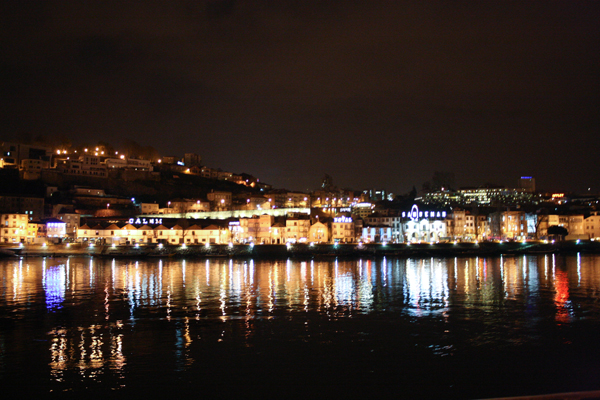
We’re on our way to Portugal!  We decided we should experience Portugal while we were in the area.  We arrived in Porto during evening rush hour, so there was heavy traffic on narrow streets, but the drivers were very polite.  We eventually found our nice hotel overlooking the river.  We followed the river walk to a great restaurant.  The view across the river was so beautiful with all the lights in the evening.

porto-night

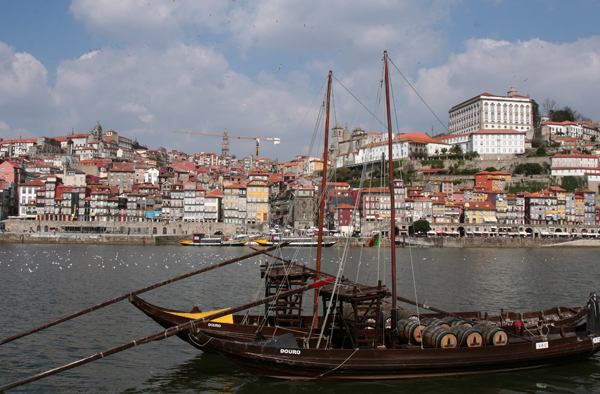
After breakfast the next morning we were off to explore some of the port wineries.  To get there we had to cross a huge suspension bridge.  From there we had a perfect view of the city.  All along the river bank are the boats from the different wineries which bring in the grapes from the vineyards.  Actually, they are for ambiance since today transportation is provided by stainless steel semis.

wine-boats

Our first stop was at Kopke, the oldest company.  They were very hospitable and treated us to four varieties of their fine port wine accompanied by chocolates.

kopke

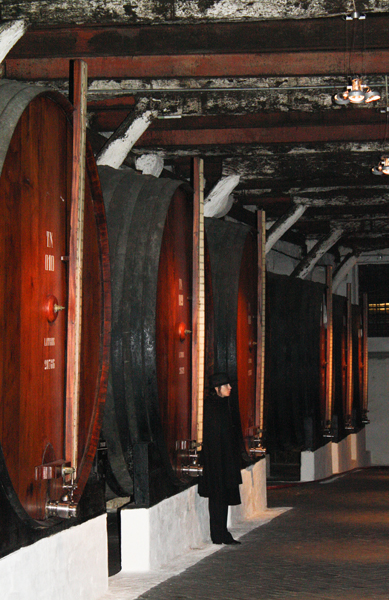
On to the Sandeman winery.  This is a much larger operation which offers tours.  How interesting to see the huge wooden vats of aging wine and learn about the process of producing port.  More samples.

sandeman-tour

We got our exercise by walking up, and I do mean up, to the Taylor winery for lunch. Not only were the food and port very good, the view from their patio was quite a sight.
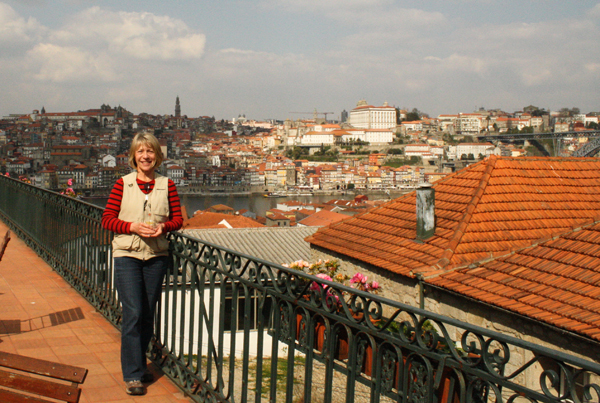
taylor

We chose to go to Porto only because it was about the right driving distance to cover in a day.  As it turned out, it was one of our favorite places.

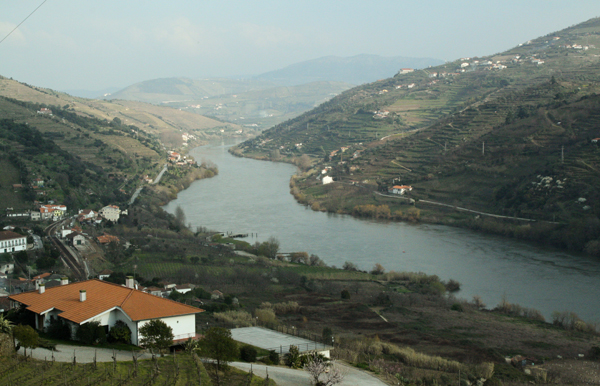
After lunch it was time to head out along the Duoro Valley.  Many of the roads were narrow and winding, but seeing the hillsides covered in vineyards was spectacular.

duoro-valley

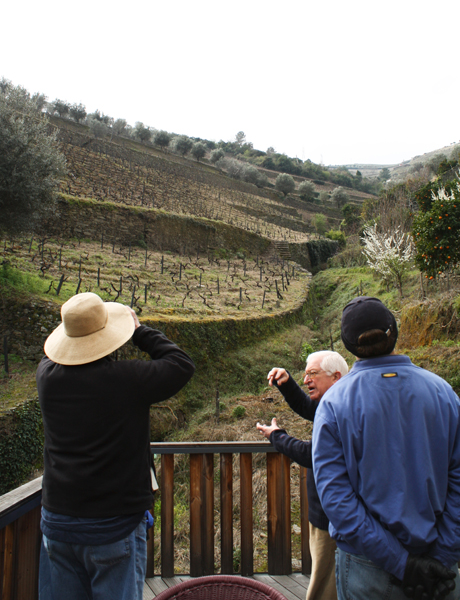
We arrived at the Marrocos Vineyard for dinner and overnight lodging.  Due to a glitch with the email reservations, they were not expecting us.  Panic!  Not to worry as they graciously prepared dinner and invited us to eat with them in their kitchen.  Caesar took us on a tour of his operation which is much smaller and different from what we experienced in Porto.  They actually stomp the grapes the old-fashion way by having people walk in them for four hours.  He then allowed us to enjoy wandering around their vineyards on our own.

marrocos

Another great day!  Everyone was so pleasant.  Also, English is more widely used there probably because of a long-standing relationship with Great Britain.