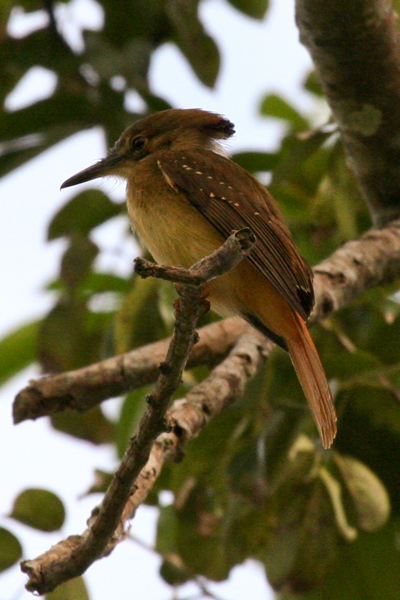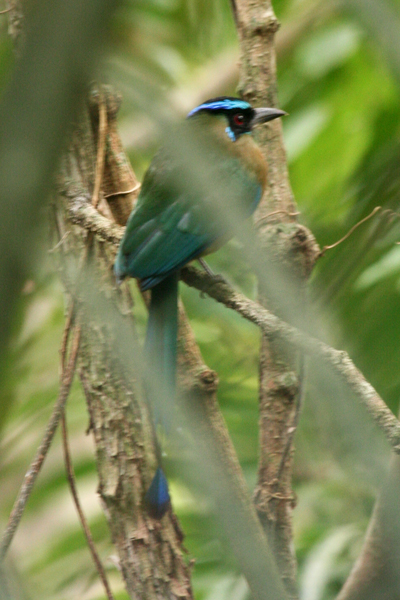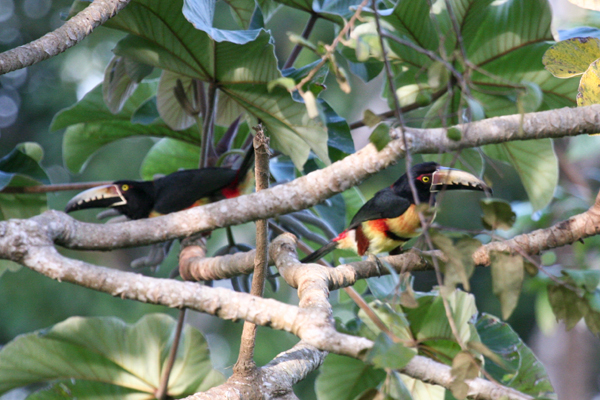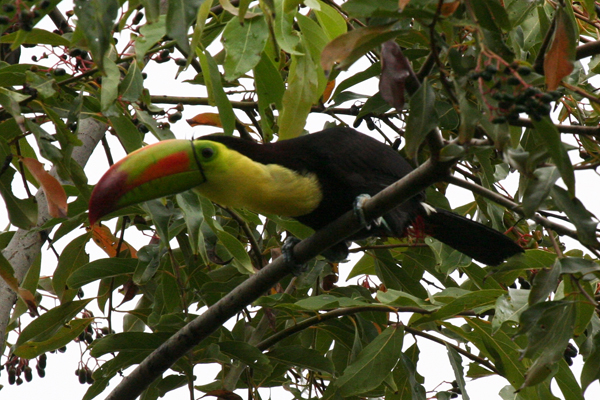
Seville – Day 9

Today we left the mountains and drove through beautiful Andalucia countryside to Seville. My wife and daughter often have a problem riding in the backseat of a car in the mountains, so my wife drove while my daughter navigated.  When we arrived in Seville, I knew I had made a very wise decision to let her drive.  The streets in the Santa Cruz area were unbelievably narrow.  In fact the street of our hotel was pedestrian only.  After the three of us dropped our things at our hotel while my wife double-parked, I waited at the hotel while they drove to the parking garage and maneuvered the car into a very small spot.  I was relieved to see they were smiling and laughing when they returned to the hotel.

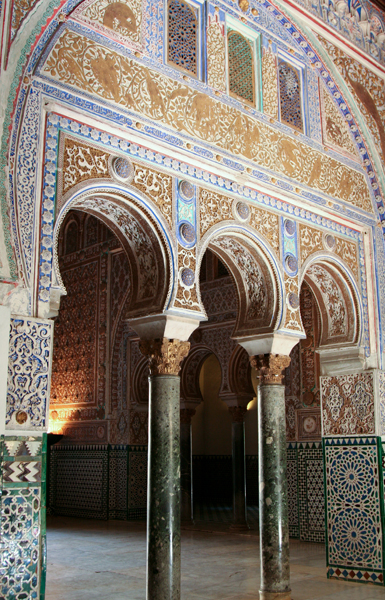
After lunch we visited the Alcazar which is still used today as a royal palace.  It was originally built by the Moors in the 10th century.
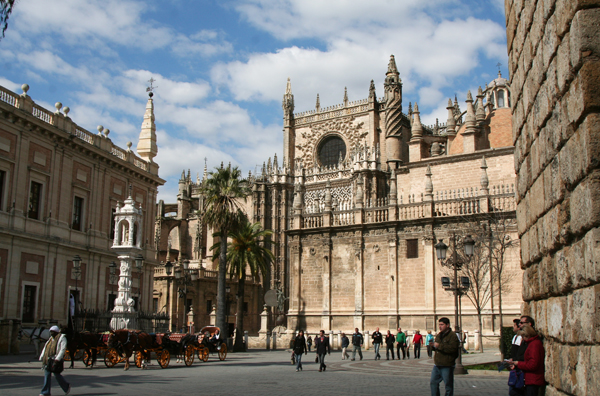
alcazar-exterior

Part of the interest here is that it was extensively remodeled in the 14th century by Moorish workmen for the Christian king, Pedro I.
alcazar-interior

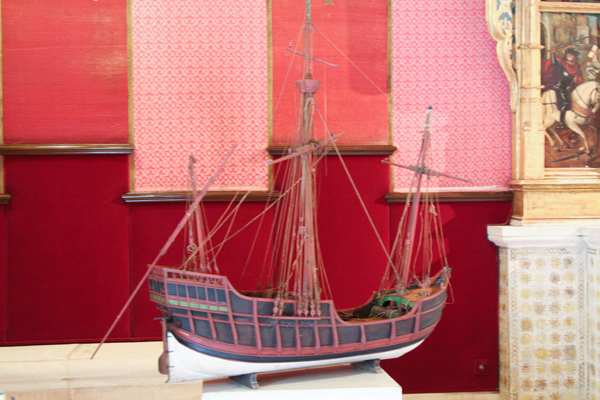
In the Admiral’s Apartments is the earliest known portrait of Christopher Columbus as well as a model of his flagship Santa Maria.
santa-maria

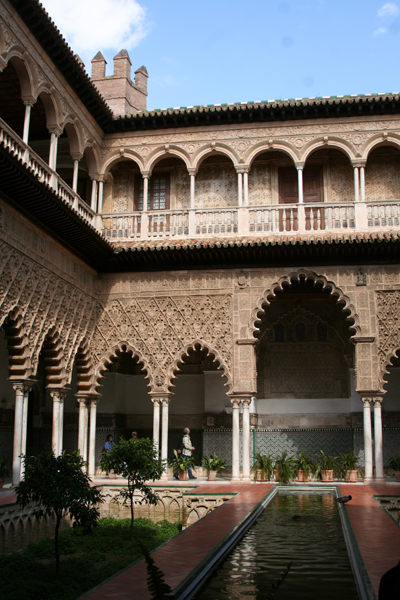
We also enjoyed seeing the Patio of the Lions, King Pedro I Palace, Court of the Maidens, and the lovely gardens.
alcazar-courtyard

In the Gothic wing of the Palace are copies of 16th century tapestries from Brussels.

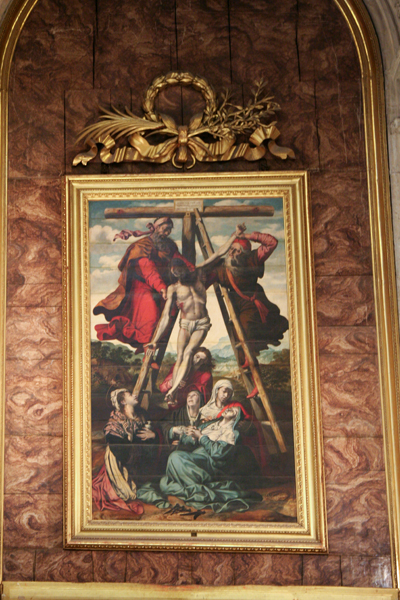
On to the cathedral which is the 3rd largest church in Europe.  As you probably know, the largest is St. Peter’s at the Vatican followed by St. Paul’s in London.  This is, however, the largest Gothic church anywhere.  Some of the works included in the art pavilion are by Seville’s 17th century masters, Bartolome Murillo and Francisco de Zurbaran.
art

As one would expect in such a large church, the 65-foot tall high altar is the largest altarpiece ever made.  It shows 44 scenes from the life of Jesus carved from walnut and chestnut and covered with an enormous amount of gold leaf.
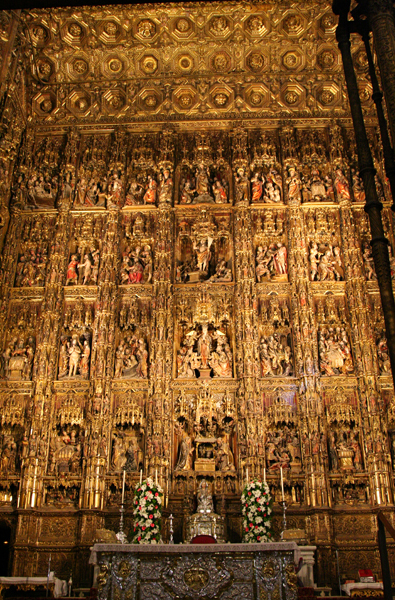
high-altar

The 7,000-pipe organ, the chapels, the sacristy, and the treasury were all very interesting to see.  One of the most photographed sights is the tomb of Christopher Columbus.
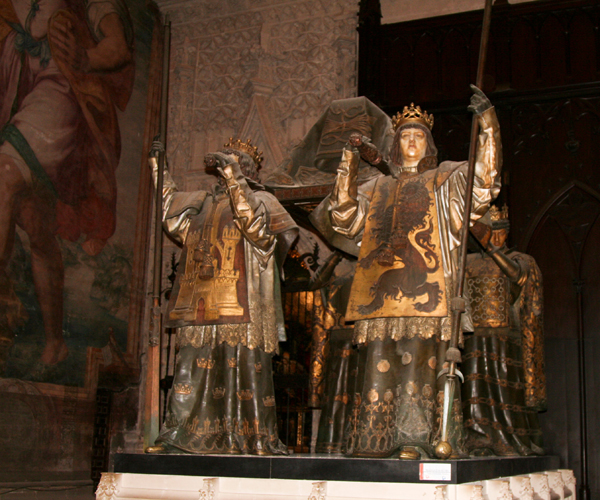
tomb

The Giralda Bell Tower was originally built as a Moorish minaret, but is now the cathedral’s bell tower.  Of course we climbed 330 feet up for a view of the city.  Instead of steps, there’s a spiraling ramp designed for riders on horseback to answer the Muslim call to prayer five times per day.
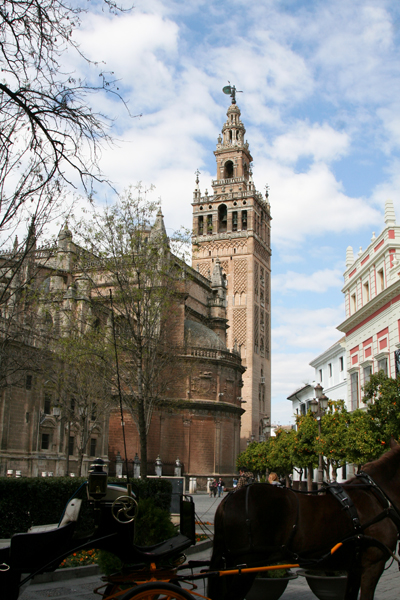
tower

You know the saying “when in Rome….”   Well, when in Seville, one must experience flamenco.  Seats were on a first come basis, so we arrived in plenty of time and were very glad we did because we had a perfect view.  The guitarist was outstanding, the singer was very soulful, and dancers were great fun to watch.  The show was a real highlight of the trip.
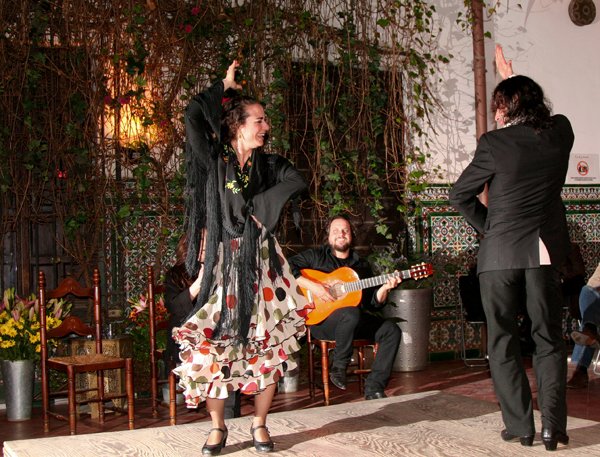
flamenco

A glass of port, then off to bed following a busy day of sightseeing.
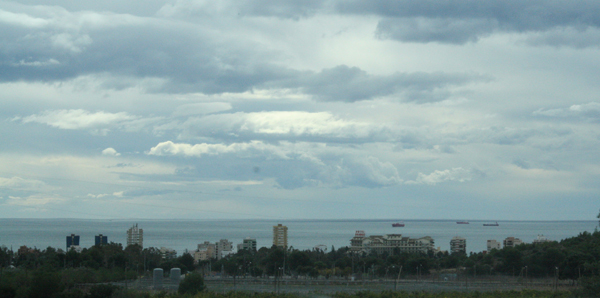
Spanish countryside and Granada – Days 7 & 8

We retrieved our car from the Barcelona airport parking area and headed toward the coast.  Although it was cloudy, we could see the beautiful  Mediterranean Sea.

mediterranean

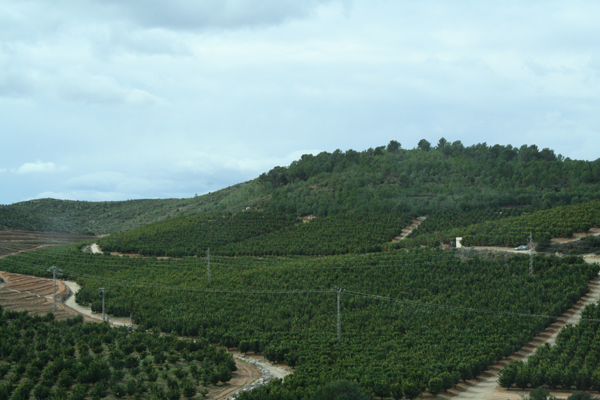
Heading inland, we saw almond, orange, and olive trees for miles and miles.

orange-trees

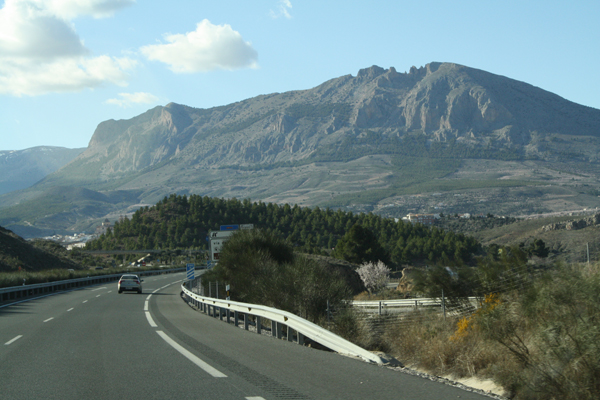
After a while we began to see mountains.

first-mountains

As we came close to Granada, the mountains were very high and snow-covered.  It was truly a day of beautiful scenery!

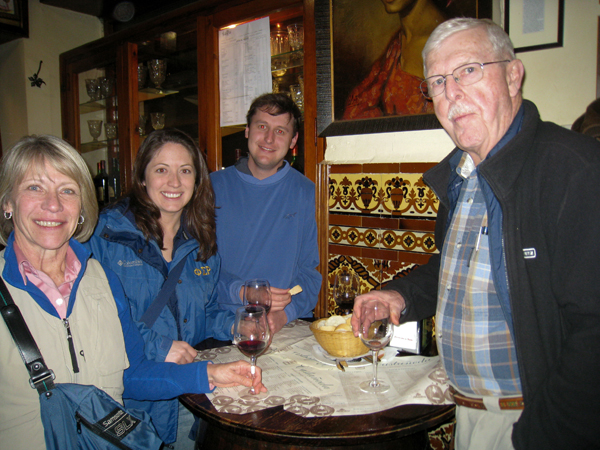
We arrived at our hotel which was directly across the street from the Alhambra.  We walked to Plaza Nuevo to find a spot for a tapas dinner.  We decided to go to Bodegas Casteneda since it was one of Rick Steves’ recommendations.  The place was packed with lively people!  We felt a bit like vultures, but we finally found a small stand-up table and ordered a bottle of wine to go with the free shrimp appetizer the personable waiter brought us.  We had been sitting in the car for most of the day so decided to go ahead and order tapas at our table rather than wait for a sit-down table.

tapas

It was a very fun evening with great food, wine, and atmosphere.

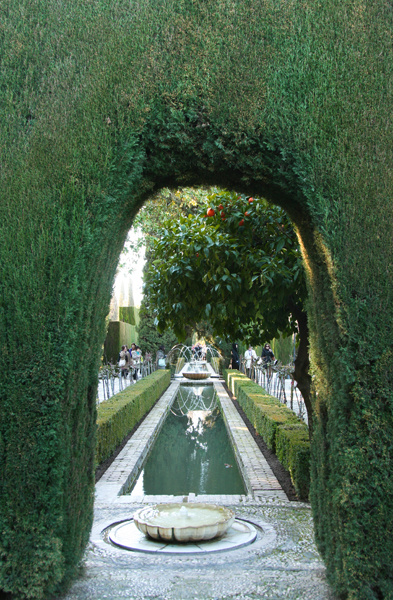
The next morning we crossed the street to enter the grounds of the Alhambra.  Fortunately, our daughter had ordered tickets online so we could go right in.  We began by strolling the Generalife Gardens.

general-life

The summer palace was home to the Moorish kings.  The gardens were planted over 600 years ago and still look almost the same as they did in 500-year-old paintings.   The original residents enjoyed the fresh fruits and vegetables which were grown here.

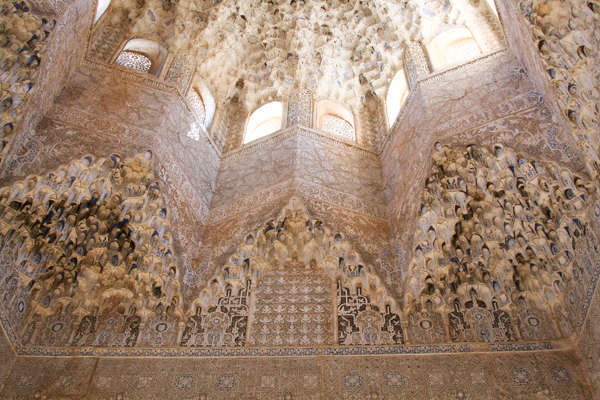
The Palacios Nazaries is a fabulous structure which highlights the refined elegant Moorish civilization of Iberia.  We visited all the magnificent rooms.

ceiling

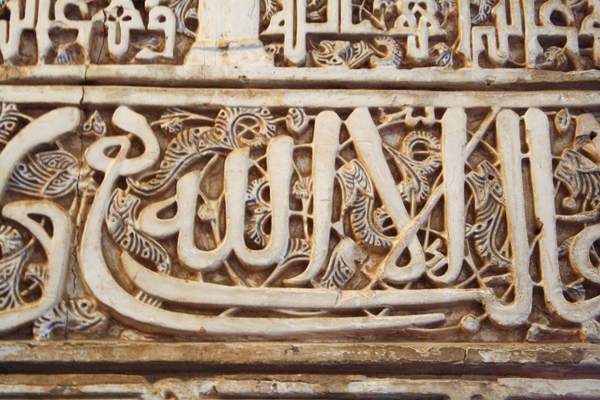
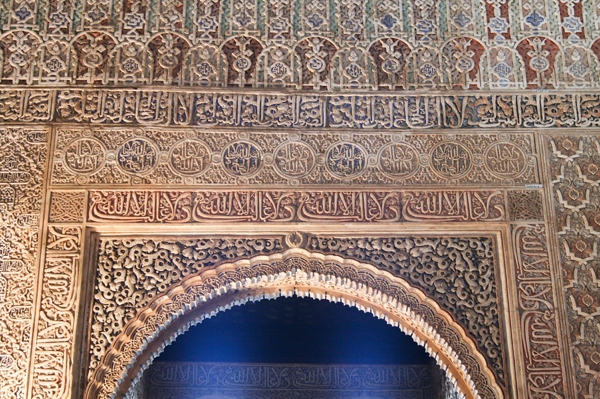
Much of the decoration is writings from the Quran.  The phrase “only Allah is victorious” is repeated 9,000 times in the palace.

qaran-writing

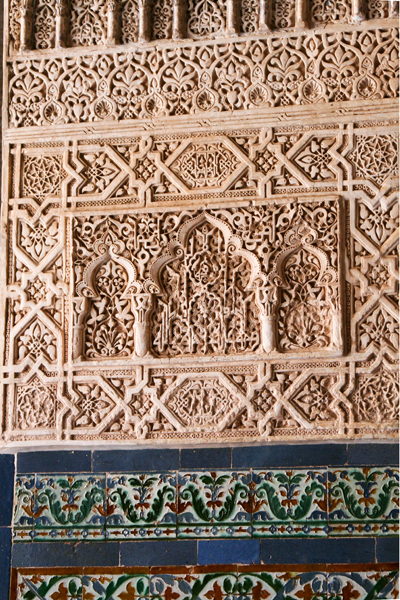
One can hardly imagine what it must have been like in its prime with such vivid colors.  At one time the Alhambra was a city of 2,000 people.

walls

The largest room is the Grand Hall of the Ambassadors which was used mostly as a throne room.  After a 700-year battle, the Reconquista was completed in this room as Boabdil signed his surrender before leaving for Africa.  It was also the room in which Columbus pleaded with Isabel and Ferdinand to fund his voyage to sail west in order to reach the East.

grand-hall-1

The Courtyard of the Lions is being restored, so the original 12 lions have been restored and are on display inside (no photos) awaiting their return to the courtyard.

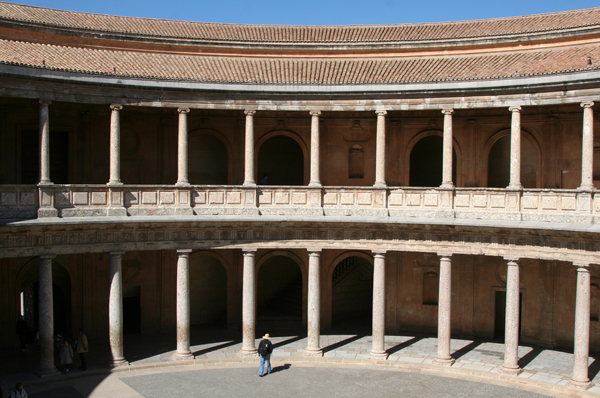
The conquering King Charles V built his own palace with funds from the defeated Muslim population.  The circular courtyard is still used for music since it has outstanding acoustics.

charles-v-palace

His son, Philip II, then built his own massive palace, El Escorial.  (See Days 1 & 2 to read about it.)

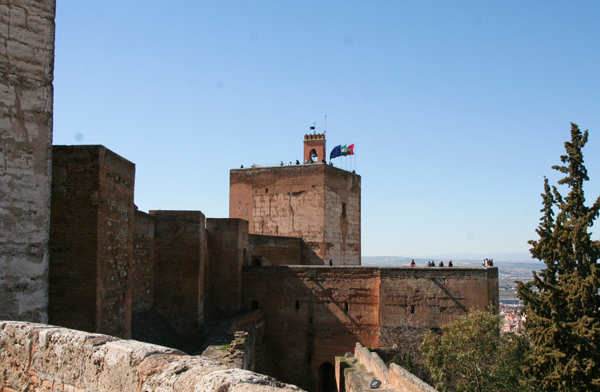
We visited the Alcazaba which is the original “red castle” or “Alhambra.”  The view from the top makes the climb worthwhile – Plaza Nueva, the Albayzin neighborhood, the Sierra Nevada mountains.  This is where the Aragon and Castile flags were raised along with the Christian cross as the Moorish king Boabdil fled in 1492.  Much later Napoleon had troops here who left substantial damage.

alcazar

After returning home, I read Washington Irving’s “Tales of the Alhambra.”  He wrote it during a romantic time in Spain while he was staying in the Alhambra in 1829.  His writings rekindled interest in the Alhambra and caused it to become a national treasure.

After a very interesting day at the Alhambra, I was ready to relax for a while.  The rest of the family pushed on.  They stopped at the lavish Royal Chapel to see the tombs of Queen Isabel and King Ferdinand.  Isabel made Granada the capital of Spain since that was where Christianity had overcome Islam in Europe, and it’s where she agreed to sponsor Christopher Columbus.  One of the most interesting sights is the painting in the lobby of Boabdil giving the key of the city of Granada to King Ferdinand.

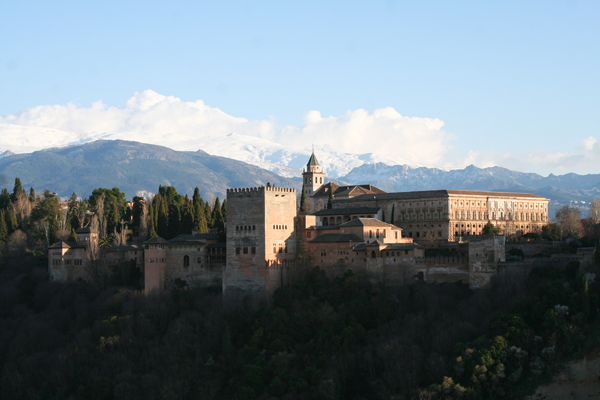
We had heard that the Alhambra is especially beautiful just before sunset from San Nicolas viewpoint, so they continued on wandering up through the Albayzin to the viewpoint.  It was a difficult walk, but they were not disappointed.  What a view of the Alhambra with the snow-capped mountains in the background.

alhambra-view

As the sun went down, they looked for a taxi, but there was not a single one to be found, so they made the trek back to the hotel.  After a long busy day, we decided to do something we almost never do – eat at the hotel.  It was a fine choice as the food was good and we were serenaded by an ensemble from Universidad de Granada.

Barcelona – Days 5 and 6

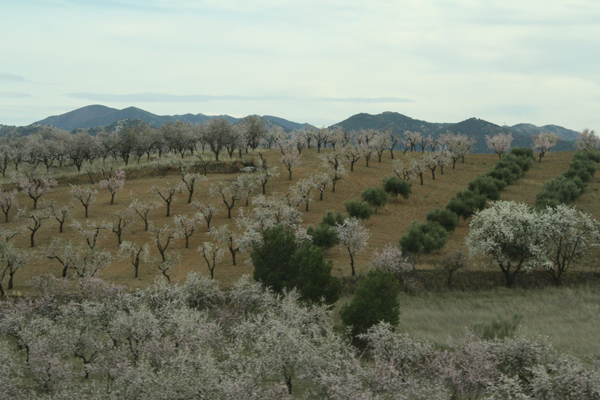
Having no need for a car in Madrid, we took the Metro to the airport to pick up our car to begin our travels to Barcelona.  The landscape and scenery along the way were varied and beautiful.  The highways were excellent with little traffic.  The almond trees were in full blossom.

almond-trees

We drove to the Barcelona airport to park the car to avoid driving in the city.  It worked very well.  We were warned to leave absolutely nothing in the car while it was parked anywhere.  Our daughter inadvertantly left 2 2-Euro coins in the cup holder and worried (unnecessarily) about them.  No problem!  We took the bus to Placa de Catalunya and walked to our hotel near the cathedral.  We were pleasantly surprised that we had been upgraded to their sister hotel across the street.  As we left the hotel to find a tapas spot for dinner, we enjoyed watching people in front of the cathedral doing patriotic Sardana dances.  These take place on most Saturday evenings and every Sunday noon.

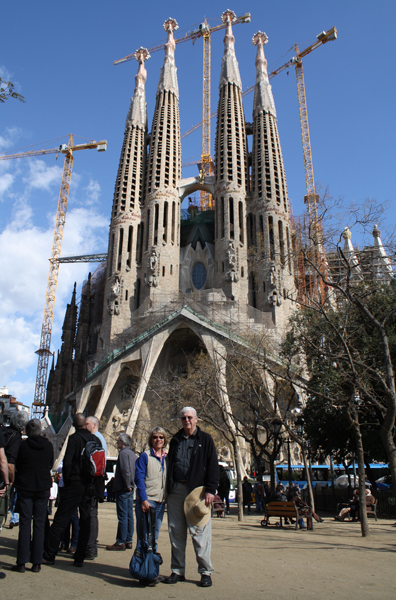
The next morning, after a quick breakfast at Starbucks and LaMie, we were off the see Gaudi’s Sagrada Familia (Holy Family Church).

passion-facade

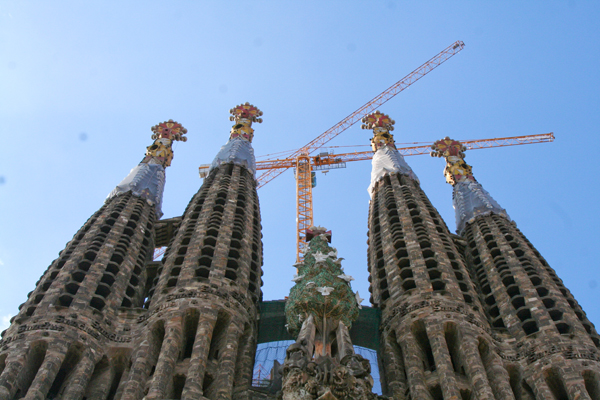
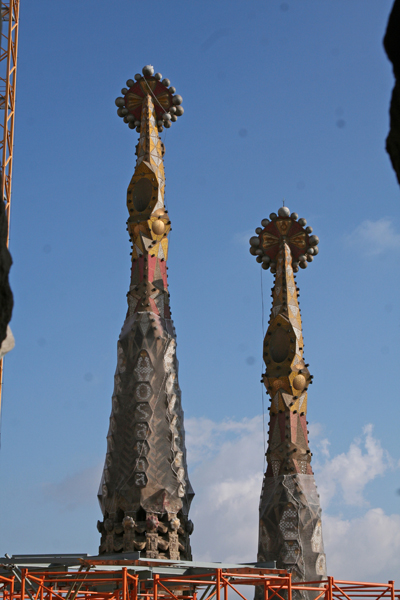
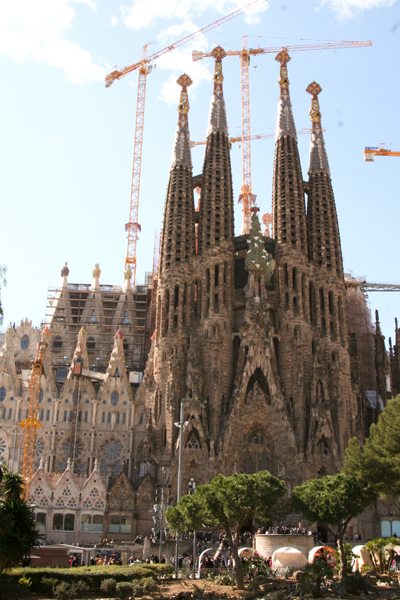
It is spectacular, unbelievable, and like nothing else we had ever seen.  Antoni Gaudi worked on it from 1883 until his death in 1926.  Construction is still being done and is not expected to be finished for another 25 or so years.  We thought both the interior and exterior were beautiful, but like all art/architecture, beauty is in the eye of the beholder.  The original design calls for 18 towers – 12 apostles, 4 evangelists, Mary, and the tallest one in the center representing Christ.  So far 8 have been erected – 4 apostles on each of the Passion and Nativity Facades.

nativity-facade-towers

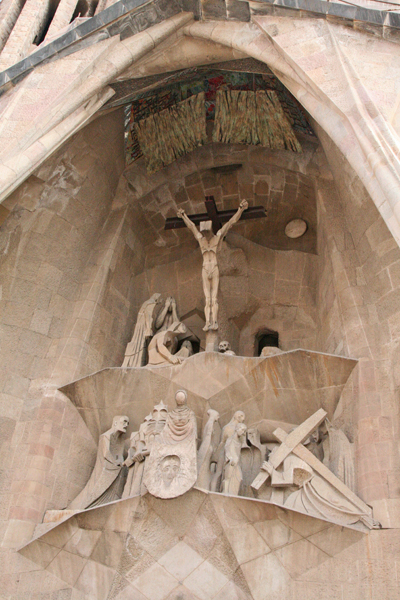
The three facades chronicle Christ’s life – birth, death, resurrection .  We started at the Passion Facade by Josep Subirachs, not Gaudi, which depicts much symbolism from the Bible with figures carved in stark straight lines.  It’s difficult to believe this impressive facade is actually just a  side entrance.

passion-facade-close 

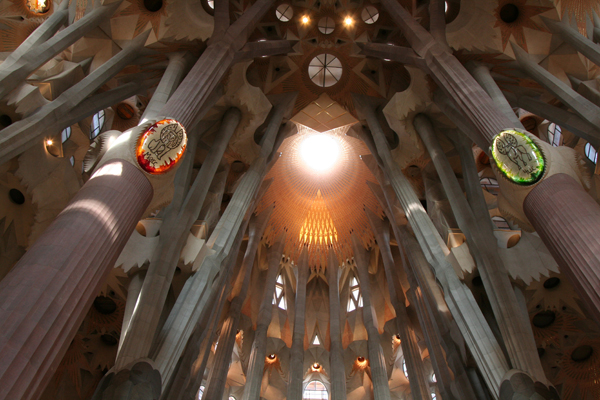
Entering the church, it seemed as if the massive columns reached all the way to heaven where daylight streamed through little windows high above. 

interior-columns

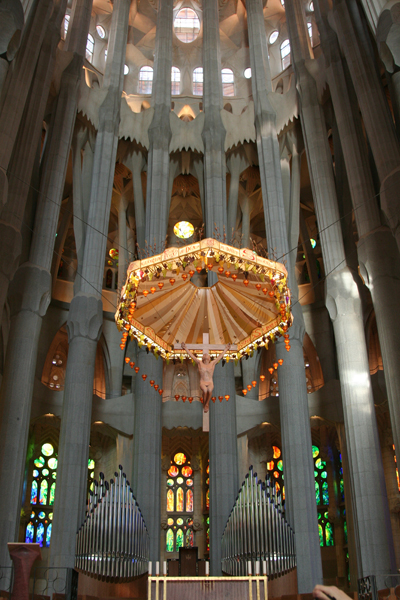
There are stained-glass windows, a horseshoe-shaped choir halfway up the columns, an organ, and a spiral staircase.  No matter which way we looked, there were endless geometric designs.  An awe-inspiring crucifix is suspended above the altar.

interior-cruxifix 

To give our necks a break from looking up for so long, we took the elevator up 215 feet, climbed a few stairs, and got quite a view of the city and a close-up view of a few of the church towers

towers-up-close

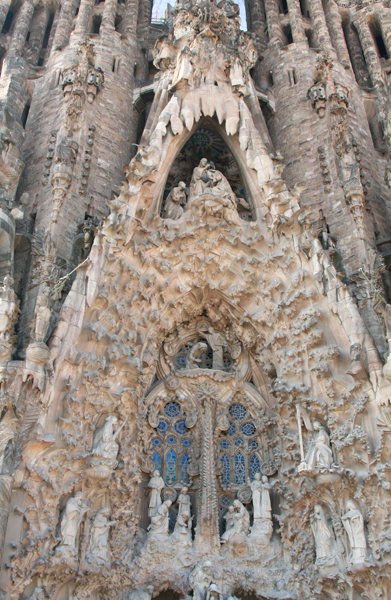
Returning downstairs we went outside and walked around to see the Nativity Facade.  This is the best example of Gaudi’s cake-in-the-rain style.  

nativity-facade

The sculptures are ornately decorated with scenes from nature.

nativity-facade-close

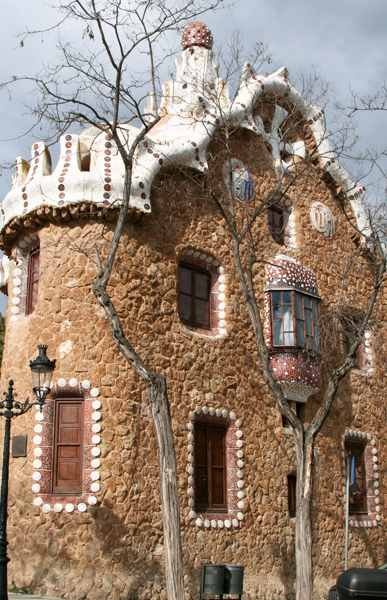
By now we were pretty hungry, so we found a nice restaurant with tables outside to enjoy tapas and sangria.  On the map it didn’t seem very far to Park Guell, so we started out walking, refreshed from our lunch.  What was missing on the map were the elevations showing the steep hills we needed to climb to reach the park.  It was quite a hike, but we enjoyed seeing the neighborhoods along the way.  Gaudi designed this park as a high-income housing community, but he was ahead of his time.  As a park, however, it’s very much a success.  Even though we were there on a rather cool cloudy Sunday afternoon, there were lots of couples and families enjoying the day and seeing what the street vendors had for sale.

park-guell-house

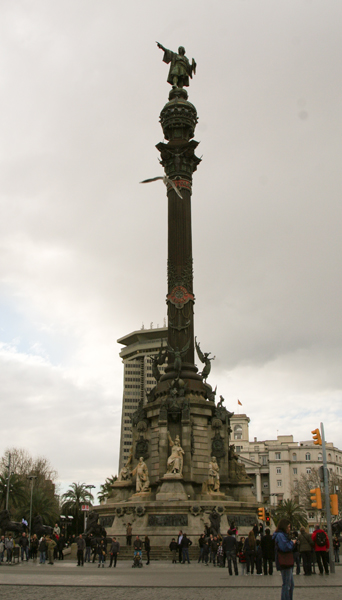
From there we took a taxi to the harborfront which was also bustling with people.  The 200-foot Columbus monument marks the place where Ferdinand and Isabel greeted him on his return from his first trip to America. 

columbus

After a nice walk along a crowded pier, we started walking up the Ramblas toward Placa de Catalunya.  My son-in-law and I returned to the hotel somewhat earlier than my wife and daughter.  It had something to do with stopping (or not) at all the little shops along the way.

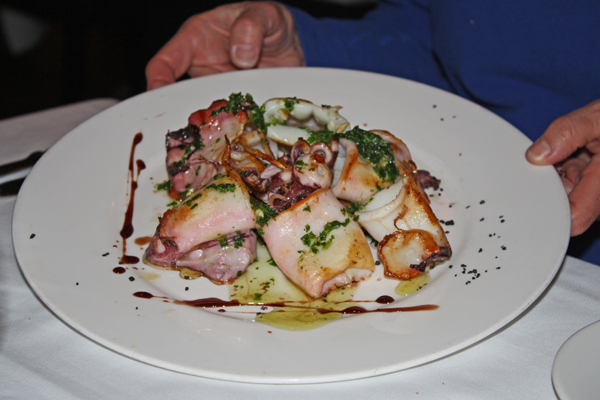
My wife and daughter ordered squid for dinner.  Rather adventuresome, but they said it was very good.  Anyway, our dinner was a nice way to cap off a very full and interesting day.

squid

Since our daughter was limited on vacation time, we almost skipped Barcelona.  We were all very glad we didn’t since it proved to be one of our favorite places.

Madrid &Toledo-Days 3 and 4

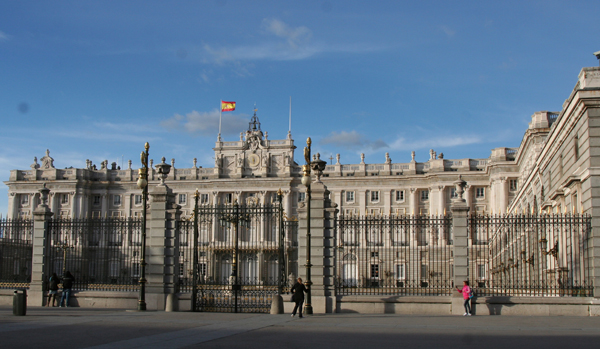
Day 3-Madrid:  I picked up a late breakfast at Starbucks and we waited for our daughter and son-in-law at our hotel.  They arrived right on schedule via the airport and the metro.  Notwithstanding their fatigue from the long over-night flight from Oklahoma, we immediately started off to see the Royal Palace

royal-palace

King Philip V, who ruled Spain for 40 years, commissioned this huge palace.  He was the grandson of Louis XIV and was born in Versailles.  His French style, coupled with his wife’s Italian heritage, can be seen throughout the more than 2,000 rooms.  We didn’t see them all.  It is very beautiful and it is still used today for formal affairs.  The throne room was especially impressive.  This is where King Juan Carlos greets his guests before dinner.  The Stradivarius Room has the only in tact Stradivarius quartet (2 violins, a viola, and a cello) in existence.  The armory is full of interesting armor and other instruments of battle, attractively displayed,  from the 1400s on.  The oldest piece is the shield of Boabdil who was the last Moorish king.  No photos are allowed inside the Palace, so you will have to see it for yourself. 
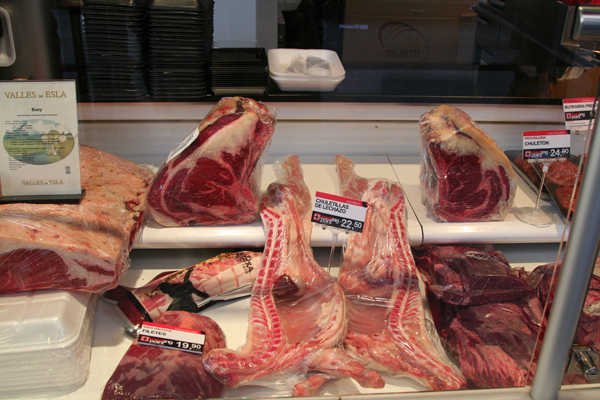
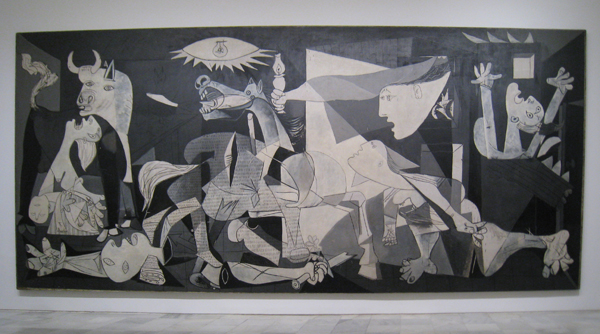
We went for lunch at the market that Barbara and I had found the day before.  The food (small servings of a variety of selections) was  interesting and quite good.  Daughter and Barbara, proving the adage that woman is the stronger sex, immediately took off to see the Centro de Arte Reina Sofia to view its modern art collection, while the males returned to the hotel for a (for them) much needed nap.  Meanwhile, the “girls” enjoyed the works of Goya, Miro, Dali, Picasso, El Greco and lesser (?) lights at the Modern Art Museum.  The highlight, considered by many to be the most impressive work of art in Spain, was Picasso’s “Guernica“. In shades of stark black and white, this expansive canvas shows the horrors of modern warfare (the Spanish Civil War bombing of Guernica by Hitler operatives at the request of Franco) in modernistic form.  This painting, shown only in New York until after the death of Franco, generates one’s interest in the history that it illumines. 

guernica

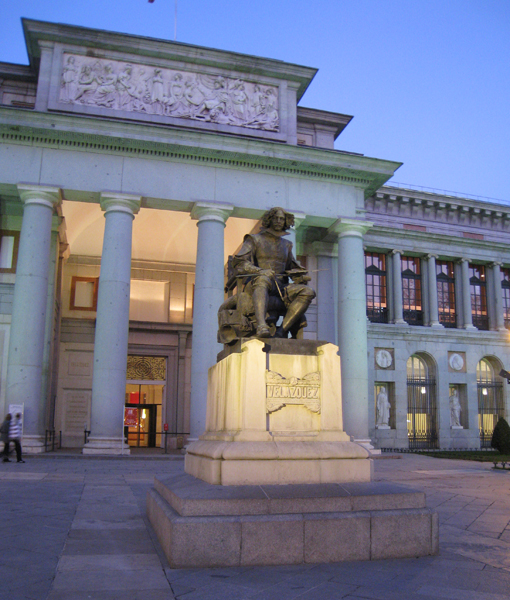
In mid-afternoon, we all met at the Prado.  This huge facility houses more art than can possibly be viewed in a day, or perhaps a week.  The most important masterpieces and their locations are listed in the brochure, so we made it a point to find them.

prado

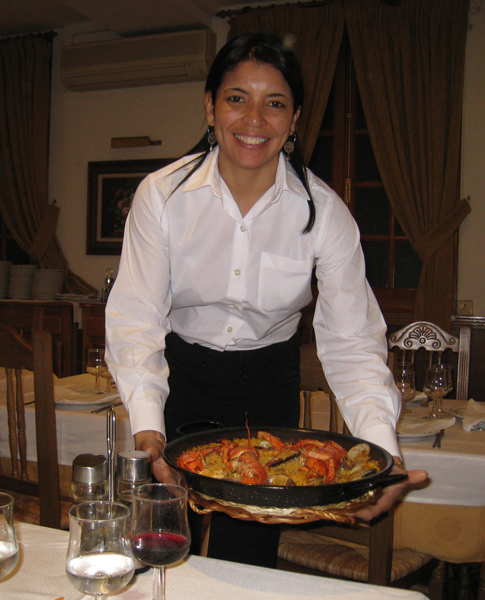
That evening we enjoyed a Spanish specialty, Paella, at a local restaurant recommended by our hotel staff.  This capped a very long and busy day. 

paella

Day 4-Friday the 25th:  We walked from our hotel, the Preciado, through Puerto del Sol, to the train station to board for a trip to Toledo.  The next couple of trains were fully booked, so we reserved seats on a later morning departure.  With an hour or so to spare, we walked around the park for a while.  The ride to Toledo is only about 30 minutes, through interesting open country-side.  Toledo was once the Capital of Spain.  The mix of Jewish, Moorish, and Christian heritages makes it very interesting. 
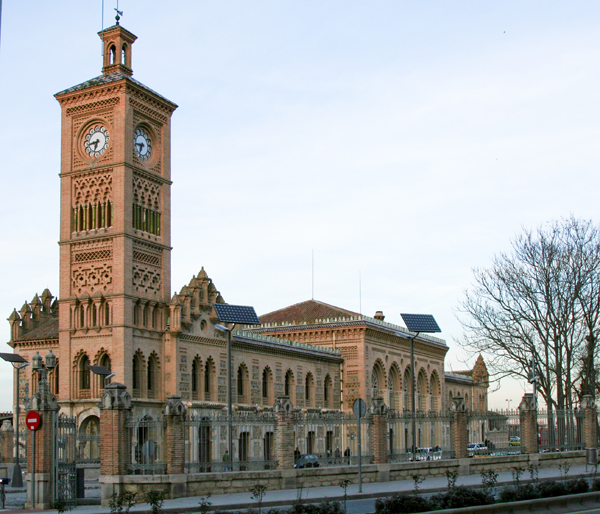
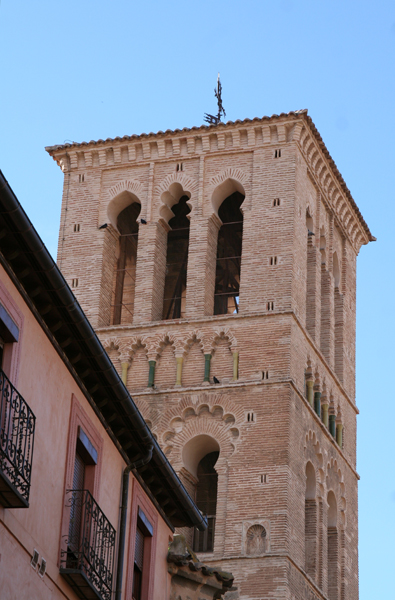
The train station at Toledo is a neo-moorish style, very attractive. 

train-station

From the train station we took a taxi up the “hill” to the Cathedral.  Our first objective was to find a place for lunch.  The hilly terrain makes walking a bit difficult, but we located a little open-air cafe and enjoyed a typical Spanish mid-day repast.  Thence, to the Cathedral

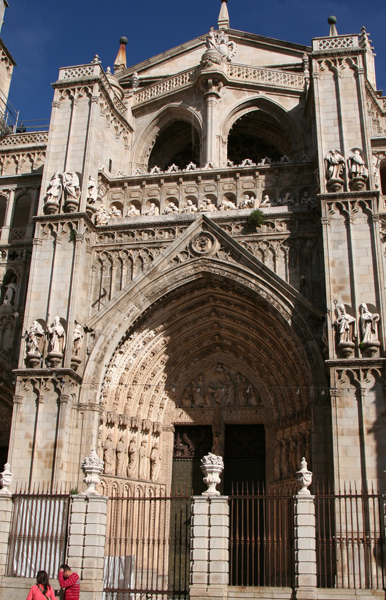
cathedral

How ornate!!!  Some would say “over-the-top” with its vast array of gold and jewels located throughout: at the high altar, the choir area, the side altars, the sacristy full of masterpieces of European artists, the room full of old, ornate vestments, etc.  The most interesting is the Treasury, the resting place for the 10-foot tall, 430 pound monstrance, layered in gold.  One day a year, Corpus Christi Sunday, it is taken from the Treasury and carried through the streets of old Toledo.  Again, no photos inside, so there’s another place for you to see for yourself. 

From the Cathedral we walked to Santo Tome Chapel to see El Greco’s, “The Burial of the Count of Orgaz”.  Some consider this to be El Greco’s finest work.  It certainly is impressive and especially since it is still in the place where the artist placed it 400 years ago.  We all spent many minutes, fascinated by the lovely colors, shadings and details of the painting.  El Greco was the resident artist here and called it home. 
santo-tome

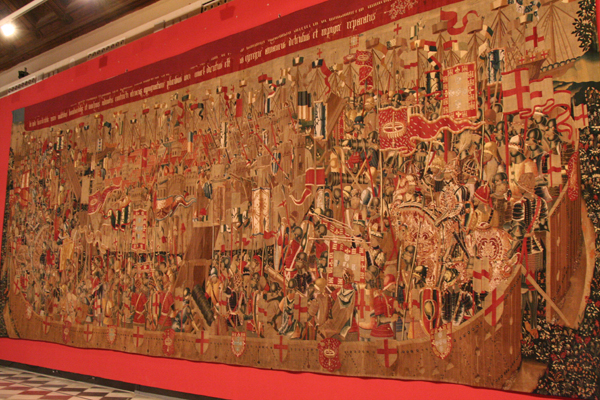
After Santo Tome, I relaxed a bit while the others went to the Santa Cruz Museum to see the lovely old tapestries

tapestry

We then sampled a little of the local specialty, marzipan, produced, apparently by the bushel, by the nuns in the local convents, and sold in many small shops.  We are all big fans of marzipan, so the local specialty was especially enjoyable for us. 

The sun was going down by now, so we hailed a taxi for a  ride to the train station and the fast train trip back to Madrid for another late Spanish schedule dinner.

Travel in Spain-2011-Days 1 and 2

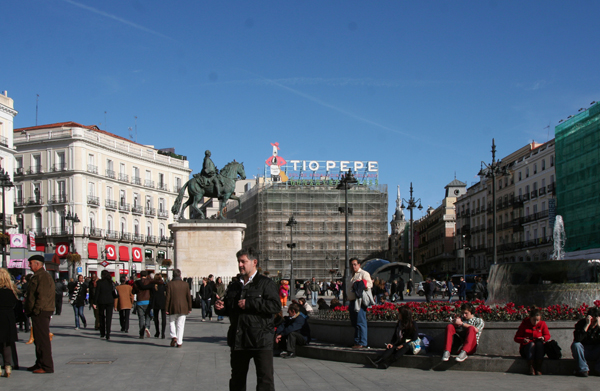
On February 21, 2011 we boarded Delta in Des Moines to fly to Madrid through JFK.  We arrived in Madrid the next morning (a 7 hour loss of time included).  The arrival process through passport control, etc., was quick and easy.  We chose not to have a car in Madrid, so we did not rent a car at that time, but chose instead to take the Metro from the airport to downtown Madrid, where our hotel, the Preciados, was very well located for the purpose of walking or connecting to the Metro in Madrid.  The Metro ride involved some walking to find the right platforms, but it worked well and we arrived at a stop just a block from the hotel.  The hotel welcomed us even though we were quite early (about 10:00 a.m.) and our nice room was already prepared for us.  After a short rest, we began our tour of Spain by walking down to Puerto de Sol,

puerto-del-sol

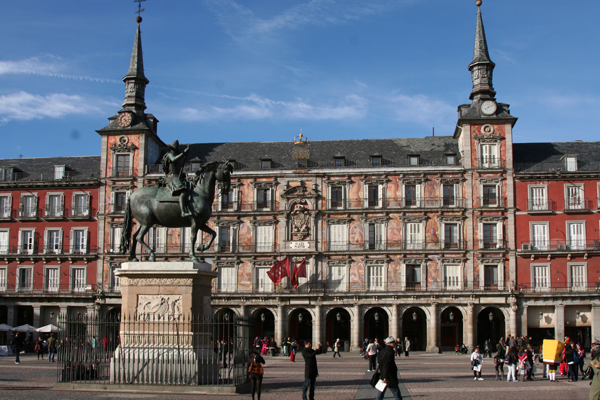
over to the Plaza Mayorplaza-mayor

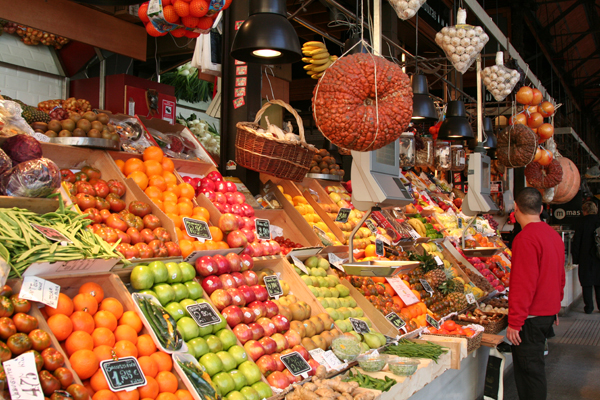
the Royal Palace, and then back to the hotel.  Madrid is beautiful, and crowds of people were out and about, walking, visiting, shopping, etc.  We found a fantastic market with fruits, vegetables, fish, pastries, and much more.

market-1

market-2

This is indeed a very nice city for a walk about. That evening we were introduced to the Spanish custom of late dining.   The “sit-down” restaurants do not open until 8:30 and we were, of course, the first ones there, at the El Senador, when we arrived at 8:30.  The food and wine were excellent.  The language differences were not a big problem. 

We planned to travel in Spain and Portugal from February 22 through March 9.  We were to be joined in Madrid by a daughter and son-in-law on the 24th.  They were returning on March 7th from Lisbon, Portugal, whereas we were driving back from Lisbon to Madrid for a day of birding with a local guide on the 8th (which you have already read about here in an earlier post) and departing Madrid on the 9th.  With the help of the invaluable Rick Steves 2011 books on Spain and Portugal and a significant amount of online research, our plans were quite detailed before we departed from Des Moines.  We had made all of our hotel reservations except for 2 nights in Lisbon, which we deferred because of uncertainty about our schedule in Portugal.  We had reserved a car for pickup at the Madrid Airport on the day, the 26th, when we left Madrid to drive to Barcelona.  The decision to rent a car came after cost comparisons for the four of us traveling by train or plane on our itinerary in Spain and Portugal.  Car rental was far less expensive on a per person basis.  Although the rental agency would not guarantee us an automatic transmission car, we were offered one when we went to the rental counter at the Madrid Airport on the 26th, much to the relief of my wife.  She had been concerned about driving a stick-shift, and neither of our “children” had ever driven a stick-shift, so it could have resulted in my being the sole driver, except on the open roads where not much shifting would have been required. 

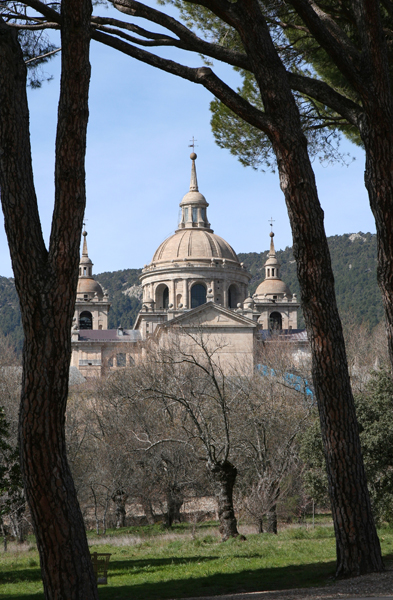
On the 23rd Barbara and I went to Escorial to see the Monasterio de San Lorenzo de El Escorial.  To get there, we walked from our hotel to the metro station, took the metro to the bus station, and rode the bus from Madrid to the bus station in Escorial.  We were on a very nice highway with nice views of the snow-capped mountains and pleasant farm fields along the way.  Escorial is a nice, smaller town.  We arrived at the palace/monastery/basilica about 11:30, but it was closed to the public until 2:30 because Queen Sofia was there for an event.  We spent our open hours having lunch at a little sidewalk restaurant in the old town and walking in the gardens.

view-from-gardens 

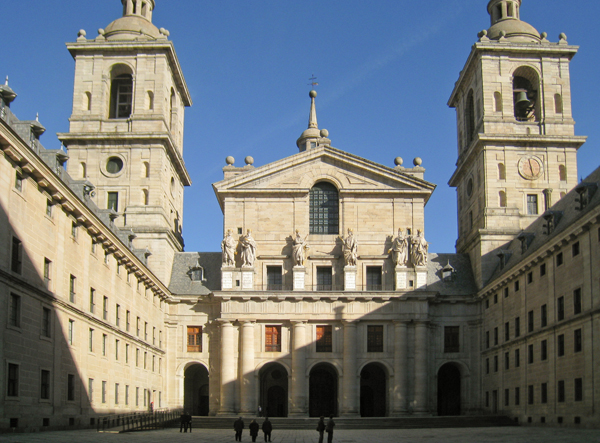
The Palace is huge and elaborate.  About 25 kings and queens are “encrypted” there in an amazing facility, the Royal Pantheon.  We understand that the “rotting room” adjacent to the crypt still contains the remains of the father of the present King, Juan Carlos, who died over 30 years ago.  He, Don Juan, was technically never King because Franco took control of Spain before he was crowned, and Franco appointed his son, Juan Carlos, as King when the monarchy was reinstituted.  So, controversy exists as to whether “King” Don Juan was really a king, and therefore, whether or not his remains can be placed in the Royal Pantheon.  And, to make matters worse, there is only one spot left, so where does that leave Juan Carlos and Sofia?

palace

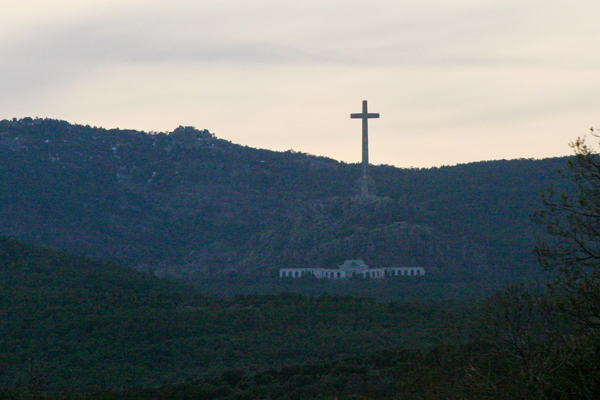
The Palace, Church and Monastery at Escorial are full of beautiful art and objects, many plated with gold.  The sculpture of Christ on the cross is magnificient.  We became a little disoriented making our way through the labyrinthian facilities and had to hurry to get out before the 6:00 p.m. closing.  In the distance on the bus ride back to Madrid, we could see the the 500-foot-tall ganite cross marking the Valley of the Fallen (victims of the Spanish Civil War of the 1930s) which is the mausoleum of Franco.  We understand that it is currently closed and undergoing a long process of restoration, though it is not that ancient. 


valley-of-the-fallen

Tomorrow our kids will arrive and meet us at the hotel.  From there we will spend a day of sight-seeing in Madrid, to be followed the next day by a train ride to Toledo and a day of sightseeing there.

Yellow Rail search at Anahuac

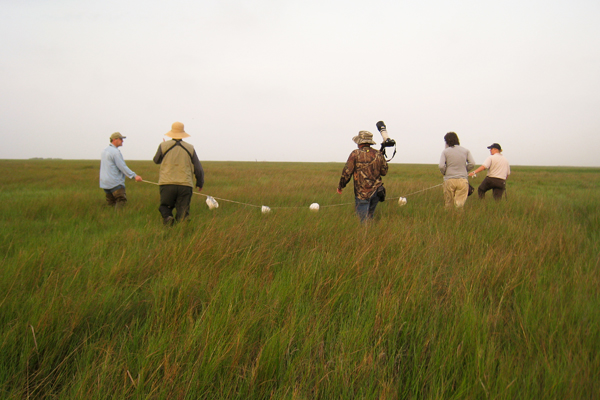
Sunday, March 27, Barbara and I took part in an interesting “exercise” at the Anahuac National Wildlife Refuge in southeast Texas.  The Friends of Anahuac sponsor “rail walks” each spring to look for the elusive Yellow Rails and even more elusive Black Rails that inhabit the grasslands of the refuge in the winter and early spring.  Having never (knowingly) seen either a Yellow Rail nor a Black Rail, I hoped to see one  or the other on this, the first walk of the 2011 season.  That was not to be.  Our leader has conducted these “walks” for 15 years, twice a day for 5 days each spring.  Our first walk of the day, commencing a little after 7:00 a.m., came up empty for the 9th time in all of his outings.

group-walking

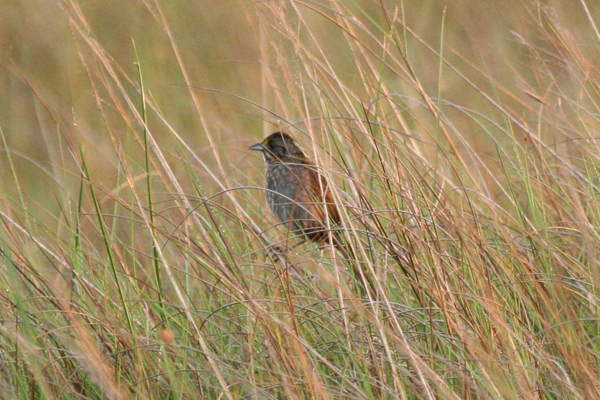
The going was tough.  We lined up behind a short rope with milk bottles attached as the leader and a volunteer pulled the rope through the grass.  Supposedly, the rails will not flush unless there is a lot of noise right beside them.  The 10 or so participants struggled to keep up, but we were all able to complete the outing.  The area we searched has not burned for several years and the grass was high and dense and the ground was wet, often with several inches of water hiding under the dense grass.  We were able to  stay with it, but we were exhausted.  Several falls occurred (with soft landings in the mushy, wet grass).  The best birds for the walk were good numbers of Sedge Wrens and Seaside Sparrows

seaside-sparrow

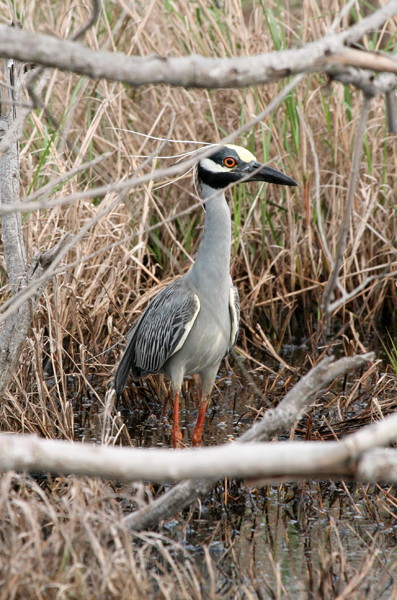
After the walk we explored some of the trails at Anahuac.  We were rewarded with closeup views of two Yellow-crowned Night Herons in full breeding plumage. 

night-herron

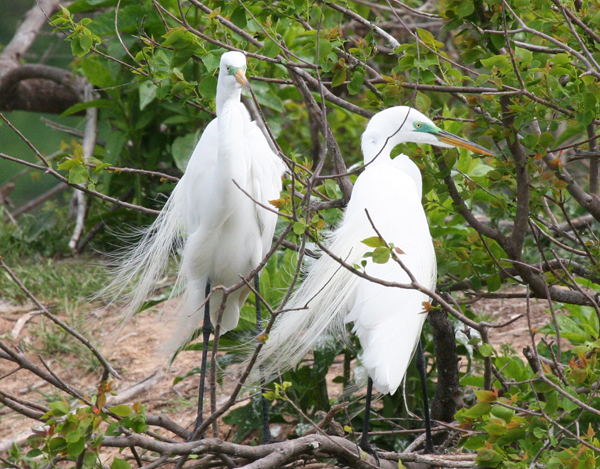
We then drove to High Island.  I have heard of High Island for years as a prime stop-over for weary warblers migrating across the Gulf of Mexico in early spring.  Either we were too early to see any warblers, or weather conditions had not been suitable to create the “fall-outs” for which High Island is reknowned.  The Audubon Society has acquired several properties at High Island.  One of these, Smith Oaks Bird Sanctuary, contains a rookery located on a U shaped island in the middle of a fairly large pond on the Sanctuary.  We were fortunate to be there at the beginning of the breeding season. 

egrets-with-color

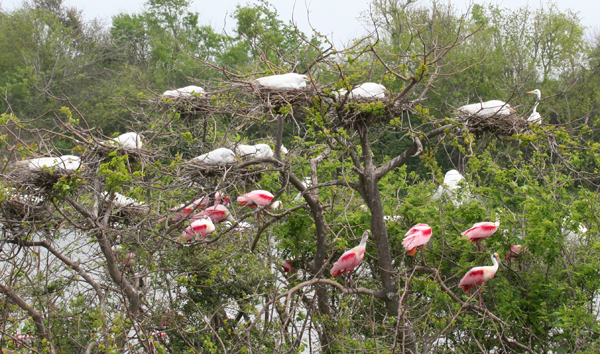
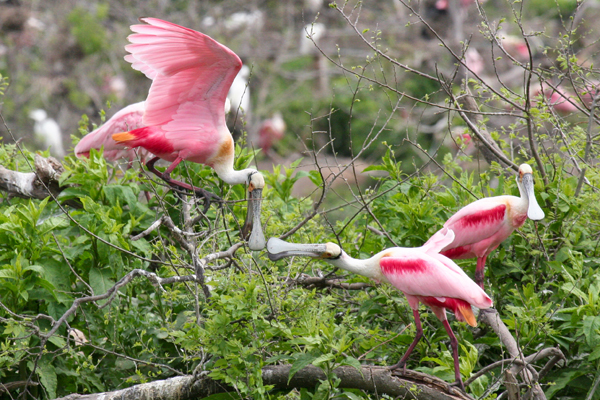
The rookery was filled with nesting Great Egrets and Cormorants, and courting Roseate Spoonbills. 

nests

The Spoonbills were exceptionally colorful. 

spoonbills

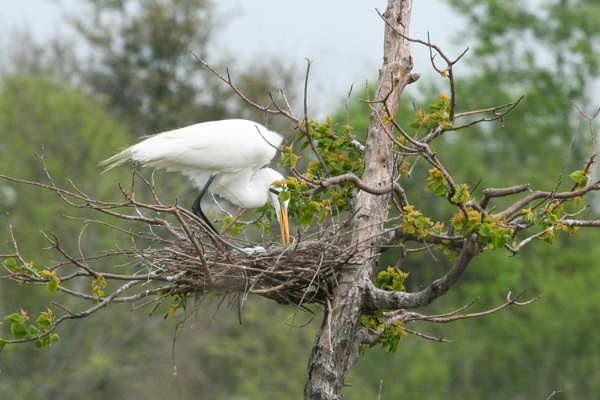
One of the other highlights was the sight of light blue eggs protected by an Egret in her nest. 

egret-with-eggs

We enjoyed the spectacle for an hour or so before moving on to explore the beach at High Island. 

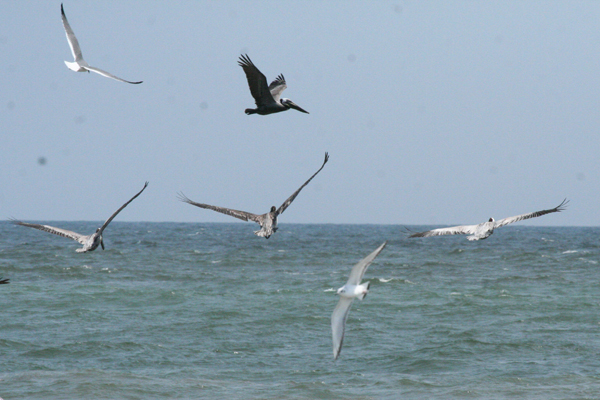
At the beach we were entertained by a myriad of Brown Pelicans, Laughing Gulls and several species of Terns as they dove into the surf for succulent raw fish dinners.

birds-in-flight

We returned to Anahuac for the afternoon walk. Our leader had located a somewhat less difficult area for the afternoon walk.  The afternoon participants included a foursome of young birders from Hungary, whose ability to keep pace with the leader made for a better chance of scaring up a Yellow Rail, but taxed us at least as much as the morning “hike” in the taller and wetter marsh.  Consequently we cut our participation short and found our way back to the road and our car before the search was completed.  Again, we found no rails, and we do not know if any were located by the remaining participants after we bailed out.  Again North American Bird number 700 eluded me.  Oh well, there will be plenty more opportunities.  For those of you who have never participated in a “rail walk”, I recommend that you do it sooner rather than later so that you have the physical stamina for it. Our guide indicated that he once had an 85 year old participant who managed it without apparent ill effects.  Personally, I would not recommend waiting that long.  Nor would Barbara.

Spain: Winter Birding near Madrid

On March 8, 2011 at the end of a two week self-guided tour of Spain and Portugal with my wife and 2 family members, I hired bird guide John Muddeford for one day of birding in the Madrid area.  John lives near Madrid.  He is an experienced Spanish bird guide and speaks fluent Spanish and English.  The day in the field with John was the icing on the (very nice) cake for me, and my wife enjoyed it also. 

Before giving an account of the birding, I want to note that this was my first visit to Spain and Portugal.  Because there were four of us travelling together,  a rental car turned out to be the least expensive and most efficient method of travel.  We rented our car at the Madrid airport after our first 4 days in Madrid, Escorial and Toledo, and during the next 10 days we drove to Barcelona, Granada, Seville, Porto, Lisbon and back to Madrid, about 2500 miles.  We avoided driving in the cities as much as possible, by parking the car and using the excellent public transportation systems.  The highways in both Spain and Portugal are first class.  Driving on the Spanish highways was very comfortable.  The driving in Portugal was a bit fightening at times because many drivers  greatly exceeded the posted speed limits.  This required constant, extraordinary attention to what was coming from behind.  In a week or two, when all the photographs have been reviewed,  I will begin posting my observations and my wife’s photographs  of the Spanish and Portuguese attractions that we visited. 

Before leaving for Spain I emailed to John Muddeford a list of the species of birds that would be new to me and that appeared from my old and outdated European Field Guide to be findable in the Madrid area in early March.  He diligently culled the list and added a few others that he thought might be of interest.  It boiled down to about 30 potential new species at that time and place.  We actually tallied about 85 species for the day, of which 25 were on my “new” list, and a couple of more new ones were added that were not on the list.  For a more complete list of what we saw see John’s report on his website, john@iberianwildlife.com

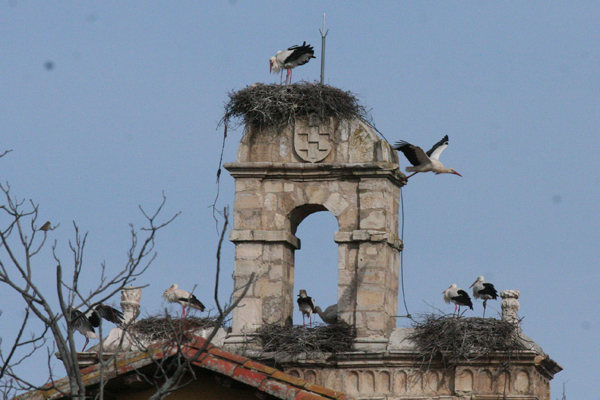
Perhaps the most iconic birds for me were the White Storks.  I had never seen one before the trip and ended it having seen well over 100.  These big birds are apparently doing well in Europe.  For centuries residents of many European countries have considered the presence of  storks nesting on their houses, windmills or outbuildings to be a sign of good luck.  Because of their favorable public image, and possibly also because they do not, I was told, taste good, they have managed to maintain a large population.  How they manage to keep their great nests attached to the tops of utility poles and other high vantage points, I do not know. 

white-storks

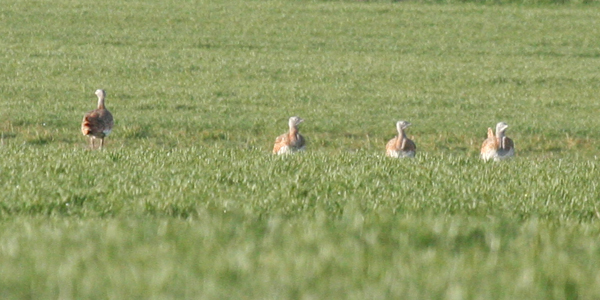
Other birds high on my list were Great Bustards and Little Bustards.  Our first sighting in this category was of a Little Bustard, flying across a green (winter wheat?) field at quite a distance.  The white in its wings made it quite apparent that it was what it was.  This was the only Little Bustard we saw.  The Great Bustards were a different story.  Surprisingly, they were fairly numerous and very visibile on the farm fields east of Madrid.  We counted at least 35.  I am surprised that these big game birds have survived the continuing encroachment of people into their habitats. 

great-bustard

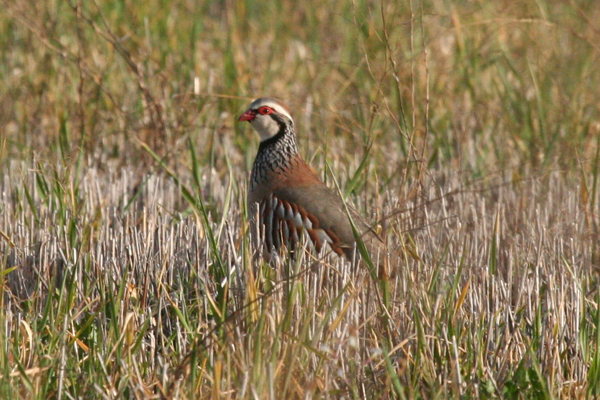
As we finished looking at our first flock of Great Bustards, two Red-legged Partridges came walking close by our car.  The grass was a bit too tall to see their most prominent feature, their bright red legs, but they are a very beautifully patterned bird nonetheless.

red-legged-partridge

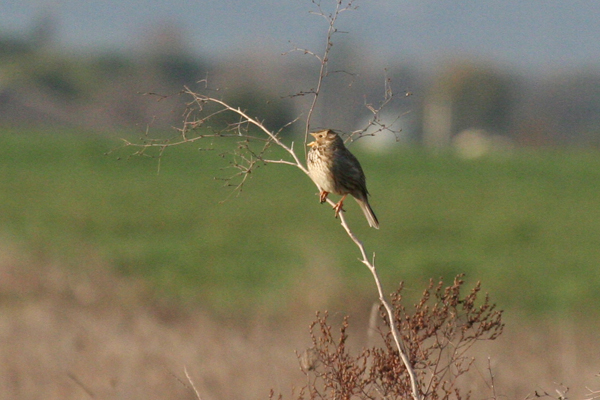
A very plain bird that I have seen mentioned in English literature but never before seen, is the Corn Bunting.  These tame little birds were present in great numbers, often singing along the fence rows or from exposed, weedy perches in the farm fields. 

corn-bunting

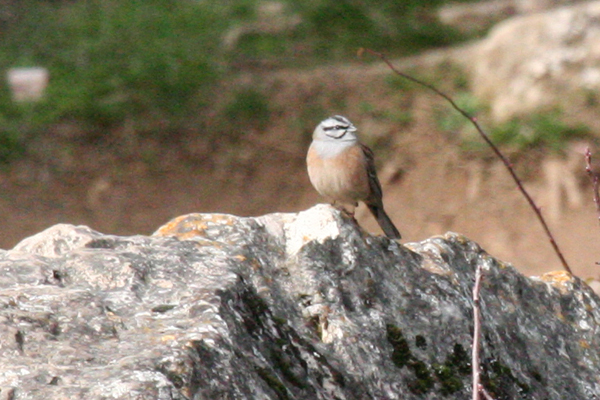
Although Rock Buntings were not new for me, they were colorful and very accommodating for my photographer.

rock-bunting

Spain is home to by far the greatest variety of birds to be found anywhere in Europe.  While early March was a good time for us to explore the excellent architecture, historical sites and art museums, it was not the best time to find the many migrating and summer resident birds of Spain.  Moreover, the Madrid area is just one of several areas where many different species can be found.  For those and other reasons,  including the friendly people, fine food and wine, reasonable prices, beautiful and diverse scenery, and pleasant weather, I plan to return to Spain later this spring for a solid week of birding, with John’s guidance, outside the Madrid area.  I hope to see 60 or so new species, which will, I think, be enough to satisfy my quest for birds in Europe.  And who knows, I and my trusty mount, Rocinante, (did I mention that I plan to travel by rented horse?) may even tilt at a windmill somewhere in La Mancha.

Belize Birding at Chan Chich-Part 3

Chan Chich and Gallon Jug are part of a very large private holding in western Belize, adjacent to its border with Guatemala.  They raise or grow all of their own food on the ranch.  Barbara went horseback riding one day and rode through the pastures in the midst of cattle, and also through a coffee growing area.  Chan Chich has been a birding destination for many birders for many years.  I heard about it years ago and it has for a long time been on my list of places that I wanted to visit.  Chan Chich Lodge has a dozen or so separate cabanas.  They are straw-thatched and very nicely appointed.  All dining is centered in the Lodge.  It was a step up from Lamanai, which, in turn was a step up from Crooked Tree, at least in terms of the luxury afforded by the cabanas and the Lodge.  As indicated in my earlier posts, however, the birding at Crooked Tree and at Lamanai was  not much different from what we found at Chan Chich.  On the drive to the Lodge we were able to observe the substantial damage caused to the jungle by the winds of Hurricane Richard, which hit the area hard in October, 2010. 

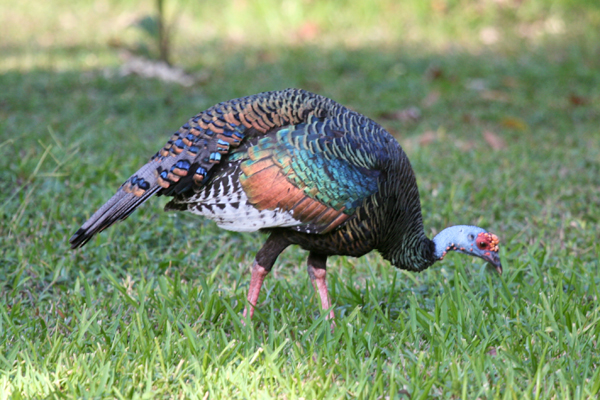
With the help of the excellent guides provided by the Lodge, we saw many of the same birds at Chan Chich as we had seen at Lamanai.  Our guides reported that for a while after the hurricane, many of their birds had disappeared, but were now returning.  New “Life Birds” at Chan Chich were plentiful, however, and included the strange and beautifully colored Ocelated Turkeys, which were very tame.

ocelated-turkey

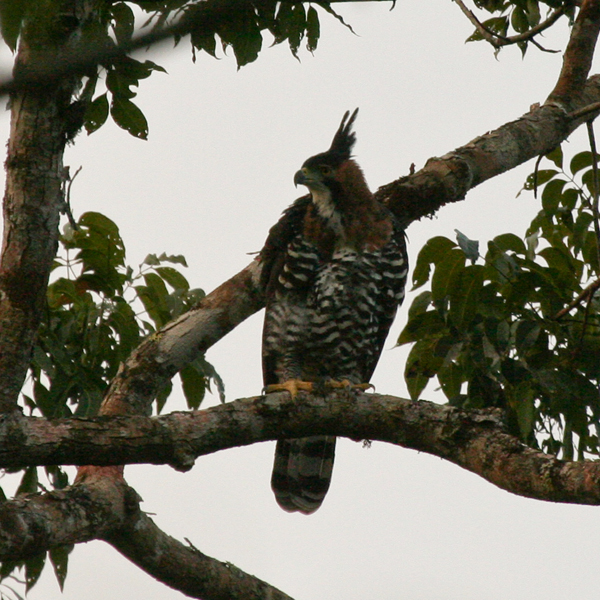
A pair of Ornate Hawk Eagles was nesting along a trail. 

ornate-hawk-eagle

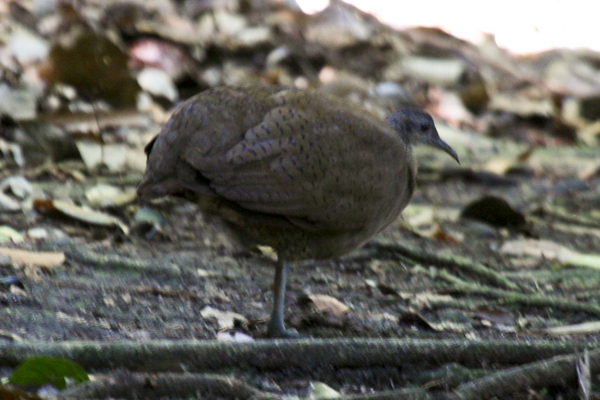
The Great Tinamous were quick to disappear as soon as they were spotted.

great-tinamou

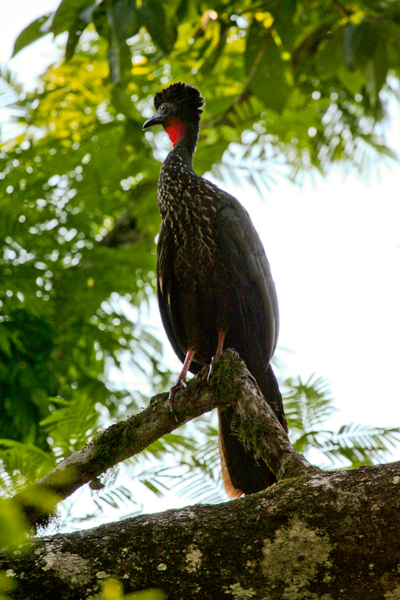
This Crested Guan was watching us as we were watching him.

crested-guan

We saw a Sungrebe floating by turtles basking along the shore.  We also saw  Great Currasows (seen also at Lamanai, but better views here), a Scaled Pigeon (uncommon here, but found by Barbara), Gray-fronted Doves, a Squirrel Cuckoo, Long-billed Hermits, Scaly-breasted Hummingbirds, White-whiskered Puffbird, Black-cheeked, Pale-billed and Chestnut-colored Woodpeckers, and Ruddy, Tawny-winged and Northern Barred Woodcreepers.

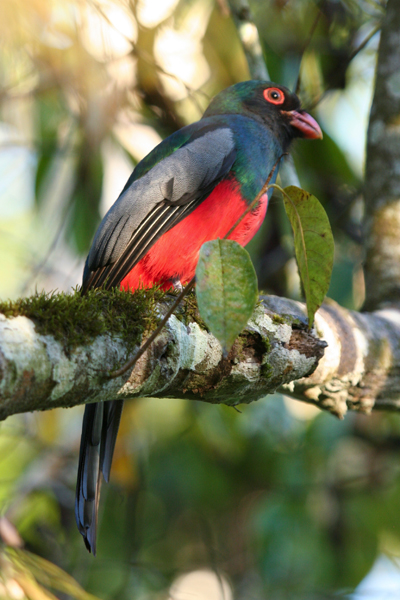
The colorful Slate-tailed Trogon was always fun to see.

slate-tailed-trogon

We spotted a Plain Antvireo, Stub-tailed Spadebill, Ruddy-tailed Flycatcher, Yellow-bellied Tyrannulet, Sulphur-rumped Flycatcher, Eye-ringed Flatbill, White-collared Manakin, White-breasted Wood-wren, Golden-crowned Warbler (the only Warbler species that is resident year-round in Belize), Red-crowned Ant-tanagers, Scrub Euphonia, Olive-backed Euphonia, and Blue-black Grosbeak.

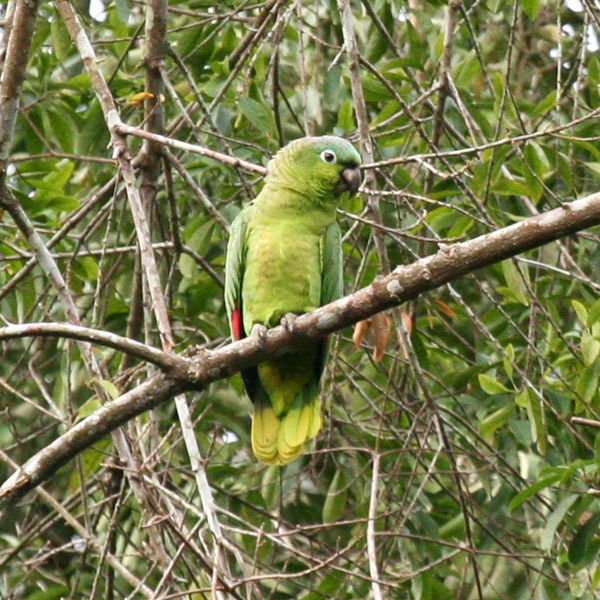
The Mealy Parrots made quite a commotion around the lodge at breakfast time and again later in the afternoon.

mealy-parrot

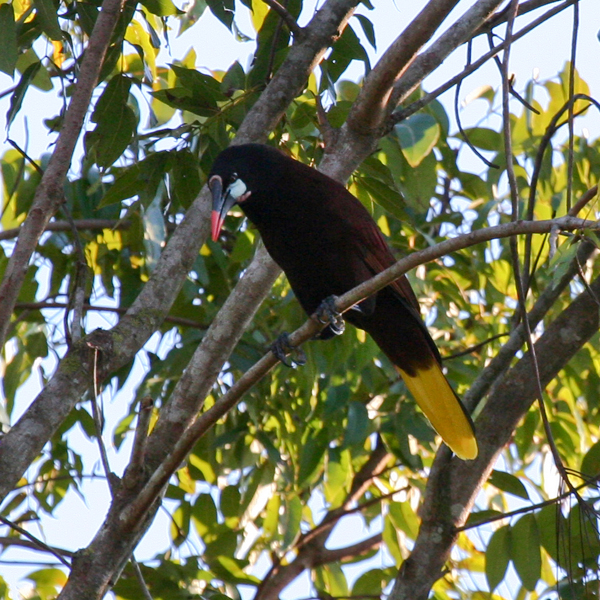
Another noisy fellow was the Oropendola which could be seen and heard around the lodge.

oropendola

We stayed at Chan Chich 4 nights.  On the last day we were driven from the Lodge to Gallon Jug (about 6 miles) and were picked up there in a small plane and flown to the airport near Belize City.  This was a much better way to travel than on the back-country roads.  Belize is in the same time zone as Iowa.  We arrived back home, through Atlanta, about 11:00 p.m. that night.

Belize, formery British Honduras, is a small country of about 500,000 people.  English is the official language.  Afteer obtaining independence from England about 40 years ago, Belize has remained a part of the British Commonwealth.  In the west, where we spent most of our time, many of the residents have come from Guatemala and speak Spanish natively.  Without exception, we were treated in a friendly and welcoming fashion.  Everyone we met, even while out on the roads walking, greeted us with a smile or a wave.  Had we spent time in the more populated areas of Belize City or along the coast, we might not have had quite the same experience.   Friends who have taken beach side or island based vacations there, however, say that it was a great experience and they would go back (for the sun, the golf and the beaches, not for the jungle as some of their somewhat peculiar friends just did).

Birding in Belize: Part 2-Lamanai Outpost

The boat ride up the New River to Lamanai Outpost took about an hour.  For the entire ride we reveled  in the bright sun, blue sky and the serenity and clarity of the river and its jungle edge.  The only activity consisted of two or three small boats bearing local fishermen.  The only substantial human habitation consisted of  some Mennonite cattle and sugar cane farms and support facilities.  The Mennonites arrived in Belize in the 1950s and have established a remarkably successful agricultural empire in the country.  Most of the country’s  meat, eggs, corn and sugar production comes from the Mennonite farms. 

We docked at Lamanai around noon and were treated to cold drinks immediately.  The cabanas at Lamanai are very comfortable and attractive.  The Lodge, where all meals are served and activities commenced, was a short but steep up-hill trek from our cabana.  Our cabana overlooked the Lagoon and was on the edge of the compound, so it provided ample opportunity for birding right from our veranda. 

Lamanai Outpost provides guides as a part of the package.  During our three days there we spent time with three or four of them and each of them impressed us with their knowledge of the natural and historical attractions of the area.  The bird life was abundant.  We took a night cruise and a late afternoon cruise on the Lagoon.  Among the new “life” birds I saw at Lamani were: Agami Heron (seen roosting by the river on the night cruise), Collared Forest-falcon (heard only), Great Curassows, Brown-hooded Parrots, White-fronted Parrots, Yellow-headed Parrots, Red-lored Parrots, Yucatan Nightjar, White-bellied Emerald, Slaty-tailed Trogon, Tody Motmot and these:

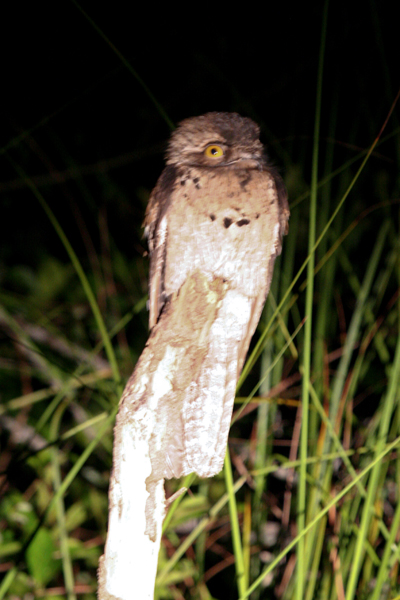
Northern Potoo  

potoo

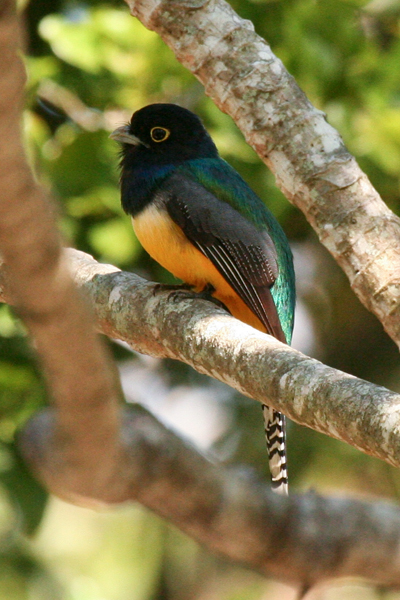
Violaceous Trogon

violaceous-trogon

Royal Flycatcher

royal-flycatcher

Blue-crowned Motmot

motmot

Collared Aracari

aracari

Keel-billed Toucan (the national bird of Belize)

keel-billed-toucan

Also see were Smoky-brown Woodpecker, Olivaceous Woodcreeper, Tawny-winged Woodcreeper, Strong-billed Woodcreeper, Northern Bentbill, Bright-rumped Attila, Ochre-bellied Flycatcher,  Yucatan Flycatcher, Red-capped Manakin, Masked Tityra, Mangrove Vireo, Yellow-winged Tanager, Red-throated Ant-Tanager, Red-legged Honeycreeper, Yellow-throated Euphonia, Blue Bunting, Black-headed Saltator, Green-backed Sparrows, and Montezuma Oropendola.  A long list.   

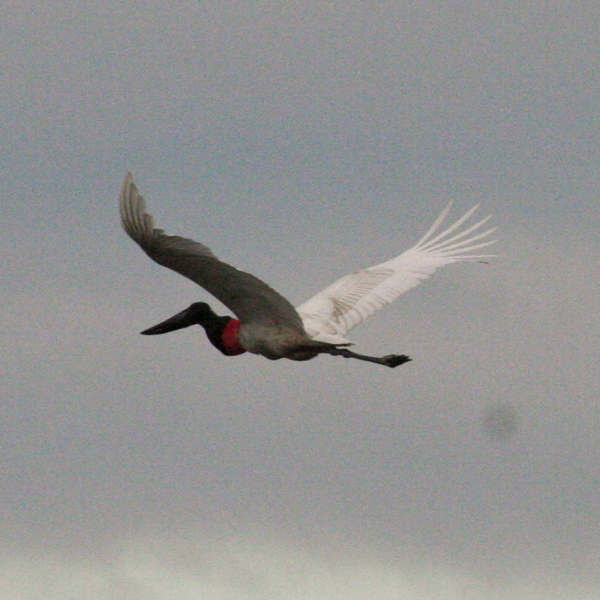
The best bird at Lamanai was not a new bird for me, but the view that we had of a pair of Jabiru Storks was unforgettable.  As the sun was going down, we were sitting quitely in our boat with our guide when we spotted the first Jabiru flying across the Lagoon from the south.

jabiru

It landed in a very large tree on the west bank, quite a distance from us.  The tree contained the nest that this pair of Jabirus has been using for the past 14 years.  As the sun was setting, the second Jabiru joined its mate atop the nest and the two of them preened in a stately manner.  The storks are 5 feet tall and have an 8-foot wingspan. 

Black Howler Monkeys were abundant at Lamanai.  They made their presence in the tree tops very evident by persistently roaring challenges to other groups of Howlers.  Howler monkeys don’t howl; they roar.  The sound is very much like that of the lions we heard roaring at night when we were in Botswana a couple of years ago.    It is difficult to believe that such volume could come from these 40-50 pound monkeys.  They would be frightening but for the knowledge that there are no lions in Belize and the Monkeys stay up in their trees.  Often their howling could be heard during the night or in the early morning hours as well as during the day.  The quiet Spider Monkeys were more acrobatic, or at least more inclined to display their acrobatic talents in leaping great distances from one tree top to another. 

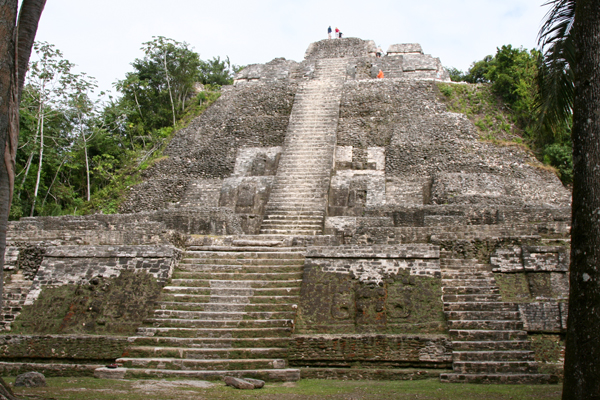
On day 2 we explored the Mayan temples at Lamanai.  These structures, some dating back over 2,000 years, were redicscovered a century or two ago.  Much excavation has taken place over the years to reveal the original architecture and art and to recover what might remain of the artifacts. 

mayan-ruins

Lamanai was an important trading post for the Mayans as it was located near the major lagoon that connected to the Caribbean and the eastern shore line of Central America.  Excavation and restoration has slowed in the past few years because of cutbacks in funding.  Nevertheless, this old Mayan city remains a big draw for tourists in Belize.  We saw far more people there than anywhere else that we traveled (except the airport).  Fortunately, the Lodge arranges for its guests to be guided through the ruins early in the morning, before it opens to the general public and the crowds arrive.  When I say crowds, I don’t mean crushing numbers.  Just groups of people, usually in the company of a guide explaining the history of Lamani.  It was pleasant to be there early  in order hear your own guide and take your time as your small group (7 of us) sees fit. 

After lunch on our last day at Lamanai we were met by a driver provided by our next Lodge, Chan Chich.  The drive was pretty bad.  It took over 3 hours to go about 60 miles to Chan Chich.  The roads were very rough and dusty and the vehicle was hot.  Our driver had the unfortunate attribute of talking very loudly and nearly non-stop.  My ears were ringing, among other maladies, by the time we arrived at Chan Chich. 

I highly recommend Lamanai Outpost for those interested in the combination of excellent birding and fascinating Mayan history and ruins.  The lodging and food are both good.  In the next installment I will summarize our experiences and impressions of Chan Chich.

Birding in Belize: Crooked Tree, Lamani, and Chan Chich

Barbara and I planned a trip to Belize with the help of Caligo Ventures.  Our primary objectives were to see the interior of Belize, find birds and see the Mayan ruins.  We were scheduled to leave Des Moines on January 11th, fly Delta to Atlanta and Delta from Atlanta to Belize City.  Bad weather in Atlanta required a quick change of plans.  We ended up going through Houston on American and arriving in Belize City pretty much on schedule as if we had been able to keep our original itinerary. 

The weather was generaly quite warm and humid in Belize although the nights and early mornings were very comfortable.  We were met at the airport by the driver arranged for by Crooked Tree Lodge, where we were staying for 3 nights.  Our cabin, one of only 6 at the Lodge, was spartan, but clean.  The lodge where we took our meals was nice, and the food was very good.  There were very few guests, so we nearly had the place to ourselves.  The next morning we were out early with our guide, Glenn Crawford, for a morning bird walk.  Crooked Tree is in flat terrain, on an island surrounded by fresh water bodies.  Most of the birds we saw that first morning were the same ones we see regularly in migration in the U.S.  Glenn is a 4th generation Belizian and knows the territory and the birds.  We learned of the local agricultural activities, including harvesting cashews, perhaps the biggest local crop. (Later, due to the hospitality of a young couple that joined us for dinner at the Lodge, we sampled the local Cashew Wine.  It reminded us of a nice Sherry.) Much of the land is quite sandy and still in a natural condition, providing good habitat.  We walked hard and covered a good deal of territory. 

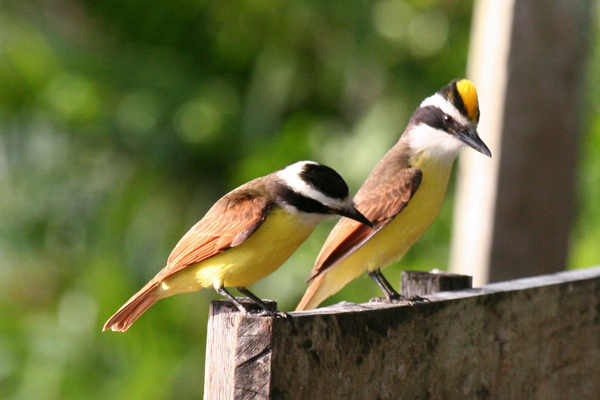
Good birds for the morning, which started at 6:30 a.m., included a Gray-necked Wood Rail (previously seen in Costa Rica), and the following new life birds:  Pale-vented Pigeon, Plain-breasted Ground Dove, Olive-throated Parakeets, Rufous-tailed Hummingbirds (numerous), Red-vented Woodpecker (formerly known as Yucatan Woodpecker), Lineated Woodpecker, Ivory-billed Woodcreeper,  Tropical Pewee, Yucatan Flycatcher, Variable Seedeaters, Blue-black Grassquits, and Black-cowled Orioles.  Substantial numbers of other birds of species I have previously seen were also present.  We were excited to see the Great Kiskadees in courtship mode. 

kiskadee

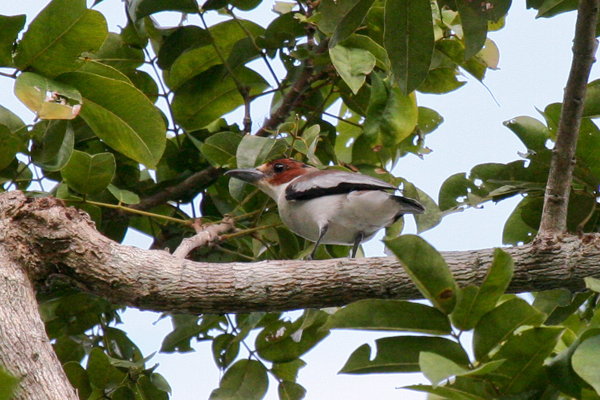
We had lunch and ventured out around the Lodge area for a couple of hours before Glenn met us for an afternoon walk.  My most exciting finds were a Black-crowned Tityra and a Spot-breasted Wood -wren. 

black-crowned-tityra

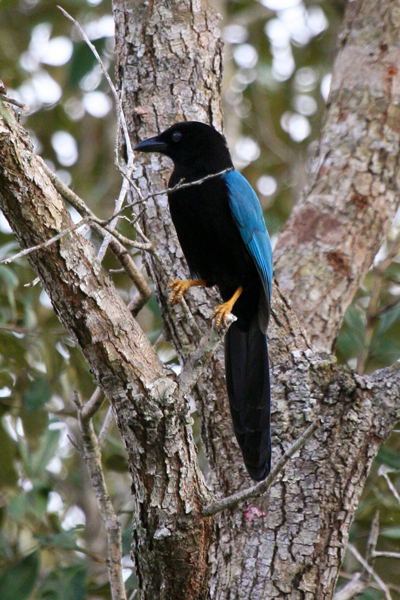
Migratory wood warblers of the various species that we commonly see in spring or fall, were present in good numbers.  We spent the afternoon with Glenn, exploring other areas near the Lodge.  Among the more interesting  birds spotted this afternoon were: Crane Hawk (not new), Ruddy Quail-dove (a fleeting glimpse), Canivet’s Emerald, and, after a long search, the best bird of our stay at Crooked Tree, Yucatan Jays.  There were at least 30 of these beautiful birds harvesting the insects that were leaving their burrows in the woods to escape a marauding Army Ant swarm.  They ignored us and allowed close approaches in their greed for more bugs.

yucatan-jay

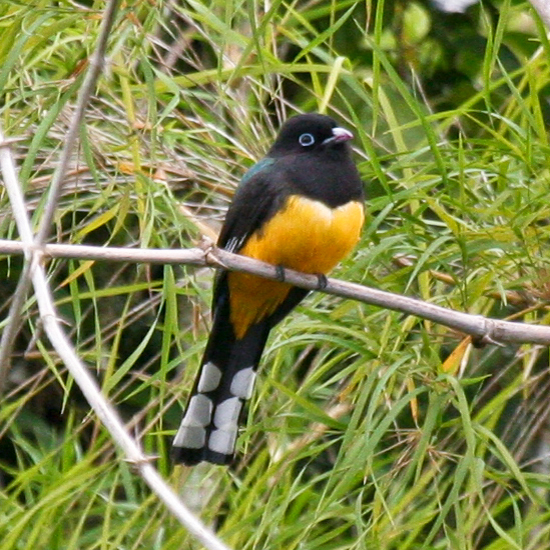
Day 2 at Crooked Tree began with a short drive to the lagoon, where we were joined by 2 other couples for an early morning cruise.  Glenn’s brother, Rudy, served as guide and another brother, Robert, was in charge of piloting the boat.  Rudy proved himself very proficient in spotting and identifying the birds.  Today produced several more interesting birds, including a Bat Falcon, numbers of common water birds, including a Bare-throated Tiger-heron and numbers of Black-bellied Whistling Ducks, a Lesser Yellow-headed Vulture, a Black-collared Hawk, a Black-headed Trogon, a Yellow-billed Cacique and a Yellow-tailed Oriole. 

black-headed-trogon

We returned to the Lodge for the afternoon and birded on our own for the rest of the day.  The next morning Rudy drove us the 1 hour to the Lamani Outpost Lodge river transfer point on the New River, where we boarded a fast boat for the long ride up-river (south) to the Lamanai Outpost Lodge.  The morning was clear and cool and the boat ride was fantastic.  For the next 3 nights we would be staying at Lamanai Outpost Lodge and would include in our itinerary a tour of the Mayan temples at Lamani. I will write about that segment of our trip soon.